HUNDREDS of distressed native fish and freshwater crustaceans have been rescued and relocated to temporary tanks until the water quality improves in the Murray River and its tributaries.
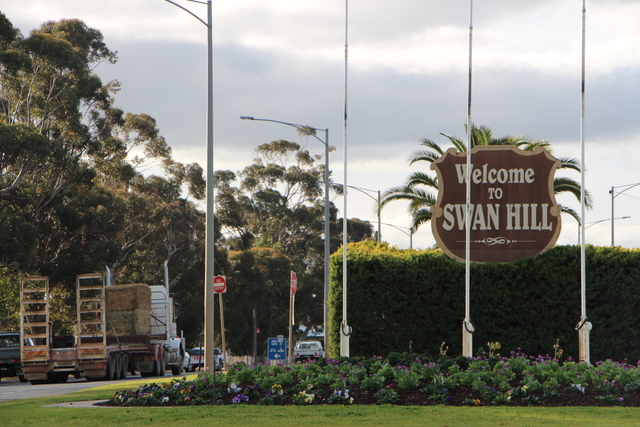
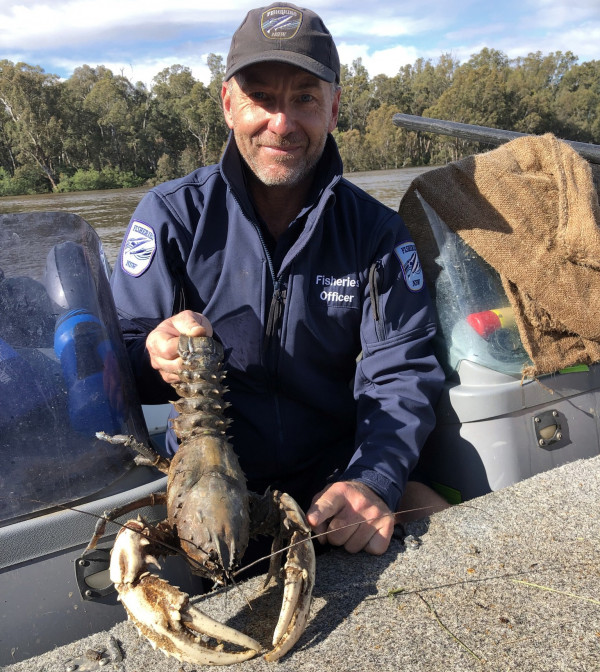
NSW Department of Primary Industries Fisheries and Victorian Fisheries Authority have combed the Murray in Swan Hill, Echuca and Barham, rescuing 224 Murray crayfish – a nationally listed threatened species – that clung onto anything above the water surface last week as natural flooding caused hypoxic (low oxygen) blackwater.
Authorities were joined by OzFish volunteers in the rescue efforts.
The rescued crayfish have been transported to Narrandera Fisheries Centre for safekeeping until conditions improve and they can be returned to the river safely.
Fisheries Officers are actively patrolling the area to deter any illegal activity, with people urged not to interfere with crayfish or try to collect them, as some may return to the water when water quality improves.
Meanwhile, North Central Catchment Authority has led a rescue mission in the Gunbower and Pyramid creeks, catching more than 500 Murray cod, golden perch, silver perch, and trout cod from hypoxic water.
Where possible, they have been taken to a fishery and will return to the Gunbower system when oxygen levels improve. Others have been moved to healthier waterways in other catchment, such as the Campaspe River.
Around 100 native fish and crayfish have also been moved to a new native fish hatchery at Arcadia. A small number will be retained as broodstock for restocking affected waters, with the remainder to be returned to the waters they were rescued from, when water quality improves.
North Central Catchment Management Authority project manager Dr Peter Rose, who is also a fish ecologist, said while water that carries carbon is normally good for native fish, the recent floods are worrying.
“When there is natural, small-scale flooding or environmental water delivery, carbon-rich water coming off the floodplain is a vital food source for native fish, but during large-scale flooding events, it can be a different story as the water can become hypoxic,” Dr Rose said.
“Floodwaters have carried large quantities of organic material such as leaves, twigs and grass into our rivers and creeks which turns the water a dark brown or black colour. As the material is broken down, it can reduce oxygen levels in the water which can kill fish and other aquatic fauna.
“North Central CMA staff have been monitoring water quality at a number of sites in the north of the state and as a result of hypoxic blackwater, dissolved oxygen levels in some waterways and creeks have plummeted.
“Fish deaths have been reported in and around the lower Loddon floodplains and other species such as the Murray cray are struggling.
“Unfortunately, we expect to see more fish deaths and other water dependent species succumb to low oxygen levels in the coming days and weeks particularly as we head into warmer weather.”
Dr Rose said that while the scale of the flooding means it is difficult to improve water quality, the North Central CMA is investigating options to help native fish and other water-dependent species survive.
“In some cases, water for the environment can be used to provide refuge for native fish or help dilute the poor-quality but this is only possible if good quality water is available and when flow in the rivers and creeks drop to normal operational levels,” he said.
“Despite the difficulties, we are investigating other options. This may include aerating the water at some sites or relocating native fish species to sites with acceptable dissolved oxygen levels to improve their chance of survival.
“There is no guarantee either of these options will work but because native fish populations are already in decline across the Murray-Darling Basin, and we’ve been successful in increasing their numbers in the Gunbower and lower Loddon systems through our Native Fish Recovery Plan, we are willing to give them a go.”
Report fish deaths to the Environment Protection Authority on 1300 372 842.