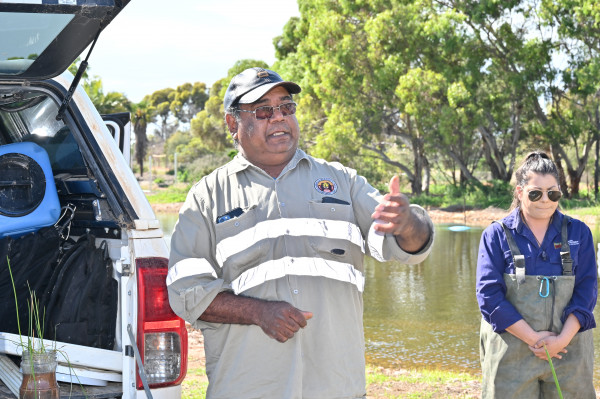
THE southern pygmy perch is shy compared to the purple-spotted gudgeon, but the native endangered fish drew the support of local rangers, who on Monday released about 200 specimens into ponds in a bid to ward off extinction.
Barkindji Maraura Elders Environment Team (BMEET) ranger supervisor Malcolm King said the perch needed help to return to natural habitats after the damage done during European settlement.
The southern pigmy perch is a pale fish with dark blotches on its body and was formerly found in the Murray and lower Murrumbidgee rivers but was now considered endangered.
On Monday BMEET rangers released the perch at the Australian Inland Botanic Gardens at Buronga, along with NSW DPI Fisheries staff and garden volunteers in the hope of growing the perch population.
Mr King said the perch had a different personality to the endangered but “inquisitive” purple-spotted gudgeon.
“Every time I walk past the fish tank (purple-spotted gudgeon) look at us,” Mr King said.
“They follow us along. And if I stop to look at them, they’ll come up. It’s like they want a conversation.
“The perch, they’re just trying to go about their business and try and stay out of sight.”
NSW DPI Fisheries habitat and threatened species senior manager Iain Ellis said the perch hid a lot after its habit was altered due to changes in water flows.
He said dams and weeds had resulted in a loss of vegetation which the perch used to hide, as the number of predators such as carp and redfin grew in the Basin.
“There’s a bunch of reasons these guys have disappeared … in the last 100 years,” Mr Ellis said. “We sort of chased them out of this part of the world.”
Mr Ellis said it was “crucial” the perch returned to the Murray River environment to keep the aquatic food chain connected.
“They are basically chewing through prey items … like small water bugs or large plankton.
“But if they don’t have enough to eat in these floodplain habitats, then we don’t have big fish.”
Mr Ellis said the ponds at the Botanic Gardens were ideal as they were disconnected from the floodplain, making it easier to keep it free of “pesky” predators.
He said the aim was to grow enough populations to return the fish to managed wetlands in the region in two or three years.
“This is baby steps. Hopefully, next time there’s a flood, they’ll start to disperse naturally as they did for thousands and thousands of years.”