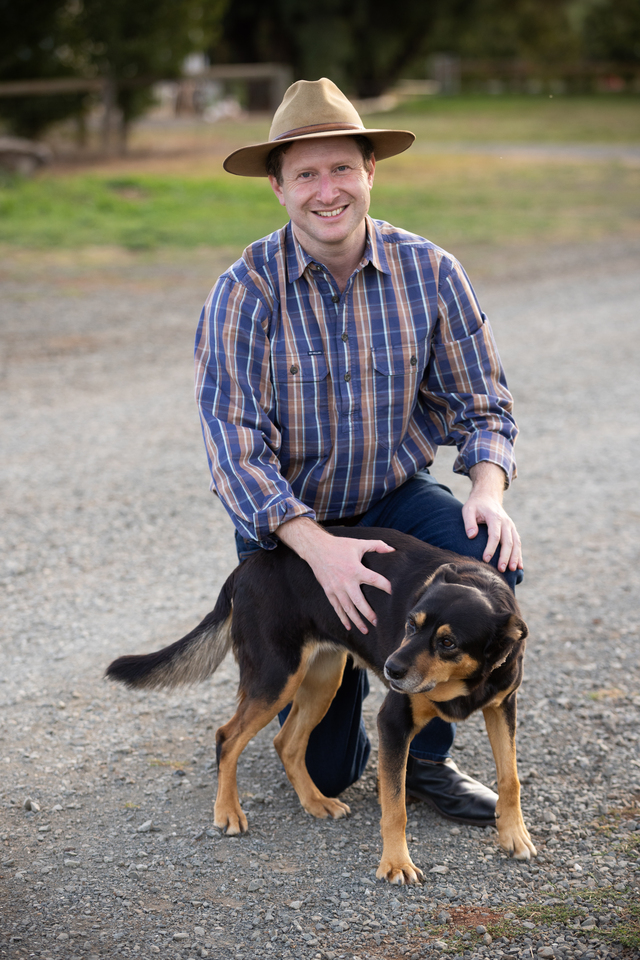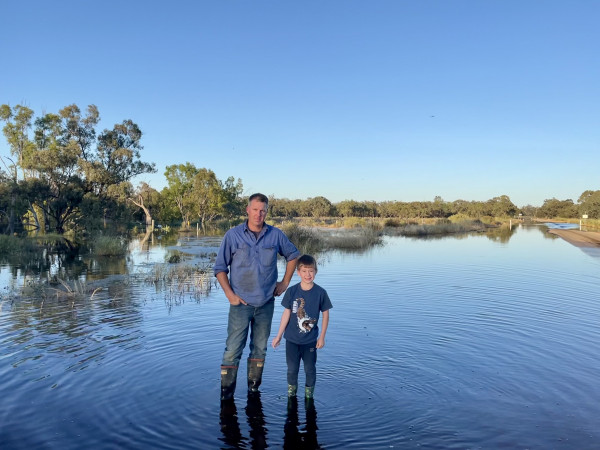
WAKOOL ricegrower Michael Chalmers planned 600 hectares of rice this season – and reckons he has done well to get 320ha sown.
He also has 760ha of cereal crops, which he has been pumping water away from for the past five weeks – and will hopefully be able to get a harvester on those paddocks in a week to 10 days.
Provided there is no more rain and no more flooding.
He had also planned to cut for hay but those plans have long been scrapped – although he is hoping what’s left in the paddocks will provide sheep feed.
Michael, also chair of the local Rice Growers’ Association branch, says the floods are bad, but even contending with rainwater has been overwhelming this year.
He says Wakool’s average rainfall is meant to be around 300mm.
“Since October 5 we have had 302mm – that’s a year’s rain in six weeks, the system simply isn’t designed to deal with that. You don’t see that 300mm annually very often, and then we get it all at once,” Michael says.
“We are far from the worst off, there are some people around the Wakool-Edward rivers system who are doing it very tough – this flood is on a par with 2011 where I am, but unlike 2011, where the levels rose slowly, this has all come with a rush.
“And now more water, we are told, is coming down the Wakool-Edward system, which is pretty scary, and we haven’t even seen the peak in Deniliquin yet.
“Once that hits there, we’ve got three to four days of sweating it out to see how much is going to come to us.”
Michael says some farmers with no hope of getting machinery onto paddocks have turned to aerial seeding, after which they have to make some fertiliser decisions – delivering it by air as well or waiting for the water to drain off and adding the nitrogen to established plants once machinery can get to paddocks.
But he warns the big problem growers will also be confronted by is weeds.
He says there will probably be a lot of them this year and any grass weeds which get into rice paddocks become “very hard to control”.
“This should have been a year for rebuilding and consolidation and was looking like it might be exactly that across the region, but now with water everywhere – and more coming – it looks as though this part of southern and south-west of NSW could be a paddy field heaven, but that couldn’t get any further from the reality,” Michael says.
“Talking to a good friend down the road, he’s lost about 160ha of rice under floodwater – and it’s been under water for about a month.
“I would guess at the moment he has something like less than 40 per cent of the intended area planted.
“Industry-wide we have to be open and say things are not looking too good, although right now I have no clear idea of how it’s going right across the rice-growing areas, but I reckon it wouldn’t be half the planting planned.”
Michael says he has only had to contend with one levee breach but is aware people on the Edward-Wakool system have lost all their protection.
“You look around and on the one hand the water that’s here, the water that’s coming, it’s phenomenal but it also brings with it so many headaches and heartaches,” he added.
“I also don’t yet expect the domestic market to be impacted, but things could be different overseas.
“In our traditional export markets, the thing that will probably have some sort of impact is the global rice shortage at the moment.”
Rice Growers Association of Australia president Peter Herrmann told the ABC growers in southern NSW would typically be wrapping up sowing at this time of year.
He says optimal sowing conditions have been replaced by an unseasonable amount of rain, leaving growers still frantically trying to plant what they could.
“In theory, the window’s still open, but we’ve been saying this now for quite a few weeks and the weather keeps coming,” Peter says.
“Some poor families are in the situation where they haven’t had the opportunity, despite their best preparations, to sow any rice crop this year.”
And as the window to sow keeps closing, the rain and the floodwaters keep coming.
At this stage, it is unclear how bad the losses are.
Peter says spring has been a big blow for the industry after increased investment into this year’s crop to cover high fertiliser costs.
“There’s the opportunity cost of crops that aren’t going to be sown.
“Then there’s the terribly distressing circumstances of losing crops that were so close, and that we had invested so much of our money in to produce.
“We’re still in damage control mode, so counting our losses is something we probably do in the middle of the night when we prefer to be sleeping.”
He says while it is unclear what the coming months hold for growers, he hopes the rain and flooding ease to ensure crop rotation can go ahead, which is vital for rice growers.
“We want that winter crop rotation, that pasture rotation, and inundation is not good for pastures,” he says.