THE Swan Hill district is taking matters into its own hands and pockets by raising funds to build aerators to save oxygen-starved fish and crays in blackwater.
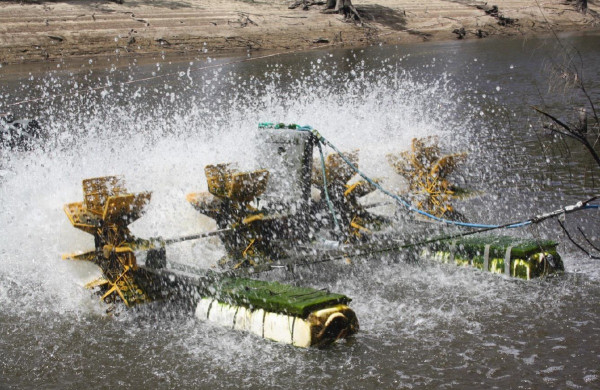
Two paddle wheel aerators will be used locally, while farmers and landholders have been encouraged to build their own.
A GoFundMe site had been set-up with more than $7500 raised.
The funds will be put towards new solar-powered aerators, fixing old aerators and help with power and fuel for volunteers to move aerators to the best locations.
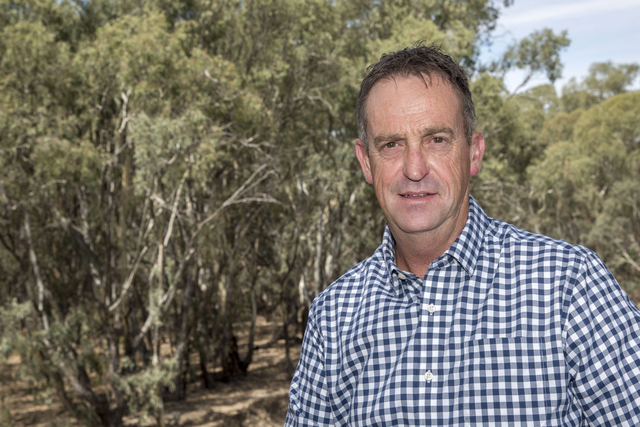
Western Murray Land Improvement Group executive officer Roger Knight said similar to 2010-11 and 2016-17, a hypoxic blackwater event is killing fish and other aquatic species.
“Behind the scenes there are many community members and agencies working hard to mitigate the impacts,” he said.
“The use of environmental flows to create refuge, Murray cray relocation, installation of purpose-built aerators and water quality testing, are among the solutions.
“High dissolved oxygen water is being redirected via numerous Murray Irrigation Limited (MIL) channel escapes to create safe areas for fish.
“The water is being provided by the Commonwealth Environmental Water Office with planning assistance from a range of agencies, MIL and local input from members of the Edward-Wakool Environmental Water Reference Group.
“A small volume (1030 ML/day) of water is being used at different points daily across a vast area into seven rivers and creeks where it will not exacerbate flooding impacts.”
He said from past events that wherever environmental water high in dissolved oxygen was delivered through irrigation escapes, there was not complete devastation of native fish.
“Fish congregate in the refuge area and migrate through the system again to breed after the hypoxic event,” Mr Knight said.
NSW Department of Primary Industries Fisheries staff have been transporting Murray crays to dedicated ponds built for up to 8000 crayfish.
When conditions improve, the crays will then be released back.
Generally, fish in very poor condition such as Murray cod do not survive when removed from a waterway.
Tim Betts, a farmer on the Wakool River near the Coonamit Bridge, recently built and installed a “punt aerator” made from an old farm gate and garden hose.
Over the past 12 years, Mr Betts has been refining aeration devices.
“If I save one fish, I’ll be happy,” he said. “My conscience doesn’t allow me to just sit here and do nothing.”
Mr Knight said now the punt aerator was pumping a considerable amount of oxygen into the water column near the bank where fish crustacea congregate, oxygen conditions will be “much improved”.
Charles Sturt University (CSU) researchers have been monitoring water quality in the region to inform decision-making on where to direct resources.
The CSU team will be monitoring the MIL escapes where environmental water is being used for the size of the refuge.
Information on water quality will also help understand the behaviours of aquatic life during hypoxic blackwater events.
“Aerators, no matter how simple or complex, play a strong role in supporting the survival rates of our aquatic life,” Mr Knight said.
“Aerators need power from either mains or a solar power source and must be moved regularly.
“Through generous support from the wider community, a few extra aerators have been offered for use, however, require some TLC to get ‘river ready’ again. People willing to help co-ordinate aerator deployment are needed.”
Agencies, philanthropists and individuals interested in providing funding to support the work can contact Western Murray Land Improvement Group at roger.knight@wmlig.org or 0487 455 511.