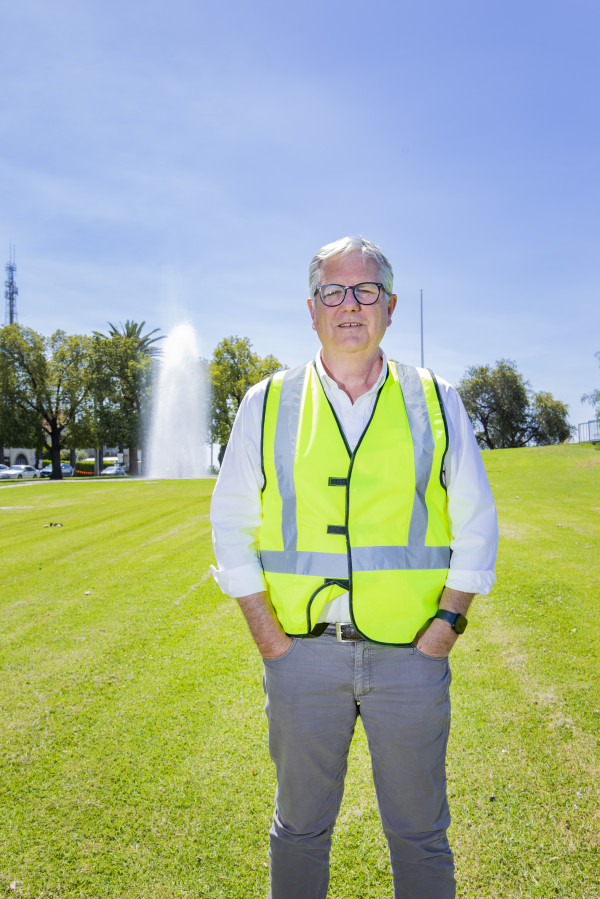
PAUL Thompson might be stepping away from the almond industry – but is not necessarily going quietly into the night.
In his decade at the helm of Select Harvests – with production areas spread from South Australia, through Sunraysia and into southern NSW – he has seen the company’s market capitalisation soar from $80 million to $600 million, with landholdings increasing from 2900ha to more than 9000ha and counting.
He left his role as president of SCA Australia, a manufacturer of sanitary products and tissues, to join Select Harvests as managing director and chief executive in July 2012.
And 10 years later, some of his parting words cut straight to the heart of all Australian agriculture – water, water and water.
Because Paul says Australia’s management of its water resources still leaves a lot to be desired: “Put plainly, it’s not ideal.
“And there’s little sign of it being any better for many years to come – there’s only one lot of water, but we have four governments arguing over it, agriculture simply must have a slice of it, the environmental argument has its place and how do you sort that out?
“In my experience it’s not how much water you want, it’s more what you do with it, and that can always be improved.
“But for the wider agricultural industry, let alone Select Harvests, to try to operate now and plan for the future, it becomes a challenge in the face of threatened government buybacks and changes of government and any impact that may have on the Murray-Darling Basin Plan.
“If I walked out of the industry and was asked what would I like to fix, it would be the whole water market structure.
“Right now it is being over-managed by those governments and their different rules and aspirations.
“If ever there was a case for centralisation, this is it, but that’s not going to happen.
“We’re talking about a national resource. My preference is for the market to sort itself out but there’s disproportionate power in the market. I think there’s too much focus on who’s winning, instead of creating a more efficient and fairer system.”
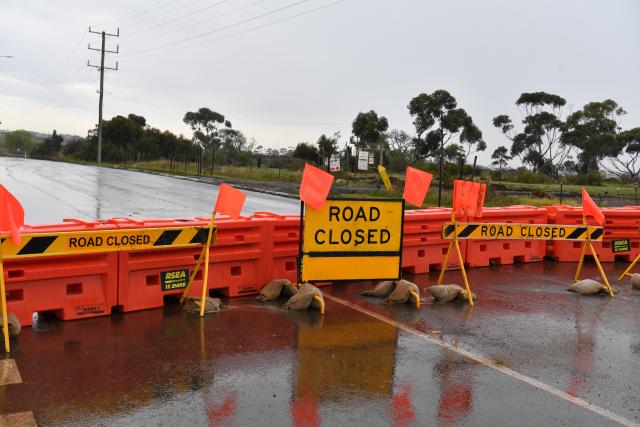
Paul also says water is on the agenda this week for different reasons – there’s too much of it and it’s headed his way.
The floods, which started at Benalla, Seymour, and Shepparton before spreading to Rochester, Echuca and now Robinvale and Mildura, have demanded some hectic crisis management.
Paul says that has ranged from levee banks on its south-western NSW properties, and around Robinvale, Euston, and Lake Cullulleraine to generators for pumps in SA in case there is a power blackout there.
“Competing with a flood is like playing chess. You have to be several moves ahead so when the moment arrives, you are as ready as you can be. In many ways dealing with a drought is much easier because with a drought you have the same conditions everywhere – but that doesn’t happen with a flood.
But at the grassroots level, Paul Thompson believes he not only leaves Select Harvests in better shape than when he became chief executive, he also leaves the communities in which it operates in better shape.
He is confident the business has “a new sense of direction, a sense of soul”.
“I see us having become an important citizen in our communities. Even in 2021, coming off the back of COVID in what had been a bad year for us, we were still supporting 23 local charities and organisations.
“With anywhere between 450 and 600 employees, depending on seasons, in our part of the world that means we impact on local towns, from numbers of children in classrooms to customers at local shops.”
The company’s growing workforce also has a rapidly changing profile as its embraces gender diversity, especially in executive roles, as well as its workforce profile, which is evolving from a traditionally strong European base to Pacific islanders and Asians.
All contribute, Paul says, to the stability of its workforce in a time of great change as the COVID era redefines the views of many people on employment.
Paul says he is leaving the industry (officially next June next year) with prices at similar levels to where they were when he started. Almonds have traded for about $7kg this year, compared to about $9 in 2019.
“The overhang from COVID has really hurt the almond industry globally. We’re a product that’s reliant on snacking and that’s reliant on people being out and about. And because people were spending time at home, we’re now working our way through a stockpile of inventory.
“The past 18 months have been very challenging: COVID, managing people who can’t travel, the current floods and the wet season has been extremely difficult.”
Select Harvests chairman Travis Dillon says under Paul’s watch the company has become a leading global integrated almond business.
“We have increased the capability and capacity of value-adding threefold. Today we generate a third of our energy internally and recycle by composting one-third of our annual biomass,” Travis says. “This now positions Select Harvests as one of the most competitive and environmentally sustainable almond growers in the world.”
Paul is analytical in his explanation of taking the job: “At the heart of it all I’m a marketer-businessman and I saw this business that had phenomenal macro growth in it. Select Harvests and the almond industry became misunderstood – post-drought and (the) Timbercorp collapse. All I saw was the opportunity.”
During his tenure, China has surpassed Europe as the biggest export market. But Paul sees all Asia welcoming Australian- grown nuts.
“China is a net food importer, and now the world’s biggest importer of almonds – and China and Asia are right on our doorstep and their demand exceeds our current production so there can only be upside here. We have no tariff on almonds into China, and many Asian cultures are strongly vegetarian based so a high-protein option such as our nuts is a natural fit with them.”
Next year he hands the reins to David Surveyor, current chief executive of New Zealand agribusiness Alliance Group.
“I’ve had an amazing decade in the industry. I’ve seen parts of Australia that I didn’t realise were so beautiful and productive and it’s a time and stage of the company where we’ve got to a certain point where someone else has to take it to the next platform,” Paul says.