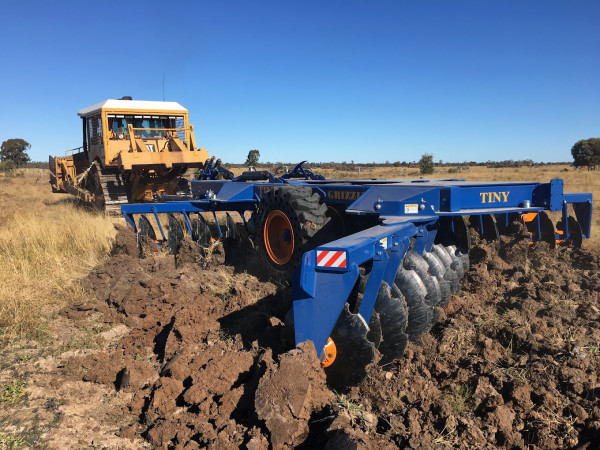
WITH the diversity of farming and the variability of conditions across Australia, Swan Hill’s Grizzly Engineering says accessibility to proven-to-work machinery so your farm thrives is essential.
A Grizzly spokesperson says deep ripping has been proved to increase yields for farmers, with data indicating yield gains between 75 and 92 per cent in recent WA studies.
Furthermore, anecdotal feedback from farmers who undertook testing in their paddocks suggested a return on investment between 10 per cent and 100 per cent with ripping.
Let’s get back to basics – what is ripping?
RIPPING, also known as deep tillage or deep ripping, is mechanically opening up or fracturing the subsoil.
Its purpose is to give your soil and crop better water infiltration, infuse a path deeper into the root-soil profile, give it access to better nutrients and give your crops access to moisture when required.
A common saying within the farming community is that ripping is all about increasing the size of your bucket.
This refers to improving the area where your crop can access the moisture, which means that you capture more water on rainfall events and store more water for longer between rainfall events.
Equipment used for deep ripping
WHEN choosing the right equipment for tillage, Grizzly manufacture and stock a range of designs and options that give your crops the proper access to moisture and nutrients. Some of the choices include: heavy-duty rippers, little jack hydraulic release, linkage heavy and deep tillage.
While Grizzly recommended not overthinking it, buyers should research ripping to increase their yields to ensure they get the correct type of machine for their part of the country and different types of soil to get the result they’re looking for.
Is ripping right for your farm?
EVERY farm is different, which means that deep ripping is not always the right choice for you.
Again, it depends on your soil type, and instead deep discing may give a better and speedier result than what is already being done or deep ripping. Deep discing and deep ripping can also be done as a combination.
Grizzly recommends you do this in the early summer months to allow rain or to help take the air out of the soil clods and melt them down.
This is a time when the soil fractures and there’s no smearing under the soil. Going through this process enable better seed to soil when it comes to sowing.
However again, it’s a must to know your farm and soil types to ensure the risks of any soil drift over the dryer summer months are minimised.
When considering what depth to rip to, you will find it unique to your farm, soil types and what you want to achieve.
However, it’s usually between 300mm to 600mm deep, which is considered a good general agricultural ripping depth.
It is deep enough for roots to access moisture and is relatively efficient to pull. If you find the soil is tight, you may be required to rip deeper over several years to improve soil health.
A word on trafficability
WHAT has your experience been with trafficability after deep ripping?
Grizzly says it cannot stress enough the importance of doing trials to prepare for a range of possible issues.
In high rainfall areas, you may find you need to be wary of tine spacing and depths because trafficability may be a problem if you need to access your paddock for spraying, sowing and spreading fertilizer.
This is where control traffic ripping comes into play and where tine spacing can be adjusted or tines removed to ensure you don’t rip out wheel tracks and maintain a hard surface to drive on.
If control traffic isn’t an option, it’s suggested to use wider tine spacing to enable firm areas between the rip marks.