By Mallee livestock production adviser MONICA LEY
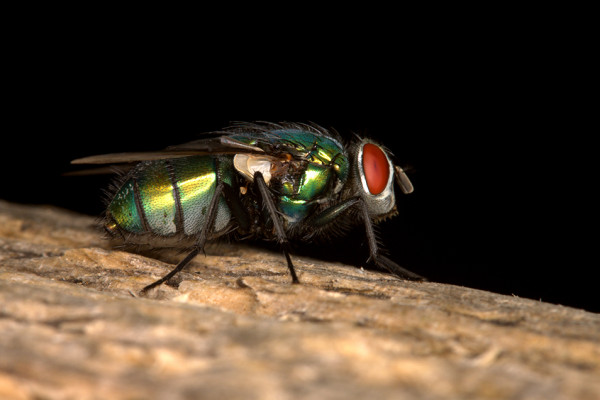
RECENT rainfall and warm temperatures have brought with them an increased risk of flystrike from the dreaded blowfly Lucilia cuprina.
Flystrike is the most important of all sheep ectoparasite diseases and is one of the most significant animal health considerations affecting the Australian sheep and wool industries.
Affected animals can experience an elevated temperature, rapid breathing and weight loss due to reduced appetite, and may eventually succumb to blood poisoning and die if left untreated.
Managing flystrike requires an integrated approach using a range of methods to greatly reduce the risk.
What are the ideal environmental conditions for flystrike?
• The presence of primary species (most commonly the Australian sheep blowfly)
• Ideal air temperatures between 17 and 38 degrees
• Recent rain – enough to keep suitable sites on the sheep moist for about three days
• There must be susceptible sheep with suitable sites (wrinkles, urine, faeces), which attract flies and sustain larvae
• Wind speeds below 9 km/h, giving flies the best opportunity to disperse
Treatment and management
OPTIMUM fly control greatly depends on farm management practices.
While producers can’t do much to control the weather conditions that flies thrive in, there are both treatment and management options available, and these are best used in an integrated approach.
The sheep industry is fortunate to have access to a range of insecticides for prevention and treatment of flystrike, with several methods of application, offering varying levels of protection.
When deciding on which treatment to use, consider how long you want coverage to last, the timing and method of the application, and of course any withholding period (WHP) or export slaughter interval (ESI) on products.
This is particularly important for terminal lambs or cull ewes.
It is important to rotate chemical groups within a flystrike season if more than one chemical application is required.
Integrating both early and late season treatments, alongside shearing and crutching in spring, early summer and autumn will further reduce susceptibility to flystrike and contribute to reducing fly numbers by limiting ideal sites for the adult blowfly to lay her eggs.
This in turn reduces the number of flies that can contribute to the fly population, which is in turn, a great preventative measure for the following season.
Monitoring for fly activity later in the season is still essential. Flocks may require additional treatment or management as flies can emerge from the soil with a sudden change to preferable weather conditions.
There are also long-term management strategies available which include shearing, crutching, strategic lambing dates, breach modification, breeding selection, as well as dag management to reduce risk.