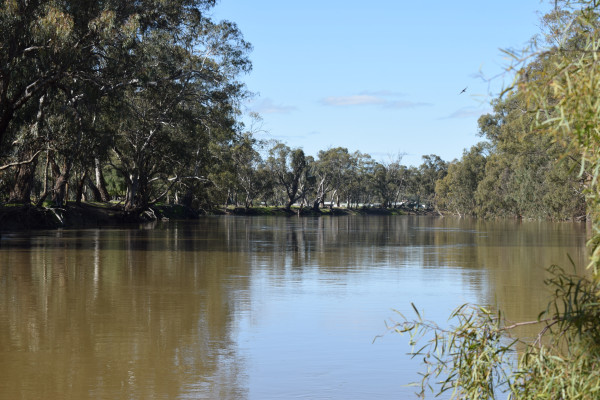
THE NSW Irrigators’ Council has launched a campaign calling on water ministers to move beyond the Murray-Darling Basin Plan’s “simplistic ‘just add more water’ approach”.
The council’s chief executive Claire Miller said the “focus, funding and sense of urgency” must shift.
“The biggest threats include invasive species like carp, habitat degradation, blocked fish passage, and cold-water pollution,” she said.
“Buying back more water from farmers won’t fix that.
“The 2100 billion litres recovered under the Plan so far is delivering many environmental benefits, but if these degradation drivers are not addressed, then just adding water will only ever be tinkering around the edges.”
Buybacks and infrastructure to improve farming efficiency will be central to the Federal Government’s plans to provide more water to the environment across the Murray-Darling Basin, Environment and Water Minister Tanya Plibersek confirmed last November.
She said water buybacks had to be on the agenda, especially as some farmers were voluntarily approaching the government to sell their water.
“It’s really important that buybacks are on the table, we’ll continue to look at other infrastructure projects to reduce demand on water across the Murray-Darling Basin,” she said.
“If there are unproductive areas of irrigation networks that irrigators want to close down or retire, we’ll look at proposals like that.”
The #BeyondBuybacks campaign comes as the Basin Ministerial Council plans to meet early this year to progress the implementation of the Murray-Darling Basin Plan.
“We’ve seen billions of dollars spent buying water, reducing the capacity to grow food and fibre, to survive droughts, and maintain a steady economic foundation to keep towns alive,” Ms Miller said.
“Where is the same sense of urgency and funding to address the key degradation drivers?
“Over-allocation was the big issue of the early 2000s, but with one in three litres of irrigation water now permanently out of production, reducing total diversions for irrigation, towns and other industries) to just 28 per cent of inflows, it’s time to get serious about fixing degradation drivers.”
Ms Miller added that under NSW law, irrigators were the last in line for water, with allocations low or zero during droughts, “so buying back irrigation water is not the silver bullet many think”.
“Buybacks are also not a cheap option when community socioeconomic impacts are accounted,” she said.
“Of course, water is important but it does not stand alone.
“We need an integrated catchment management approach, rather than just a water management approach.”