HEALTHY populations of beneficial insect can suppress pests.
Despite grain growers being keen to preserve these natural helpers, integrated pest management programs have been challenging, because there was no integrated, scientifically-proven guide explaining the impact commonly used insecticides have on beneficials.
Now as part of the Australian Grains Pest Innovation Program, an investment by the Grains Research and Development Corporation in partnership with Cesar Australia and the University of Melbourne, there is a guide for growers, agronomists and farm advisers in the Beneficials Chemical Toxicity Table.
Developed in consultation with grain growers and chemical industry representatives, the table summarises the impacts of various insecticidal and miticidal active ingredients on a range of beneficial insects, such as ladybird beetles, parasitoid wasps, predatory mites, lacewings and hoverflies.
The research focused on chemicals, field rates, growing environments, pests and beneficials specific to the grains industry, and this was the first time that such a guide had been developed for Australian broadacre cropping.
Since its initial publication in April 2022, this guide has been instrumental in helping growers make informed management decisions.
South Australian agronomist Hamish Verco said the toxicity guide had become a valuable reference tool in the field.
“I work in the organic/biological space, so my recommendations are often to avoid insecticides all together, but this is not always possible,” Mr Verco said.
“So, where growers must, it is great to empower them with knowledge on what products they can use that may have less effects on beneficials.”
The data collected on beneficial insects covers a wide range of species, which are presented in a consolidated grouped form in the table.
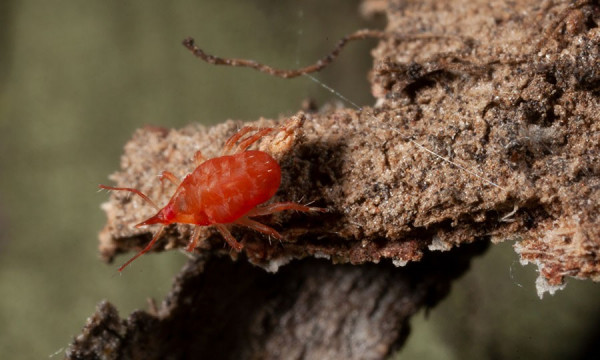
For example, recent findings on snout mites, which are important predators of the red-legged earth mite and lucerne flea, are now incorporated into the “predatory mites” category.
Overall toxicity ratings for each chemical have been determined by averaging the results across all insect species included.
Chemicals are arranged in ascending order of overall toxicity – the least toxic chemicals begin at the top of the table and progress downward toward the more toxic chemicals.
By utilising the Beneficials Chemical Toxicity Table, growers can make targeted spray decisions that minimise harm to essential beneficial insects and maximise biological control against a specific pest.
For instance, if a grower struggling with aphids has observed the presence of parasitoid wasps in their fields, they can opt for an insecticide that exhibits low toxicity towards the parasitoids.
Even if a grower doesn’t know which beneficials are present in their fields, the table can still be used to identify which pesticides have the lowest overall toxicity across all beneficial species, with a focus on hardy generalist predators such as rove beetles.
Check out the toxicity table at cesaraustralia.com/resources/beneficials-toxicity-table/