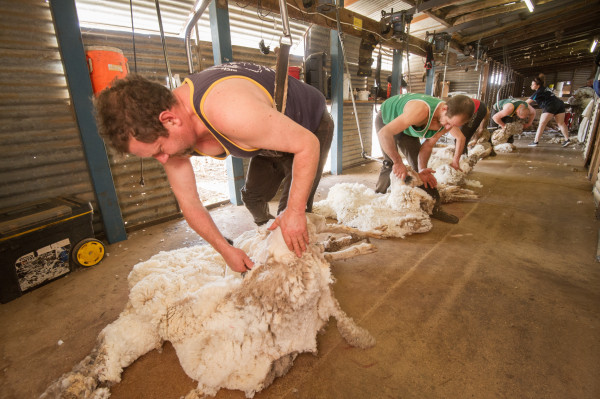
WOOLGROWERS can help preserve Australia’s reputation for producing a quality clip by being vigilant about preventing contamination.
Contamination can be a major issue for wool processors and can attract discounts if it is identified prior to the clip’s sale.
Examples include non-wool items, such as drink cans and clothing, that are inadvertently added to the wool bale in the shearing shed.
However, contamination also includes wool that has urine, dung or other stains, or wool with dark and medullated fibres.
At a recent meeting of the Joint Working Group, China raised the issue of clip preparation and contamination being found in Australian wool bales.
AWI chief executive John Roberts said the confidence of wool processors in the quality of Australian wool was of paramount importance to the industry.
He encouraged careful clip preparation.
“This will not only reduce the possibility of a discount on the price that individual woolgrowers receive, but will also help ensure that more general discounts are not incurred across the whole auction system,” Mr Roberts said.
“The Australian wool industry is committed to ensuring that its wool-harvesting workers are able to do their jobs in a professional manner, by providing valuable training to new workers it attracts into the industry and through ongoing training of existing staff.”
Woolgrowers should discuss strategies to prevent contamination with their wool classer and contractor before shearing.
Non-wool contaminants
HARD contaminants can cause major machinery breakdowns.
The most common hard contaminants found in pressed bales of wool are combs and cutters, screwdrivers, bale fasteners, bale hooks, small tools and drink cans.
Hard contamination is the easiest type to detect and care must be taken to ensure they do not end up in the bale.
The major soft non-wool contaminants include dog hair, clothing, towels, grease rags, general rubbish and vegetable matter.
Any polypropylene products – baling twine, old wool packs and fertiliser bags – are a particular problem.
When wool is processed, any non-wool fibres will break up into many single fibres that spread throughout the processing batch. These fibres can only be removed by hand picking in the fabric stage at great cost to the manufacturer.
The entire wool batch being processed – up to 10,000 kg – can be affected by one small piece of baling twine.
Wool contaminants
WOOL contaminants include urine or dung and other stains.
Stain is discolouration that has combined with the structure of the wool fibre. It is permanent and cannot be removed by scouring.
The intensity of the stain determines the dye colour needed to over-dye the stain, limiting its end use and reducing the value of the greasy wool.
The risk of contamination from urine stain can be greatly reduced by crutching sheep, ideally within three months of shearing.
Dark and medullated fibres in wool also affect processing performance and the quality of the final product.
Only small amounts of dark and medullated fibres are needed to contaminate wool. Just one staple of dark wool in one bale of white wool is sufficient to prevent that wool being used for light-coloured cloth or yarn.
Medullated fibres are hollow and do not take up dye, are very coarse and appear as white fibres in dyed garments.
Tips to eliminate contamination in the shed:
• Store tools, clothing, towels and shearing gear and bale branding supplies away from wool handling areas.
• Remove all poly products found.
• Never use fertiliser bags as bulk class bale dividers.
• Keep the wool press area, wool room, shearing board and sheep pens clean.
• Don’t eat in the wool handling areas.
• Use rubbish bins.
• Don’t let dogs camp in the wool areas.
• Any dark breeds or shedding breeds must be kept completely separate from Merinos and be shorn after all the Merinos are shorn.