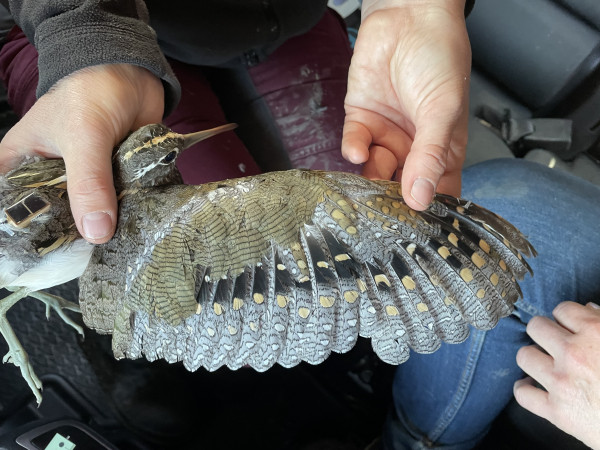
EXPERTS are one step closer to understanding the patterns of the “holy grail” of endangered Australian waterbirds after starting a tracking program in Balranald.
The Australian painted snipe, with an estimated remaining population of just 340, has rarely been spotted and before this month had never been tracked.
Thanks to the assistance of one local landholder, ornithologist Dr Matthew Herring and his team at Murray Wildlife were able to catch and track one of the “cryptic” birds.
Dr Herring said his team hit the road after a landholder let them know they had seen Australian painted snipes on his property.
“We’ve had a landholder in touch with us, prior to our catching, every day for about two weeks,” he said.
“This is one of these legendary landholders that really appreciate the wildlife that their properties support.
“The guy is actively involved in conservation, and he had around 25 Australian painted snipes on his property, from the start of October.
“That’s when we mobilised our tracking team to get out there and attempt our first catch.”
After roughing it out on the Balranald resident’s land, Dr Herring and his team were able to catch and track their first bird.
The bird was named Gloria, which Dr Herring explained was part of the community’s involvement in the work.
“We actually crowd-funded at the end of last year to have enough money to track the birds for the first time,” he said.
“Different donors were able to get naming rights through one of our crowd-funding rewards, so someone was able to name her Gloria.
“We are still pinching ourselves – this whole experience has been an absolute highlight of our careers.
“We only caught Gloria on Sunday morning, and she is already giving us insights that just weren’t possible before.”
Glimpses into the basic lives of the bird will allow ornithologists to learn more about the everyday lives of the Australian painted snipe.
“Now we can find out things like how nocturnal they are, and their eating patterns and how they roost,” Dr Herring said.
“We were able to speculate in the past, but for the first time we have real, hard data.
“We’re still getting our heads around the key threats to this species, because they’re poorly known we can’t pinpoint it down to any one thing.
“We think that the key threat, like to many other species, is related to habitat loss.
“It looks like the increasing severity and frequency of drought might be the No.1 issue for them.”
Dr Herring said that having more community members getting involved in conservation and learning about endangered species was vital to protecting our wildlife.
“Community support is critical and it’s one of the reasons why I’ve always been drawn to working with farmers,” he said.
“Species like the painted snipe rely on the Australian agricultural community.
“Don’t get me wrong, there’s some great reserves that have wetlands and they are really important, but the majority of wetlands still occur on private land.”