THE reintroduction of water buybacks would cause significant negative impacts on industries, economies and communities.
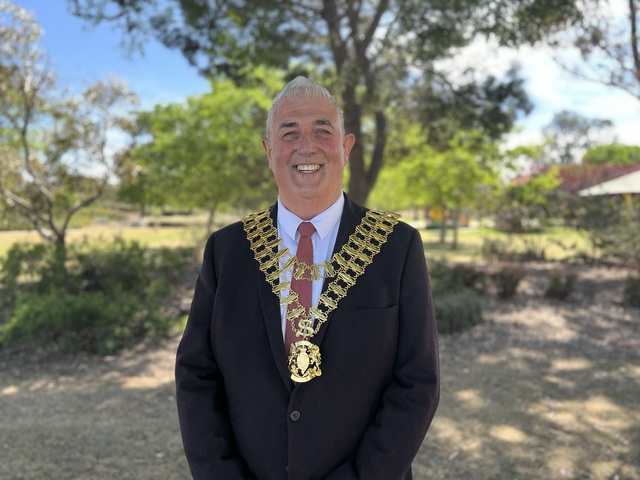
This was the key message delivered by Murray River Group of Councils chair Rob Amos at a public hearing for the inquiry into the Water Amendment (Restoring Our Rivers) Bill on Tuesday.
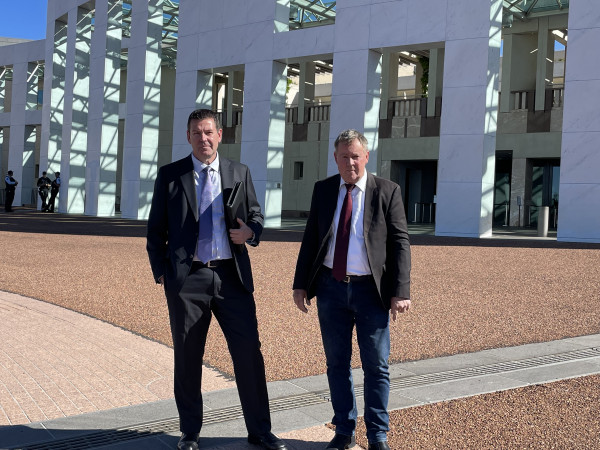
The visit to Parliament House comes as the MRGC, which comprises Campaspe, Gannawarra, Loddon, Moira, Mildura and Swan Hill, recently launched its #PushbackBuybacks campaign, aimed at stopping the Water Amendment Bill from becoming law.
Cr Amos said proposed changes under the Bill were inconsistent with the 2007 Water Act and the 2012 Murray-Darling Basin Plan, in which the Commonwealth and all basin states were in agreement.
“A key objective of the Water Act is ‘to promote the use and management of the basin water resources in a way that optimises economic, social and environmental outcomes’,” Cr Amos said.
“However, the new Water Amendment Bill seeks to remove the socioeconomic impact test from the basin plan implementation.
“To remove the socioeconomic impact test from the basin plan is like sticking your head in the sand and ignoring what the data and community is telling you about what happens in reality.”
Cr Amos said the Bill was “un-Australian” as it was in opposition to what the government was supposed to stand for.
“In his 2022 federal election victory speech, incoming Prime Minister Anthony Albanese declared two key principles upon which his government would be led – no one left behind and no one held back,” Cr Amos said.
“Now, in 2023, we find ourselves with a Bill that undermines the Prime Minister’s promise to the Australian people.
“That why the MRGC is urging all Australian parliamentarians to look beyond water recovery targets only and apply a triple-bottom-line (social, economic and environmental impacts) lens when considering how they vote on the upcoming Bill.”
The Productivity Commission’s implementation review this week acknowledged the MRGC’s concern about buybacks damaging communities.
In the commission’s report, the government was warned against buying large volumes of water in a short space of time, which risked disruption and significant socioeconomic impacts.
The commission urged “careful design and engagement with communities”.
“Future water recovery should take place alongside a commitment from basin governments to assist communities, where necessary and warranted, to transition to a future with less available water,” the review report said.
“Adjustment assistance should be based on the lessons – and learn from the mistakes – of past programs, and the regional economic context.”
However, the report also noted gross agricultural production in the basin increased by about 12 per cent between 2013 and 2018, a period when the volume of water used in irrigation decreased 16 per cent.