BASIN states and the Murray-Darling Basin Authority have been jointly celebrating 20 years since the “first step” decision to establish The Living Murray program.
A forerunner of the 2012 Murray-Darling Basin Plan, The Living Murray program was initiated in response to compelling evidence of severe and long-term decline in the health of the Murray River system.
MDBA chief executive Andrew McConville said the program had forged an enduring partnership between the Australian Government and basin state governments to restore and protect the river system.
“The Living Murray is about sharing responsibility to restore and sustain the vital natural assets along the river system, harnessing community, farming, industry, and government goodwill to do the right thing, which is in all our interests,” Mr McConville said.
“Over the life of the program, the health of special River Murray icon sites has improved through the addition of infrastructure, land and river management practices and the delivery of water for the environment,” he said.
“Twenty years ago, all icon sites were under stress, rated in ‘fair ecological condition’ or ‘need of attention’.
“Now, most sites are in ‘good’ or ‘excellent condition’, which goes to show that where there is a plan and sustained commitment we can make a difference and deliver rivers for generations.”
The New South Wales Department of Planning and Environment’s deputy secretary water Amanda Jones said TLM demonstrates the tangible environmental outcomes that can be achieved when state governments and the Australian Government work closely together.
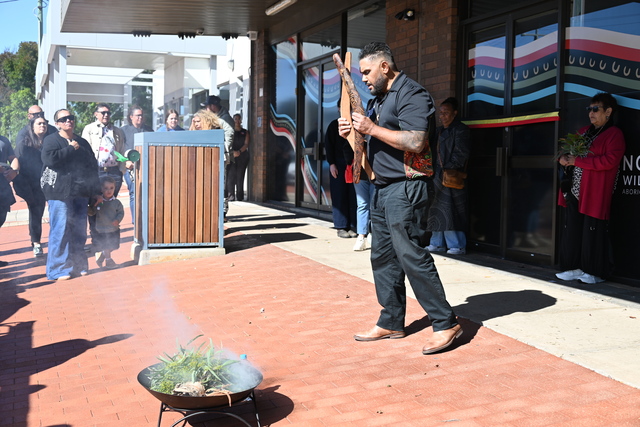
“This program would not be the success it is without the indigenous partnership and the role played by traditional owners to drive program priorities, undertake monitoring, cultural heritage and land management works on country,” Ms Jones said.
Victoria Department of Energy, Environment and Climate Action acting deputy secretary-water and catchments Andrew Fennessy said that in Victoria, environmental works were constructed at several sites funded by the Living Murray program, including Hattah Lakes and Gunbower Forest.
“This enabled about 12,000 hectares of high value floodplains to be watered with exactly the required flow patterns, even during droughts,” Mr Fennessy said.
“Victoria continues to look to protect our floodplains and wetlands through new projects such as the Victorian Murray Floodplain Restoration Project.”
South Australia Department for Environment and Water acting director of water infrastructure and operations Lisa Stribley said investment in The Living Murray has resulted in significant ecological improvements at the program’s icon sites in South Australia.
“The 20 years of continuous robust data collection both provides testament to the changing ecological conditions at the icon sites and highlights the positive outcomes of increased water delivery to these sites,” Ms Stribley said.
The Living Murray program sits inside the larger water reform journey under the basin plan to support healthy rivers and communities up and down the Murray-Darling system.
The Living Murray initiative arose from a major shift in thinking about river management: recognition that to achieve a healthy, functioning river system would require going beyond the cap and starting to return to the environment water that was previously taken out for consumptive purposes.
The practice of trying to prevent or reverse ecological damage by allocating and directing water flows for environmental purposes was not entirely new, but The Living Murray has taken environmental water management to a new level.
The Living Murray focuses on activities at key “icon sites” selected for their ecological and cultural significance.
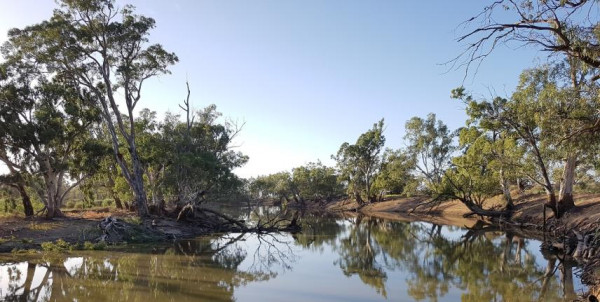
The sites encompass areas of high conservation value – the floodplains, wetlands and forests along the Murray, the Murray’s estuary and the river itself.
In 2003, the Murray-Darling Basin Ministerial Council announces The Living Murray First Step Decision to begin returning the Murray River to the status of a healthy, working river.
In November that year, the Ministerial Council announced what the “First Step” decision to invest $500 million over five years to recover 500 gigalitres for six “icon” sites along the Murray.
They included Barmah-Millewa Forest (just downstream of Tocumwal), Gunbower-Koondrook-Perricoota Forest, Hattah Lakes, Chowilla Floodplain and Lindsay-Wallpolla islands (spanning the border between South Australia, New South Wales and Victoria), the Lower Lakes, Coorong and Murray Mouth (near Goolwa in South Australia); and The River Murray Channel (running from near Albury to the sea).
See also: Hattah Lakes
https://www.theguardian.com.au/farming-and-environment/hattah-lakes