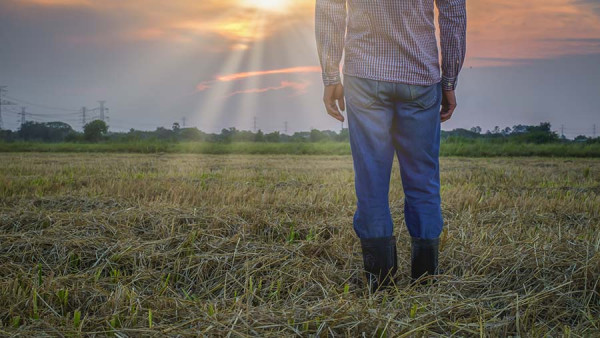
WITH areas in Victoria experiencing one of the coldest starts to winter in years, it is a chance to remind the community of the mental toll extreme weather conditions can have on farmers.
Farmers are constantly at the mercy of the weather and are expecting to deal with the effects of climate change a lot more in the future.
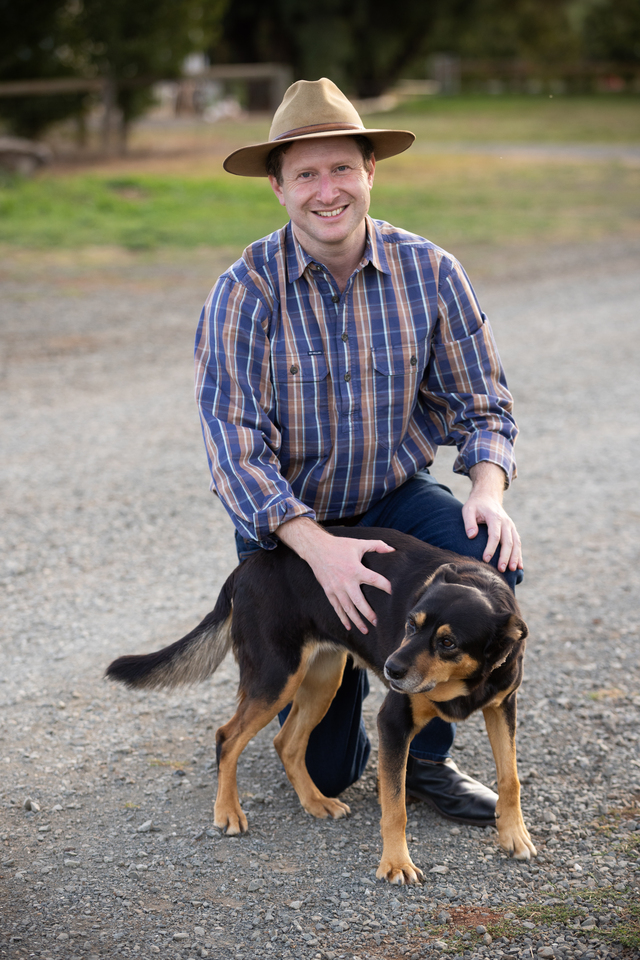
Quambatook fifth-generation grain farmer Brett Hosking said weather played a big part in his and his peers’ mental state.
“We know weather can affect anyone’s mental health on a daily basis, but when it affects your income, and your standard of living as well, then it certainly takes a bigger toll,” he said.
“It could be droughts or floods,” Mr Hosking said. “It could also be a severe frost event that takes away a lot of crops in one cold morning.”
The National Farmer Wellbeing Report released in 2023 highlighted weather conditions and natural disasters were at the top of the list of issues that triggered poor mental health for farmers.
“Sometimes droughts can be worse because you have more time to think about it,” Mr Hosking said. “As you wait it out, it sort of wears you down.
“Whereas with floods, there is a lot more happening since it’s a very busy period. You’re working hard to try and manage and protect what you’ve got, so you don’t have that that time alone with your thoughts as much.”
Mr Hosking’s daughter Grace, who helps on the family farm, said she could remember how the Millennium Drought affected her family when she was a child.
“I’m probably a bit naive to the full repercussions of that period, but in hindsight I can look back and I still remember little things, like being really conscious of how much water we were using.
“I can remember the grass not being as green, and I can remember my parents being quite stressed and kids leaving school because their families had to move away,” she said.
Ms Hosking said the effects of climate change on the farm were something she expected to deal with more in the future.
“Climate is the largest driver of productivity in Australian agriculture, so it does pose a really serious threat to the sector,” she said.
“In my involvement with the farm in the last 10 years, I’ve experienced some of the wettest years as well as some of the driest years.
“I guess the unpredictable nature of the environment that we farm in means that we’re going to have to continue to adapt to really extreme weather conditions.”
The National Farmer Wellbeing Report also found that 30 per cent of the farmers surveyed had thoughts of self-harm and suicide in Victoria and nearly half the farmers surveyed nationwide experienced these thoughts.
That figure is significantly higher than the national average.
Farmers also reported that financial stress and cost pressures were contributing to mental ill-health.
“Markets are also well beyond our control, because it’s a global marketplace,” Mr Hosking said.
“When someone in Russia declares war in the country next door to them, it impacts our markets and the price we get for them.
“We always try to manage what we can but there’s a lot that we can’t because it’s beyond our control.”
With harvest seasons getting longer, and many uncontrollable variables for farmers affecting their mental health, Mr Hosking said it was important farmers had access to schools, churches and sports clubs in their communities to prevent burnout and loneliness.
“These things are important in the good times but they are more important in the tough times.
“We don’t have the resources that larger metropolitan communities get to have when it comes to health services. Even something as simple as getting an appointment with your local doctor can take weeks, when you really need to talk to someone about how you’re feeling.
“We do see more virtual services like telehealth, which has been a great initiative in supporting rural communities, but on their own they are not enough.”
While Mr Hosking is expecting to face further challenges with technological developments changing farming industries and more extreme weather, he said he enjoyed farming because his entire family was involved.
“My kids also enjoy being on the farm, and are interested in what’s going on,” he said.
Ms Hosking is also senior manager of extension and communications at Birchip Cropping Group. She said she had more confidence to manage the farm in the future as she grew up there.
“I really look forward to it. I think it’s it’s kind of nice and a unique environment because when you grow up and get to experience life on the farm, it’s almost like training for it for a long time,” Ms Hosking said.
“It would allow me to work alongside my family and kind of contribute to something that’s been in our family for so long.”
Ms Hosking said she was glad there were now more initiatives in place for farmers to deal with extreme weather conditions, such as the Victorian Drought Resilience Adoption and Innovation Hub, which BCG works with.
“It allows BCG to consult with farmers on the ground around ways they can improve their drought preparedness for the next drought,” Ms Hosking said.
“It’s really important for farmers’ mental health to ensure they are supported in those periods.”
Ms Hosking said she was looking forward to embracing discussions about mental health at the BCG Main Field Day in Nullawil on September 11.
“I think there definitely still is a stigma associated. It’s a really complex issue and I think we’re doing better at it by talking about it now, and at events in the community to help overcome it,” Ms Hosking said.
The event will feature South Australian farmer Mark Modra speaking about surviving a farm accident.
Anyone requiring urgent help can call Lifeline’s 24-hour number, 13 11 14. For crisis support, call Beyond Blue, 1300 224 636,
headspace, 1800 650 890, Suicide Call Back Service, 1300 659 467, or MensLine Australia, 1300 789 978.