SWAN Hill Council has committed to working with the Victorian Government to ensure food security, given the municipality’s location as one of the state’s key food-production areas.
Swan Hill chief executive Scott Barber made a submission last month to the Legislative Council Legal and Social Issues Committee’s inquiry into food security in Victoria, which is considering the impacts, drivers of, and solutions for food security in Victoria.
Those impacts included the effect of food insecurity on physical and mental health, poverty and hardship and the options available to lower the cost of food and improve access to affordable, nutritious and culturally appropriate food.
Mr Barber said the council recommended the committee consider a reliable transport supply chain, timely and continuous access to ports for perishable foods, productive land availability to grow food, reliable water availability, value-adding to process food, workforce stability, ongoing consultation with the community to ensure that food cultural diversity was addressed, and the issue of regions with significant food producers being supported with infrastructure to continue to play a key role in food production.
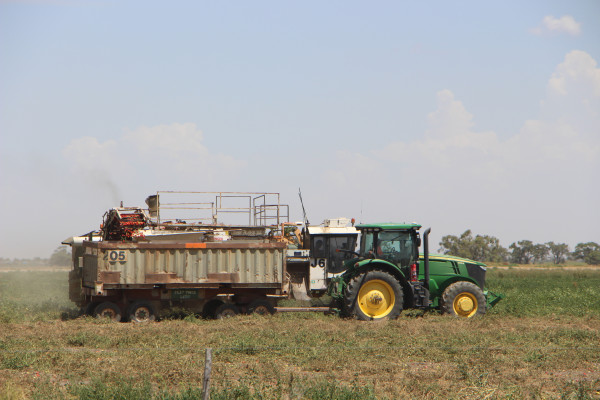
Mr Barber said agriculture comprised 20.3 per cent of the total economic output of the municipality, valued at $3 billion.
“Our municipality has a rich history in traditional farming, fruit and vegetable production, and the emergence of food industries such as almonds and olives, which has contributed significantly to the region being recognised as one of the state’s food bowls,” he said in the submission.
“There is great support for the terms of reference as they are critical factors in working towards food security.
“Council agrees that Australia needs its own food certainty, as the detrimental impacts on people both physically and mentally have been made clear as evidenced by the recent COVID-19 pandemic.
“The prospect of food shortages during the pandemic due to supply issues led to panic buying and the unavailability of basic food items, which led to a range of negative impacts on people.
“Recent bird flu outbreaks have challenged the availability of eggs, again highlighting the need for the State Government to have a whole-of-government approach when there is a real or perceived threat to food supplies.”
Mr Barber said being able to import and export food products was critical to ensure adequate access to food.
“The committee should be ensuring … the State Government continues investment into building the capacity for access to all of the state’s ports through an appropriate level of funding for infrastructure required, including upgrading roads and rail across the state,” he said.
“Timely and continuous access is critical for quality perishable products, particularly highly nutritious fruit and vegetables.”
The council’s submission emphasises the government’s planning process must “strike a balance” among the competing needs for access to suitable land.
“Within regional Victoria, there are emerging industries relating to renewable energy and mining that may have the capacity to impact on food production if not properly managed,” Mr Barber said.
“It points to the need for the committee to consider recommending the government have a clear overall plan that relates to all of the competing needs for land use to ensure that the right balance can be achieved so as to avoid a detrimental impact on food supply.
“It should be noted that council does not support the protection of non-viable land formerly used for irrigated agriculture, which has been left unproductive as a result of Federal Government water buybacks.
“Such land cannot produce agriculture without irrigation significantly supplementing rainfall.
“This land can be rezoned from farming land into rural use and residential land when requested by councils, to assist with the housing crisis.”
Mr Barber said Victoria needed to continue to be a major food producer and look to limit the reliance on importing food.
The submission also highlighted workforce, value-adding and food costs.
“One of the biggest threats to food security is a lack of people within the workforce to ensure that the food produced is harvested or processed to then go onto market,” Mr Barber said.
“Workforce shortages are being experienced right across a range of industries and the food industry is not immune to such threats.
“Recent discussions around the reduction in the number of overseas people being allowed to come and work in our country is a concern.
“The food industry, in particular, relies heavily on overseas workers and backpackers to take up additional jobs when the local labour market has been exhausted and therefore the committee needs to give serious consideration to the negative impact on food supply if the workforce is not in place to continue to produce food.”
Mr Barber said supermarket chains had the right to be profitable, however it should not come at the expense of vulnerable sections of the community who relied on basic food groups.
“It is clear that charity food providers are also under stress because of the increased demand on their services … the committee also needs to investigate how charity food providers can also be supported to provide food relief,” he said.
“Swan Hill Council is committed to working with the State Government to ensuring food security given our location as one of the state’s key food production areas and the development of a comprehensive ongoing plan … critical to the success of food security.”