IN a business built on ingenuity in recycling, Russell Calder has found a way to reuse a new waste product.
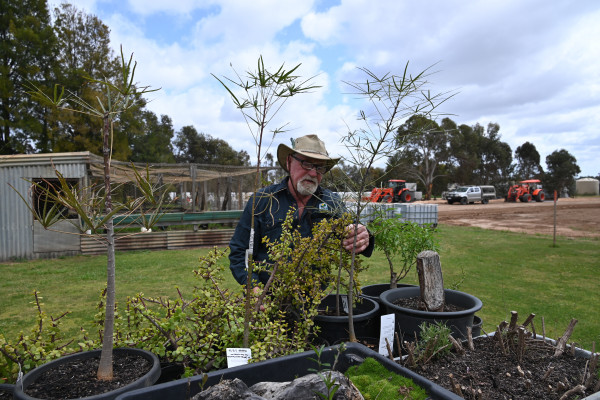
As the worm beds that have produced Calder Permaculture’s certified organic plant fertiliser for a decade are exhausted of their nutrients and swapped out for fresh compost, Mr Calder has returned to his roots to propagate and nurse plants.
“We’re recycling the spent compost as potting soil, getting a 60 per cent yield of carbon rich soil from the top of the beds,” he said.
“The other 40 per cent is a fine soil that is too moisture-rich for potting mixture that doesn’t allow the soil to drain.
“It’s a good problem to have.”
To support his new venture of growing his own trees out of the potting soil, Russell turned to Swan Hill Rural City Council for recycled pots, drums, trays and 1000 litre bulk containers.
“We’ve planted trees that we hope to propagate from in reused bulk containers, with the only waste materials coming from when we cut the top off the tubs,” Mr Calder said.
“The metal caging goes to the metal recycler.”
The program extends the life of the original product – manure from the stockyards and straw – even further and draws more local waste materials into Mr Calder’s circular economy.
“There’s no reason plant pots can’t be recycled, despite concerns over the years of spreading disease,” he said.
“I’ve been propagating for around 35 years, and I have never had a problem with disease using recycled pots.”
Council director of infrastructure Leah Johnston said the Parks and Gardens team immediately supported Mr Calder’s proposal.
“We are committed to discovering new ways to support sustainability and reduce our carbon footprint,” she said.
“This initiative directly addresses the plastic waste generated by our annual tree planting program.
“The repurposing of plastic items for planting is a practical solution to reducing landfill waste, and we are seeing tangible benefits from this collaboration.”
Mr Calder and his team will be nursing Queensland box and lemon scented gum seeds collected from the region under guidance of qualified council staff, with the purpose of replanting them around the municipality.
“Calder Permaculture’s innovative approach to reusing plastic items and incorporating sustainable practices into our programs is truly commendable,” Ms Johnston said.
Utilising both his original worm casting fertiliser and the new potting soil, as well as more recycled materials including an old fridge that acts as a greenhouse for seedlings, Mr Calder has many new seedlings on their way and is experimenting with grafting.
“The flame top maples have successfully grafted onto the bottle trees, which should make for a sturdier tree with incredible red foliage,” he said.