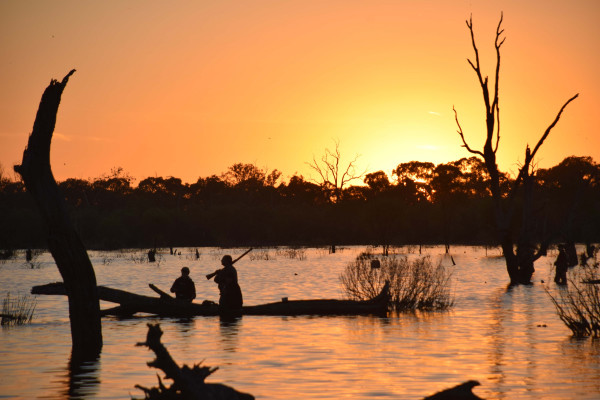
FAVOURABLE environmental and breeding conditions and more active hunters likely resulted in an increase in the number of ducks harvested last year, according to the game management regulator.
An estimated 391,900 game ducks were harvested in 2024, which was 22 per cent above the long-term average of 320,000, according to the Game Management Authority estimates of duck harvest report.
Of the 21,383 licensed duck hunters, 60 per cent actively hunted last year. On average, active duck hunters harvested an estimated 30.3 ducks during the season over an average 8.9 days.
The three most commonly harvested species were the Pacific Black Duck (39 per cent of the total harvest), Grey Teal (25 per cent) and Australian Wood Duck (24 per cent).
The most popular hunting areas, with the highest numbers of ducks harvested, were around Sale, Kerang, Boort, Horsham, and Shepparton.
GMA director of strategy and research Simon Toop said the research was based on information gathered from randomly selected licenced game bird hunters who voluntarily participated in the surveys.
“Favourable environmental and breeding conditions and more active hunters likely resulted in an increase in the number of ducks and quail harvested,” Mr Toop said.
“The information hunters provide helps build a stronger understanding of gamebird harvest trends and hunting activity in Victoria and I’d like to thank all hunters who participated in the surveys.”
Throughout last year, 3458 licenced game bird hunters were surveyed to collect information about their hunting activity, including how many game birds were harvested, where hunting occurred, hunting methods used, and the species of game birds harvested.
The report is produced annually by GMA in collaboration with an independent telephone survey company and the Arthur Rylah Institute for Environmental Research.
The Victorian Government was expected to reveal details of this year’s duck hunting arrangements before the end of the month.
Regional Victorians Opposed to Duck Shooting spokesperson Kerrie Allen slammed the data from GMA.
“GMA have been quick to release results of their voluntary hunter guesstimates, but they’ve totally failed to publish key facts pertinent to this season,” she said.
Ms Allen said the latest Eastern Australian Waterbird Aerial Survey showed duck numbers had “crashed”, with game species well below average.
She said the number of licensed duck shooters had also declined.
“The regulator has a peculiar way of demonstrating it is independent let alone takes sustainability seriously,” Ms Allen said.
“Hunting is permitted at over 50 per cent of Victoria’s public wetland area – most of it is unmonitored.
“This effectively locks out other recreational users like birdwatchers, kayakers, fishers and is just another drama regional landowners don’t need.
“Tourism Research Australia shows that Queensland and New South Wales are doing far better from tourism dollars … neither state allows recreational bird shooting, least of all in public areas.”
In respone, GMA chief executive Graeme Ford said the gamebird harvest survey was designed and analysed by experts, conducted by an independent research company, and “provides comprehensive data on annual harvest levels in Victoria”.
“The GMA conducts and commissions independent research to monitor game duck abundance to ensure hunting is sustainable,” he said.
The authority said the number of gamebird licence holders in Victoria had remained relatively steady, ranging between 21,000 and 24,000 during the past 10 years.