Trees provide shade, improve air quality, and enhance the beauty of a property, but sometimes they can become a safety hazard. A weakened or damaged tree can pose risks to people, buildings, and infrastructure, making tree removal the safest option. Here are some key signs that indicate a tree may need to be removed.
1. Visible Structural Damage
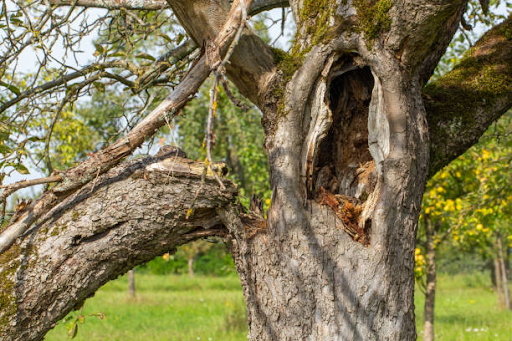
If a tree has large cracks, splits, or hollow areas in its trunk, it may be structurally unstable. Trees with significant internal decay often appear healthy on the outside, making professional inspection crucial. A weakened structure increases the risk of the tree falling unexpectedly.
2. Dead or Dying Branches
Dead branches, particularly in the upper parts of the tree, are a warning sign that the tree may be in decline. If more than 50% of the branches appear lifeless, the tree may not be able to recover and could become hazardous. Large dead limbs can fall during storms or high winds, posing a risk to people and property.
3. Leaning or Tilting Trees
A tree that suddenly starts leaning or appears unbalanced may indicate root damage or soil instability. While some trees naturally grow at an angle, a sudden change in position is a red flag that the tree’s stability is compromised. Immediate action may be necessary to prevent it from falling.
4. Fungal Growth at the Base
The presence of mushrooms or fungal growth around the tree’s base often signals internal decay. Certain fungi, such as bracket fungi, indicate that the tree’s structural integrity is compromised. If the tree has extensive rot, removal may be the safest option.
5. Root Damage
Tree roots are essential for stability and nutrient absorption. If roots become damaged due to construction, soil erosion, or disease, the tree may struggle to remain upright. Signs of root damage include thinning foliage, dead branches, and a leaning trunk.
6. Pest Infestation
Severe insect infestations, such as borers, termites, or beetles, can weaken a tree from the inside. If pests have extensively damaged the trunk or branches, the tree may become unstable. An arborist can assess whether treatment is possible or if removal is necessary.
7. Proximity to Structures or Power Lines
Trees that grow too close to homes, fences, or power lines can become a hazard. Overgrown branches can damage roofs and windows, while roots can disrupt foundations and underground utilities. In some cases, tree removal may be required to prevent property damage or electrical hazards.
8. Storm or Weather Damage
Severe storms can break branches, split trunks, or even uproot trees. If a tree has sustained major weather damage and poses a risk of falling, removal may be the best option to ensure safety.
Conclusion
Regular tree inspections and maintenance can help prevent accidents and property damage. If you notice any of these warning signs, consulting a professional arborist can determine whether the tree needs to be removed. Prioritising safety ensures that your property remains secure and well-maintained.