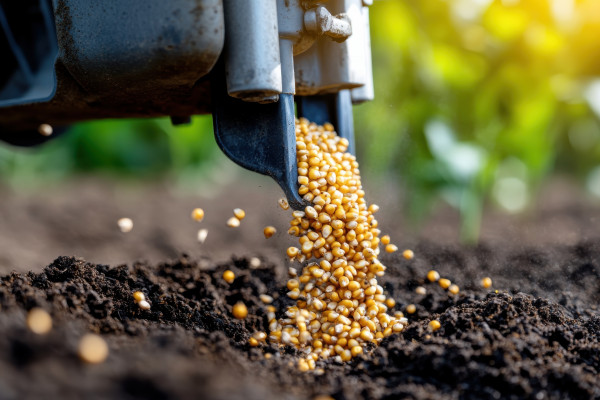
THE quality of seed at sowing is a critical component of a crop’s success.
While many crops in western Victoria were impacted by a dry finish and spring frosts last season, here in northern Victoria they were affected by rain during harvest.
Now is the time for farmers to run a germination test on seed retained from 2024 according to AgVic regional grains manager Felicity Pritchard.
She said to ensure your new crop has the best possible start, testing of retained seed allows you to assess its viability and to adjust sowing rates, particularly as frost and drought can impact seedling vigour and germination, often by between 20 per cent and a whopping 40 per cent.
“Ideally, weather (rain) damaged seed should not be used for sowing,” Ms Pritchard said.
“If your seed contains shot grain from weather damage or poor storage, a germination test will help you alter your sowing rate according to the seed viability.
“It will also help you determine if you need to obtain alternative seed.”
Seed kept for more than two seasons will generally have a lower germination percentage than fresh seed, as viability declines with age.
However, in some cases, two-year-old seed which has been stored well may be a better option than fresh seed of poor quality.
Ms Pritchard said home germination testing methods for cereals, pulses and canola are available on Agriculture Victoria’s website.
She said weather-damaged seed should ideally be tested in a laboratory for germination. Laboratories can also test for vigour, weed seeds and purity.
Some general rules of thumb to consider if using seed affected by frost, dry conditions or weather damage:
• If germination is 10 per cent lower, sowing rates will need to be increased by 10 per cent to attain a similar plant density.
• If only 5 per cent of cereal grain is shot, the seed is likely to be suitable for sowing without a major adjustment to the sowing rate.
• If 10 per cent of cereal grain is shot, the sowing rate should be increased by 10 per cent and so on, up to a maximum of 20 per cent shot grain.
“Pulse and cereal seed are suitable for sowing if the germination is above 80 per cent but cereal seed with less than 70 per cent germination should not be used for sowing,” Ms Pritchard explained.
“If the result is between 70–80 per cent, germination should be tested in a laboratory. For canola, 85 per cent germination is considered the minimum.
“Grade your seed batch to remove the smaller seeds, as larger seeds emerge faster and produce vigorous and more resilient seedlings.
“Remove any shrivelled or damaged seed, weed seeds, diseased seeds and any other impurities.”
She said growers must also be aware some seed treatments can affect seedling emergence, especially when sown deep.
If seed has already been stressed by frost or a dry season, it’s best to choose a treatment that is ‘soft’ on the seed.
A soft treatment is one that does not negatively affect germination or slow coleoptile or hypocotyl growth.
The coleoptile is the sheath surrounding the first leaf of a cereal and the hypocotyl is the stem of an emerging canola plant.
A range of accredited laboratories provide germination, vigour and weed seed testing.
For seedborne disease testing, contact Crop Health Services, Agriculture Victoria on 9032 7515 or email CHS.reception@agriculture.vic.gov.au
Read more farming stories at https://www.northwestfarmer.com.au/