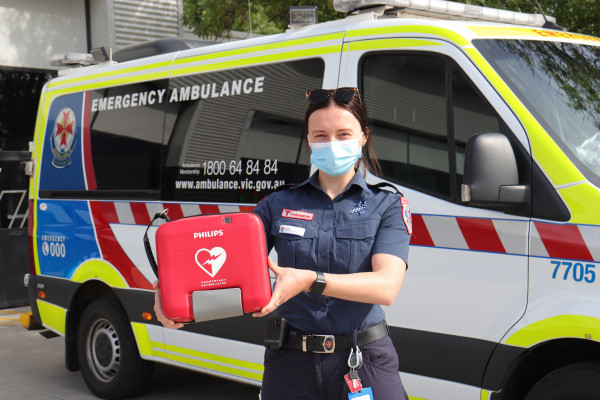
SWAN Hill paramedic Karla Allen says the cardiac arrest survival rate was halved during COVID-19 lockdowns as people were cooped up at home.
Ambulance Victoria (AV) has urged people to learn CPR and sign up as a GoodSAM responder as Victoria begins to open again.
During the month of October, AV is running a “Shocktober” campaign aimed at improving cardiac arrest survival rates.
“This campaign is very important because everyday about 18 Victorians will suffer a cardiac arrest and only one in 10 will survive,” Ms Allen said.
“Of these cases, 76 per cent occur at home, so it’s massively important for our community to be familiar with the signs of cardiac arrest and what you need to do as a bystander.”
GoodSAM is a life-saving app that connects patients in cardiac arrest with a nearby volunteer who is willing to start hands-only CPR while an ambulance was on the way.
More than 50 Victorians are alive today after receiving early CPR from GoodSAM responders.
Ms Allen said you don’t need to be a paramedic to be a lifesaver — you just have to be over 18 and willing to give hands-only CPR.
She said more people were learning how to perform CPR and use an Automated External Defibrillator (AED), but there were never enough people learning.
“The GoodSAM app has about 15,000 responders which is incredible and more people are putting their hands out and saying they know CPR,” she said.
“As paramedics in Swan Hill, we are going out and help people learn CPR and a lot more organisations, such as St John’s, that are helping as well.”
Ms Allen said there was a growing list of publicly accessible defibrillators.
“When you sign up for the app, it actually tells you how many there are around you, in about a 5km radius,” she said.
“If a bystander acts and calls triple zero, and uses an AED, it increases the chances of survival of cardiac arrest by 72 per cent … it’s an incredible machine.”
Ms Allen said alarming research led AV found rates of cardiac arrest survival decreased by up to 50 per cent during lockdowns.
It found paramedics were taking an extra two minutes to arrive at the scene under strict coronavirus protocols, including putting on full personal protective equipment such as face masks, gloves and gowns, blowing out emergency response times.
Before the COVID-19 pandemic, paramedics arrived within eight minutes of a triple zero call, but this has increased to 10 minutes, delaying the use of defibrillators to deliver lifesaving shocks to people in cardiac distress.
The research showed soaring numbers of Victorians were going into cardiac arrest in their homes, and more people were dying at home or shortly after arrival at hospital.
The spike in deaths has been linked to a sharp decline in bystanders performing CPR on the street and a lack of access to the state’s more than 6500 public defibrillators which are stored in shuttered schools, offices, sporting clubs and shopping centres.
Ms Allen urged anyone experiencing chest pains or heart palpitations to call for an ambulance immediately.
“It can happen to anyone, whether they have cardiac history or not — it doesn’t discriminate,” she said.
“People think it’s older members in the community that will suffer, but it affects kids, women, men — anyone really.”
AV will hold a Facebook livestream event on October 20 to demonstrate how to perform CPR, use an AED and the GoodSAM app.
For information about the GoodSAM app and how to sign up, visit heartrestarter.com.au.
To learn how to do CPR and use an AED, visit ambulance.vic.gov.au.