THE Victorian Government says it will maintain “enhanced” quarantine arrangements for overseas travellers to protect the state from the new Omicron COVID-19 variant “until more is known about the strain”.
The measures – also implemented by New South Wales – were in line with additional national border security measures from the Federal Government and were a precautionary response to Omicron.
There are no known cases of the Omicron variant reported in Victoria.
In line with the Australian Government’s measures, all travellers arriving in Victoria who have visited South Africa, Lesotho, Botswana, Zimbabwe, Mozambique, Namibia, Eswatini and Malawi during the 14-day period before their arrival must enter hotel quarantine for 14 days – regardless of their vaccination status.
Continuing measures announced on Sunday, all other overseas travellers must complete a PCR test and isolate for a full 72 hours at a nominated address or accommodation.
Travellers may exit isolation after 72 hours and following a negative PCR test. Travellers must also complete an additional PCR test between days five to seven after arrival.
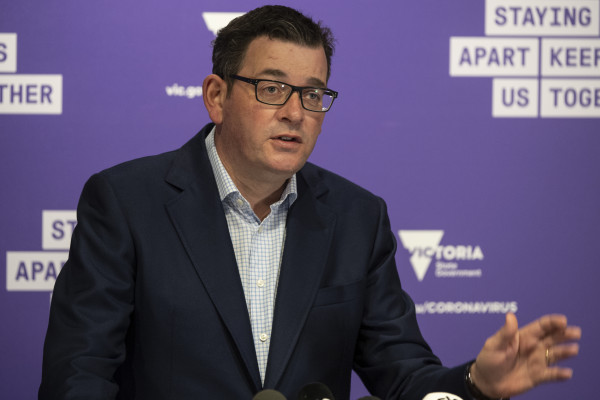
“The last couple of days have shown us that this isn’t over, and our response needs to be nimble,” Mr Andrews said.
“We’re taking proportionate, precautionary steps to keep Victorians safe until we know more about Omicron and the risks it poses to our community.”
Victoria recorded 1419 new cases yesterday and 10 deaths.
There were four active cases in the Swan Hill local government area.
There were 288 people in hospital, 41 in ICU and 20 on a ventilator.
Victoria’s Chief Health Officer Professor Brett Sutton said it was still in “very early days of understanding this variant of concern”.
“It clearly seems to be out-competing the Delta variant in Southern Africa,” Prof Sutton said.
“This may be due to higher effectiveness in transmission, immune escape or, perhaps most likely, a bit of both.
“In any case, that’s a strong reason to watch it very closely and urgently understand more.
“It’s clearly been seen in both (double) vaccinated individuals and in those with previous infection, but we don’t know if that’s more likely yet with Omicron than with other variants.
“With so many mutations of the spike protein, immune escape is possible.”
Prof Sutton said current vaccines were still likely to provide protection, but that was the biggest question to resolve with likely more known in coming weeks.
“Is it more severe? Again, a lot said but no real indications at all at this stage,” he said.
“We shouldn’t assume it’s very mild, or more severe.
“What we do know, is that getting vaccinated is as important as ever, and that getting a booster is urgent.
“Don’t delay if you’re already due. And importantly, there are many other things to do right now to reduce your risk, for this or any variant.”
Prof Sutton urged people to wear a mask in public indoor spaces and anywhere people couldn’t physically distance.
“Live an outdoors life where you can – for coffee, or chat, or whatever.”