LOCAL farmers have been able to get their hands on a crucial supply of rapid antigen tests (RATs) thanks to a joint initiative from the Victorian Farmers Federation (VFF), Food and Fibre Gippsland and Fruit Growers Victoria.
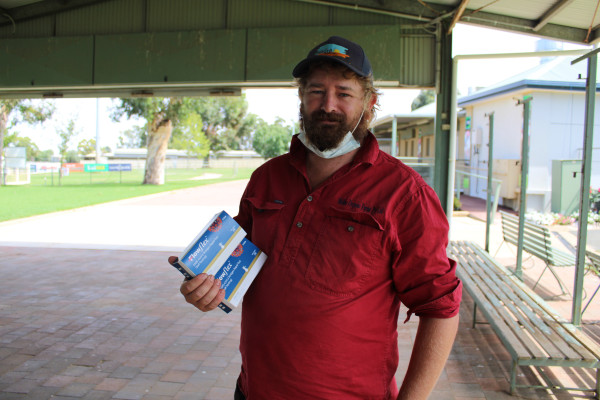
In Swan Hill on Tuesday, around 30 different farmers were able to get a supply of RATs which was organised to try and minimise the disruption to essential food supply chains which have been impacted due to the recent outbreak of Covid.
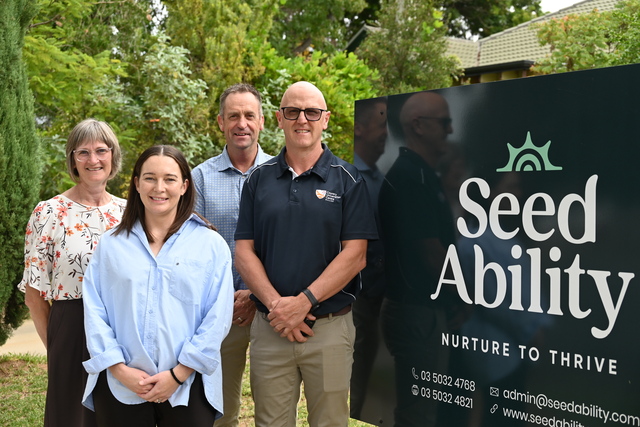
Farmers from Manangatang, Sea Lake and Mildura were just some of the recipients of the RATs as was Nathan Free who is a fourth generation farmer from Lake Boga and VFF Horticulture President.
“It is important to get these supplies for our business and allow for continuity for our employees and contractors,” he said.
“It will allow us to keep on top of things and look after our people.”
With over 30 employees, Mr Free has already had his business impacted by staff needing to isolate after having a Covid test, with the shortage of workers further impacted when workers are stuck in isolation.
State wide over 56000 RATs are being distributed to farmers with VFF President Emma Germano saying that they have received an overwhelming response from people looking to get their hands on some much needed supplies.
“Our industry as well as many others have been crying out for RATs for months,” she said.
“We decided to get on the front foot and secure a supply of tests ourselves.”
Industry experts and farmers have been voicing their concerns for months regarding the new isolation directives which were intended to ease pressure on supply chains, with them claiming that it simply won’t work.
“The response has been enormous as we’ve had over 56000 orders within two days from literally every corner of Victoria,” Ms Germano said.
“Our ability to get it done despite a number of frustrating delays goes towards ensuring our industry continues to operate.”
Quite a lot of effort has gone into the securement and distribution of the orders, with Ms Germano highlighting the willingness to work together to reach an outcome which will help out all parties.
“In two weeks the tests have landed in Sydney and been driven down to Victoria to be distributed out to 24 towns across the state,” she said.
“We’ve dubbed it the ‘rat race’”.
The VFF, Food and Fibre Gippsland and Fruit Growers Victoria worked together to secure the supply of RATs from HiCraft Safety, which the farmers were able to purchase at a fair price with a small fee added to cover distribution costs.
Meanwhile, complaints to Australia’s consumer watchdog over spiking RAT costs have continued to soar despite probes into prices at pharmacies and supermarkets.
The Australian Competition and Consumer Commission (ACCC) has received almost 4000 reports from consumers about prices being charged for RATs around the country between December 25 last year and January 26 amid spiking demand for the tests as Omicron cases surged.
Pharmacies are reportedly the biggest culprits for price hikes with 34 per cent, or 1309, complaints made about the sector since Christmas.
More than 781 complaints have been made about petrol stations such as BP, while the watchdog received 764 complaints about supermarkets and tobacconists including IGA stores.
The complaints surged amid tip-offs that rapid tests were being illegally resold without being properly tested for use in Australia.
Almost 95 per cent of the complaints were about the price of rapid antigen tests, with some reports alleging single tests in some stores were being sold for $30 each.
ACCC chair Rod Sims said businesses caught price gouging on rapid tests would be named and shamed because the high number of complaints showed the community were concerned about the cost and quality of the rapid tests available.
“Community concerns about sales practices for rapid antigen tests remain very high, for good reason,” Mr Sims said.
“Businesses now know we will be in touch very quickly if they choose to impose unjustifiably high mark-ups on rapid antigen tests, or make misleading statements to consumers.”
The average cost of a rapid test has reportedly sat at about $24 since January 12.
“While $20 retail prices remain lower than the more extreme reports received by the ACCC, this is still an unusually high mark-up that in our view is very difficult to justify,” Mr Sims said.