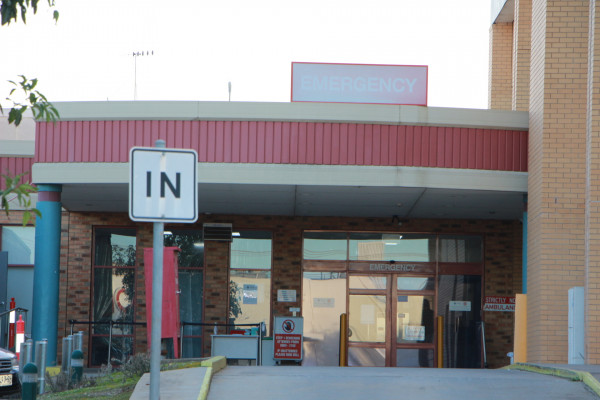
STAY away from the Swan Hill emergency department (ED) unless it’s a genuine emergency.
That’s the message as a perfect storm of surging ED presentations, their complexity and staff sick leave puts pressure on Swan Hill District Health in flu season.
SHDH has turned to Facebook in the past two months, as recently as the first day of winter on Wednesday, urging people to stay away if avoidable due to the department “bursting at the seams”.
“Please remember the ED is for emergencies. If you are feeling unwell but it is not an emergency, we ask that you please call NURSE-ON-CALL on 1300 60 60 24. This service is able to provide immediate health advice from registered nurses and is available 24/7, or contact your GP for any non-urgent health concerns,” the post advised.
“We ask that you consider your health needs carefully particularly if you are experiencing cold and flu symptoms. These symptoms can generally be managed in the comfort of your home with pain relief, fluid and rest.
“We would like to advise our community that if you do need to attend ED, then you may experience long waits for treatment.”
SHDH chief executive Peter Abraham said the lifting of COVID restrictions in recent months had seen increased activity in the community, leading to an increase in influenza cases.
Over the past two years, Victoria has reported very low flu numbers, but Mr Abraham said they were bracing for a spike this year and expected services at the hospital to be stretched.
“These presentations are for lots of respiratory illnesses that are higher complexity, what we call third care COVID people, who haven’t been able to get into GPs because they have been smashed and busy,” he said.
“They haven’t been able to get the care they needed or just stayed away so it’s typically more complex presentations coming through.”
Mr Abraham said presentation numbers had only slightly increased.
“Our average is about 55 to 60 people coming through our ED each day. We have had some recent peaks of about 70, even up to 80 patients in one day, which does put a lot of strain on our service and the ED is not the best quality standard facility you could walk into,” he said.
“It’s more about the complexity of the care, so what we call category two and three that are higher complex cases, more intensive support when in ED. In those numbers, they have increased which puts pressure on the patient flow.
“Staff are impacted, no doubt, with schools back and community activity at such a high level, sick leave is clearly very high for us and it is placing very real pressure on our staff, shift-by-shift, to be able to continue to service all the different areas we need to.
“There is no doubt the ED is the front door and when people can’t access services elsewhere or need support, they come to the ED and I think that is a really difficult discussion because the emergency department is for emergencies and there are a lot of very unwell people in the community from influenza and many other issues and that balance then for people who need what we would call some primary health support and how they access that is difficult.
“Certainly, the pressure on the emergency department has a flow-on impact through the hospital.”
Mr Abraham said the health service was also “suffering significantly” from staff shortages.
“Staff are tired, exhausted and been working 12-hour shifts,” he said.
“Many nurses have left the profession because they’ve just had enough.
“It’s been really challenging to find the workforce when we are being strangled by bigger health services … every hospital in Australia, in the world, is in the same position.”
Mr Abraham said that fewer nurses meant SHDH had to limit beds available in the acute ward, which created a backlog into ED, patients waiting to get into beds or being transported out of Swan Hill to another hospital that has the same problem.
“There has been a real patient flow problem, in that it has slowed down. We usually admit about six patients per day into hospital beds, which is great, low number. We need to find six beds and operating theatre beds, then make sure we have the flow moving, ensuring people are safe to go home – that’s been a challenge,” he said.
“That’s why you see that push on social media to say if you don’t need to come to ED, if you have a sniffle and can’t get into the GP, maybe wait until we are less busy or ask can it wait for that GP appointment.
“If the NURSE-ON-CALL instructs you to present to ED, then do so, but it could be a six-hour wait, so it might be worth coming back the next day if well enough to do so.”
Mr Abraham commended the community for adhering to the hospital’s pleas.
“Number haven’t been significantly higher a a result, just the complexity of cases means patients have to stay longer in ED,” he said.
“It’s a frustrating system at the moment because people are waiting for beds everywhere, delays in care everywhere.
“Right now the ED is bursting at the seams, but people who need care are being cared for.
“Our biggest risk is having a scenario where ambulances are ramping, which hasn’t happened with us, but we don’t want that happening and people deteriorating without being seen is our main concern.”
Mr Abraham said that on any one day the service had 20 staff on sick leave, but not all COVID-related.
“We do have COVID in the community and within our staff and currently look after COVID patients,” he said.
“Mostly staff are tired and also getting sick, getting the flu and needing personal leave to sort thing out .. they need holidays, they are generally just run down with 12-hour shifts, sometimes seven day a week.
“It’s really tough going and I don’t see light at the end of the tunnel in a hurry either.”
– NURSE-ON-CALL puts you directly in touch with a registered nurse for caring, professional health advice around the clock.
– Call 1300 60 60 24 from anywhere in Victoria for free health advice, 24 hours a day.
– If you think your situation is an emergency, you should always call 000 or go to an emergency department at a hospital.
What happens when I call NURSE-ON-CALL?
Step 1 — A registered nurse will answer your call and collect some basic information about you and the reason for your call.
Step 2 — The nurse will then ask you a series of questions about your symptoms and other issues relating to your health.
Step 3 — At the end of the call, the nurse may suggest ways you can care for yourself, advise you to contact a GP or, if your condition is very serious, transfer the call to triple zero (000). Nurses do not diagnose and cannot provide a diagnosis.