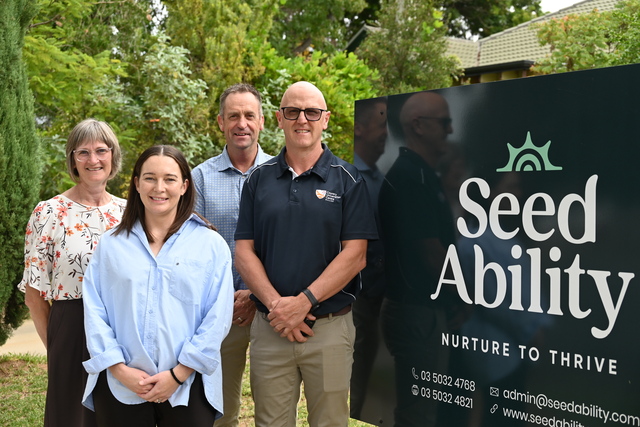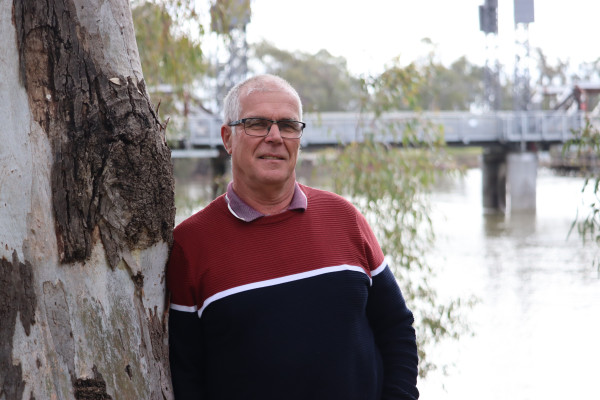
AS a Swan Hill councillor, Les McPhee is loud and proud of his community.
He defends it, but he recently had to fight his own battle – a personal one that he hasn’t shared publicly until now.
“Anything that is related to cancer is a bit of a shock, but after speaking with the doctor he assured me,” Mr McPhee told The Guardian about his prostate cancer fight.
“It’s just making sure we get checked regularly and catch these in the early stages – which I did.”
It comes as new data revealed prostate cancer diagnoses have reached a crisis point.
It is now the most common cancer diagnosed in Australia, overtaking breast cancer as the country’s moat prevalent cancer.
Testing guidelines are based on outdated data and are likely contributing to the deaths of an increasing number of men.
New data from the Australian Institute of Health and Welfare estimates 24,217 Australian men will be diagnosed with prostate cancer this year, compared to 20,640 women diagnosed with breast cancer.
Mr McPhee was able to undergo a treatment process after his GP detected the cancer at an early stage last year.
“There are lots of ways it can be treated,” he said.
“When the urologist was talking to me about it, he said there was a scale from one to five, and if you were to be diagnosed with prostate cancer, number one was good.
“That in itself makes you feel reassured, but then we still had to work through what the best treatment was.”
Mr McPhee’s life was thrown into uncertainty when he underwent a regular blood test at his local GP.
“The Prostate-Specific Antigen (PSA) levels gave the GP an indication, then I was sent to the urologist in Bendigo where I had to have a scan and a biopsy was taken to determine the type of cancer the best type of treatment.”
The retired police officer underwent brachytherapy – a type of internal radiation therapy that is often used to treat cancers – in Melbourne.
“They inserted 64 seeds into the prostate which continued to emit radiation and destroy the cancer,” he said.
“I have a check-up every three months and the PSA levels have now dropped right down and the cancer has reduced.”
Mr McPhee was certain early detection saved his life, and he urged other men to follow his lead.
“I have to stress that having tests done regularly mean early detection increases the survival rate,” he said.
“After you turn 50, it’s important to get tests done.
“Males are very bad at listening to their bodies and taking notice of signs, w have to get better at that.
“We take our cars to the mechanic when they need surviving, so it’s not different to taking our bodies to the GP to be serviced.”
Mr McPhee said he had friends wheare booking into their local GPs to be screened.
“I know mates who have since told me about their prostate cancer journey. Some men have had their prostates removed and are living healthy lives,” he said.
Prostate Cancer Foundation of Australia (PCFA) chief of mission and head of research Professor Jeff Dunn AO said prostate cancer accounts for more hospital admissions than any other type of cancer in the country.
He said greater awareness would be key to reducing deaths from the disease.
“PCFA surveys have found that 75 per cent of Australians do not know the PSA test guidelines, an alarmingly high level of unawareness that impedes early detection and diminishes population-wide survival prospects,” Prof Dunn said.
“If we can diagnose all men at the earliest stage and ensure they have access to new medicines and care, we can beat this disease. For men with a family history of disease, we need to give much clearer guidance about their risks and screening options.
“If we don’t step up and take action, Australian men will continue to die unnecessarily.”