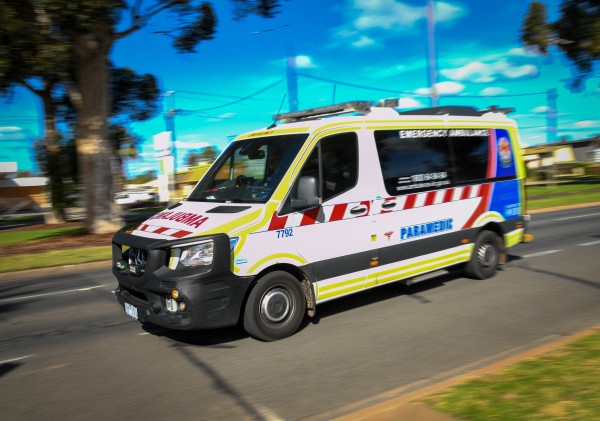
THERE are no signs ambulance response times will improve anytime soon, according to Ambulance Victoria, as Swan Hill records its slowest response time in years.
COVID-19 and the associated pressures on the health system is said to be behind the local and statewide delays, with the Omicron variant and health staff absences further adding to the soaring demand for ambulances.
During the April to June quarter, Swan Hill paramedics attended 319 call-outs, eight fewer than the previous period.
However 61.1 per cent of code 1 or priority cases were responded to in less than 15 minutes, compared to 67.6 per cent from January to March this year.
Ambulance Victoria’s target is for paramedics to respond to 90 per cent of critical incidents within 15 minutes.
The latest statistics put the average local response time for ambulances at 17 minutes, 21 seconds.
Across the state it was a similar story, with 64 per cent of code 1 cases responded to within 15 minutes, falling well short of the 85 per cent target.
However the statewide average response time came in at 15 minutes and 49 seconds.
Ambulance Victoria missed its code 1 response targets in every council area last quarter, with four out of five patients in the state’s worst region waiting longer than the benchmark.
Loddon Shire was in the five worst-performing local government areas, with results ranging from 27 to 30 per cent.
Paramedics responded to 135 call-outs in the neighbouring council area, reaching 27.4 per cent of cases in less than 15 minutes.
The average response time in Buloke Shire was more than 30 minutes.
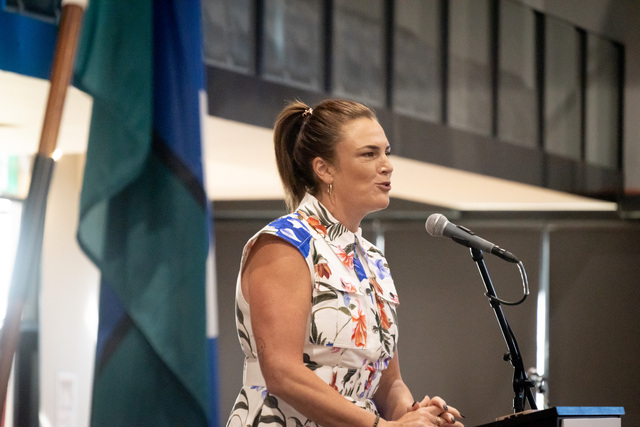
Ambulance Victoria interim chief executive Felicity Topp said response times continued to be impacted by issues including increasing demand from sicker patients who had deferred care and the effects of COVID-19.
“There are no signs of demand slowing down through winter,” Ms Topp said.
“COVID-19 continues to pose a high risk to Victorians and will do for some time.”
Ambulances were called to 97,928 code 1 cases across Victoria from April to June this year, signalling the busiest quarter in Ambulance Victoria’s history and its third consecutive record-breaking quarter.
Ms Topp said Ambulance Victoria was working hard to relieve pressure in the system with more paramedics on the road and more Ambulance Victoria Offload teams to rapidly transfer patients to hospital care.
“These teams, established as part of our pandemic response efforts to improve patient flow at the ambulance and hospital interface, are now being expanded to 14 public hospitals and a further five are in planning,” she said.
“They are made up of paramedics and nurses who receive handover of suitable patients after triage, allowing ambulance crews to get back on the road faster.
“Meanwhile, a record 700 paramedics were recruited in 2021 and a further 404 paramedics have already been recruited this year to help get more ambulances on the road.”
Going backwards, says MP
MEMBER for Northern Victoria Tania Maxwell has called for a fresh approach to fix the worsening ambulance response times across northern Victoria.
The Derryn Hinch’s Justice Party MP said performance data showed the service on average got to a code 1 call-out patient inside the 15-minute target in just two of the 27 local government areas in her electorate.
“If you’re in Buloke Shire and called 000, it took more than double that time – 30.29 minutes. That’s three minutes longer than it took in the January-March quarter and 2.19 minutes longer than a year ago,” she said.
“Paramedics are doing their absolute best to respond to these critical emergency calls, so why are response times between March and June going backwards in 21 of 27 local government areas and getting better only in one – Mansfield – between one year and the next?
“The government’s ploughing hundreds of millions of dollars into recruitment, training and more emergency call-takers, but communities are yet to see any significant improvements in performance response and our resolute, hard-working paramedics remain under sustained pressure.
“I’ve brought to ministers’ and parliament’s attention many times the challenges my communities face with Emergency Services Telecommunications Authority call handling, ambulance emergency response times, hospital ramping and how community paramedics and first-responder services could be supported to reduce the strains on our health system.
“In a letter late last month I encouraged new Health Minister Mary-Anne Thomas to consider how the government could alleviate demand on our ambulance and hospital services.”