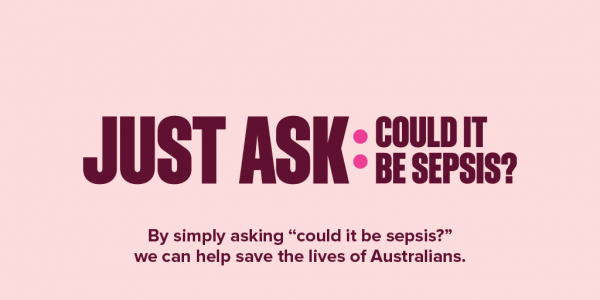
ASKING “could it be sepsis?” can help to save the lives of many Australians, especially during September’s sepsis awareness month.
Sepsis is a life-threatening condition that arises when the body’s response to an infection damages its own tissues and organs. It is a medical emergency requiring urgent treatment.
This inflammatory response can lead to dehydration and changes in circulation, for instance a drop in blood pressure.
This can compromise the ability of the circulatory system to provide adequate oxygen to the tissues. That leads to dysfunction in various organs, such as the lung, heart, kidney, and brain.
It can also lead to shock, multiple organ failure, and death, especially if it is not recognised early and treated promptly. Sepsis is an emergency.
Sepsis can affect anyone – every year more than 55,000 Australians are diagnosed with sepsis and more than 8700 will die to the condition.
There are a number of groups within the community who are identified as high-risk groups, including newborns and young children; older Australians; Aboriginal and Torres Strait Islander peoples; patients with complex health conditions; patients with COVID-19; immunocompromised patients; pregnant women, both during pregnancy and following childbirth; cancer patients treated with chemotherapy; sepsis survivors, previously diagnosed with sepsis.
The first hours of treatment are the most important, so do you know the signs of sepsis?
Signs can include (in adults) fast breathing or breathlessness; fevers and chills; low body temperature; fast heartbeat; nausea and vomiting; pain and fatigue or confusion.
Signs in children can include fast breathing or long pauses between breaths; discoloured skin; skin cold to the touch; rash that doesn’t fade when pressed; infrequent wet nappies; drowsiness, restlessness or floppy; vomiting and convulsions and pain.
Many of the signs of sepsis can be mild and not all need to be present. Preventing infection is the best way to prevent sepsis. Maintaining a healthy lifestyle with nutritious food, exercise and rest will assist with infection prevention as well as washing your hands frequently, seeking medical help when an illness does not seem to be improving or seems to be getting worse.
In June this year, The Sepsis Clinical Care Standard was launched and Australia was one of the first countries in the world to have a sepsis standard agreed at a national level.
Developed by the Australian Commission on Safety and Quality in Health Care, The Sepsis Clinical Care Standard will help to ensure sepsis is recognised early and patients receive coordinated, best practice care so that the risk of death or ongoing health issues is reduced.
It aims to ensure that health services, like Swan Hill District Health, are able to ensure that a patient presenting with signs and symptoms of sepsis is recognised early, receives appropriate therapy and care with continuity of that care from the acute setting through to discharge and into survivorship.