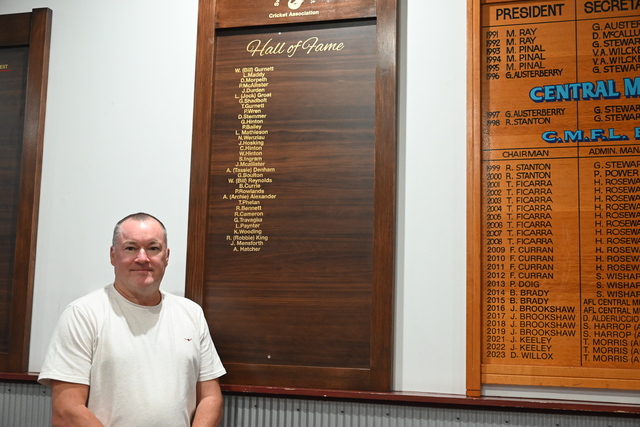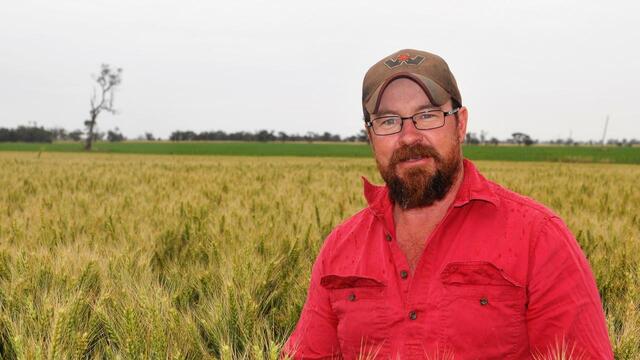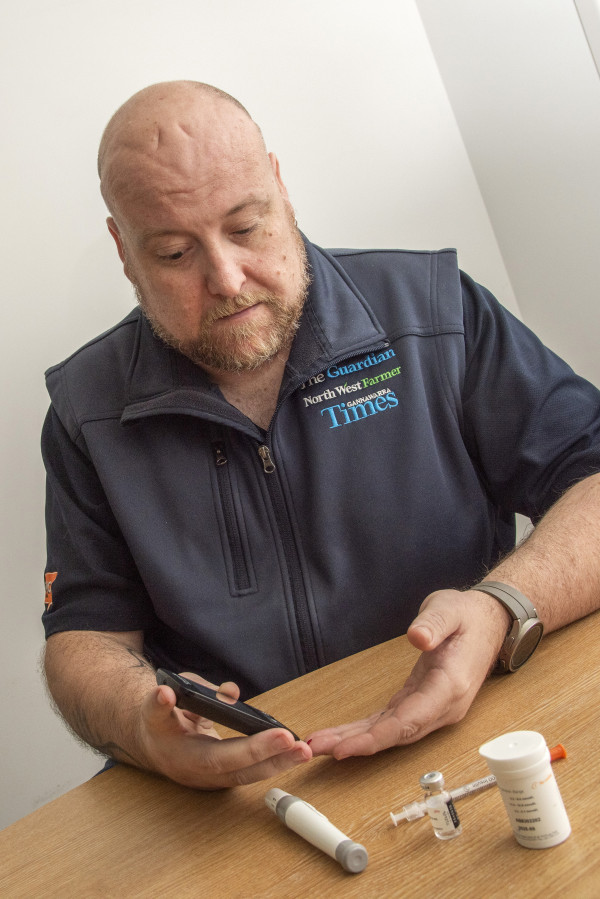
FOR Michael Auricht, diabetes runs through the blood.
The Swan Hill father-of-three was not surprised when he was told he had Type 2 diabetes.
“I have memories of helping my nana testing her blood sugars,” he said.
“Comparing the colour of a test strip on the side of the bottle, much like testing the pH levels in a fish tank.
“Growing up, I knew a little about good and bad foods, ketones, and that if you did not look after yourself, you can lose limbs.”
Mr Auricht said the diagnoses changed the way he looked at foods he now ate.
“I am much more wary of the amount of sugars that are in certain foods that I would eat a lot of before being diagnosed,” he said.
“It has made me step back and look at my lifestyle, and what changes I need to keep my sugar levels consistent.”
National Diabetes Week, recognised last week, highlighted the impact of diabetes, which was the fastest-growing chronic condition in Australia.
Around 90 people develop diabetes every day in Victoria.
“The scariest thing was knowing that I could no longer eat all the stuff I liked,” Mr Auricht said.
“I admit I would live off sugar daily, so knowing that would stop did depress me.
“Because of the family history, I have been having blood tests for years to keep an eye on my HbA1c (haemoglobin A1c), so I was not surprised when I was diagnosed.”
The “scariest” thing, however, came when his body went into diabetic ketoacidosis.
It’s a serious diabetes complication where the body produces excess blood acids (ketones). This condition occurs when there isn’t enough insulin in the body. It can be triggered by infection or other illness.
“My sugars were being managed by my medication at the time, so I stopped testing for a long time,” Mr Auricht said.
“Although I had not changed my diet or daily routines, I started to experience symptoms like increase thirst, urination, fatigue, loss of appetite and weight loss.
“I lost about 15kg in a month. Being a bigger bloke, I didn’t think much of it, and welcomed the loss.
“After a routine blood test, I received a call from my doctor to go to the emergency department.
“There I was informed that I was in diabetic ketoacidosis, where my body was no longer producing enough insulin, and instead it was burning up fat as fuel.
“Ketoacidosis is a serious condition, and one I never knew about, and it can cause a lot of complications.”
Mr Auricht was put on different oral medications and daily shots of insulin until they a combination worked and kept his glucose at a safe level.
He said the biggest disadvantage of living with diabetes in a regional community was accessing medications and equipment he relied upon.
“I have come across the low supply of certain medication at times, or other accessories like glucose sensors, and you then need to rely on them being ordered in or purchased myself off websites,” Mr Auricht said.
Accessing healthcare was another hurdle for local diabetic patients.
“Our local doctors are spread thin and appointments are booked out weeks or even months ahead,” Mr Auricht said.
“So even something as simple as getting a new script for my medication has been difficult, and have to grab whatever appointment comes available.
“This means you might not speak to a doctor that knows your history.
“Many people are having to rely on online script providers, but from my experience, the injectables I need are not listed in their available medications, so then I would need to have an online consult which is expensive.”
Mr Auricht said he took himself to the emergency department just to see someone as his glucose levels were high.
“I could not get in to see my doctor,” he said. “I felt bad that I was putting unneeded pressure on the emergency department.”
Mr Auricht urged other diabetics not to live with the “she’ll be right” attitude.
“Keep an eye on your levels, eat the right foods and exercise,” he urged.
“Sitting behind a desk all day, I do not exercise as much as I should, but it is amazing to see how just a five-minute walk around the block can lower my levels.”
Mr Auricht praised the diabetic support team at Swan Hill District Health.
“The educators and dietitians are very helpful and have a vast knowledge to pass on to you.
“There are numerous websites with helpful information. There are also Facebook groups that you can join and talk to others who are going through the same thing as you.”
Although Type 2 was more manageable than Type 1 diabetes, Mr Auricht said he was disappointed not having the same access to NDSS (National Diabetes Services Scheme) as people living with Type 1.
“I use a glucose sensor that is stuck to my upper arm with a small wire inserted in my skin,” he said.
“This sensor monitors my levels 24 hours a day and sends the information straight to my phone.
“Unfortunately, I can only use these in the weeks leading up to my endocrinologist appointment because the sensors are not subsided for people with Type 2 diabetes and cost more than $100 every two weeks.
“My weekly injections cost $300 per month, so something as little as two free sensors would be a godsend, and a financial relief on an already over-stretched budget.”
Virtual emergency department to help diabetics
A NEW virtual emergency department for diabetics has been launched.
Member for Northern Victoria Gaelle Broad said the Victorian Virtual Emergency Department Diabetes Service (VVEDDS) would help keep people in their homes and out of emergency departments.
“This is believed to be a world-first and will provide instant access to experts for people living with diabetes,” Ms Broad said.
Ms Broad is a co-convenor of the Victorian Parliamentary Friends of People Affected by Diabetes.
“People with diabetes navigate a constant balancing act between high and low blood glucose levels and this can lead to emergencies requiring urgent care. This is particularly tricky for people living in rural and regional areas who often face barriers in accessing health care,” she said.
“The service will provide free telehealth services and enable better triaging of people with diabetes.
“In addition, ambulance paramedics called out by the service will now be equipped with blood ketone level testing kits to determine if the patient can be managed at home safely.”
Ms Broad said the service would be available 24 hours a day and would offer help in a range of different languages.
The Nationals MP held a diabetes round table earlier this year which found diabetes is on the rise in Northern Victoria.
“All types of diabetes are growing at an unprecedented rate, profoundly affecting people’s lives and placing an extra burden on the health system,” Ms Broad said.