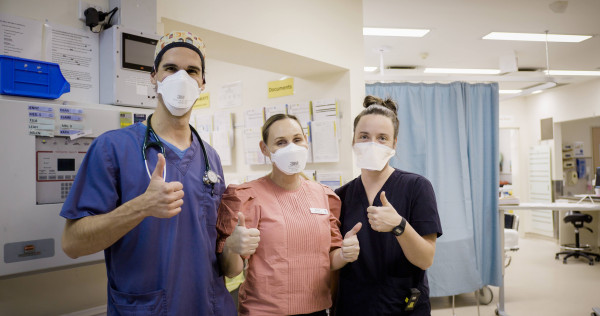
THE emergency department is an integral part of Swan Hill District Health’s care provision. It’s the essential service the community turns to in times of crisis providing both general emergency care and quite often critical life support.
In the lead-up to the highly anticipated opening of the new ED later this year, SHDH shares some insight into the roles, responsibilities and skill sets that make up the team in ED.
SHDH is proud of the brilliant work the team achieves, day in and day out and often under high pressure.
When attending the ED, patients will be met by a variety of staff.
Clinical staff include nurses and doctors, each with different roles and training. The clinical team is made up of the following:
Triage nurses: Often the first person patients will meet on arrival at ED. They will take a brief history and submit details into the computer system and allocate a triage category, based on how urgent it is for each patient to see a doctor. These nurses are highly skilled in rapid assessment, recognising serious illness, potential clinical deterioration and decision-making.
Nurse in charge: With many years’ experience, this role requires nurses to work closely with the senior medical officer to co-ordinate all aspects of patient flow through ED, to understand every patient’s condition and progress, as well as manage all other staff on shift.
Clinical nurse specialist: These nurses have additional training in emergency care provision. They provide direct clinical care and are clinical experts in this area of nursing specialisation.
Registered nurse: Nurses with a bachelor degree in nursing and varying levels of experience within nursing in general. Patients will probably have been cared for by these nurses when in the beds in the ED.
Graduate nurse: These nurses have a first year of nursing following their bachelor degree. These nurses rotate through ED year around. They are enthusiastic and the experience allows them to build their foundational skills.
Enrolled nurse: Nurses who have a nursing diploma. They are new to nursing and in the ED are supported and closely supervised to build their basic skills. These nurses have had a number of years training before coming into the ED.
Nursing students: They come from a variety of universities, learning to become a registered nurse.
Medical staff include:
Senior medical officer: Doctor in charge of the shift and supervise all other medical staff. They are highly skilled and experienced doctors who provide clinical oversight to all patients in the ED and work closely with the nurse in charge to manage the ED.
Hospital medical officer: These are junior doctors with more than a year’s experience working as doctors. Some of these will be internationally trained doctors and others will be doctors rotating from other hospitals to gain rural emergency experience.
Intern: These junior doctors are in their first year working as doctors and are rotating to Swan Hill from St Vincent’s Hospital in Melbourne.
Medical students: From Monash University, learning to become a doctor.
Nurse practitioners: These are masters-degree-level registered nurses with experience, expertise and authority to diagnose and treat patients of all ages with a variety of conditions. Nurse practitioners at SHDH are the most senior and independent clinical nurses in our health-care system.
Non-clinical staff supporting the emergency department with their own important roles:
Ward clerks: Provides administration support such as answering phones, clerking patients as they attend ED and ensuring paperwork is correct. They are critical to the running of the department, providing support to the team and in every aspect of work flow, assisting with stock and supply management behind the scenes.
Security officers: Keep our patients and our staff safe, they often offer emotional support and comfort to people in distress.
Support staff: Responsible for moving patients between departments, and will do all the running around for equipment, sampling to laboratories and patient transfers. They also keep the department clean and tidy.
There is also a management team in the ED that orchestrates daily operations, ensuring the team delivers a high quality of patient care while managing staff, budget and resources:
Nurse unit manager/ED clinical lead: They blend efficiency, clinical expertise and leadership. These two staff balance administrative tasks with patient interaction, while creating an environment that supports both the health outcomes of patients and the professional development of the team.
Clinical nurse educators: Crucial mentors and pillars of support for the nursing team (comprising staff and students), fostering a culture of continuous learning and professional development. Their primary responsibilities involve developing and delivering continuous comprehensive training to equip nurses with the necessary skills to manage complex and urgent cases proficiently.
Every staff member plays an integral role in the efficient and reliable running of the SHDH emergency department. The ED staff deserve kindness, respect and appreciation.