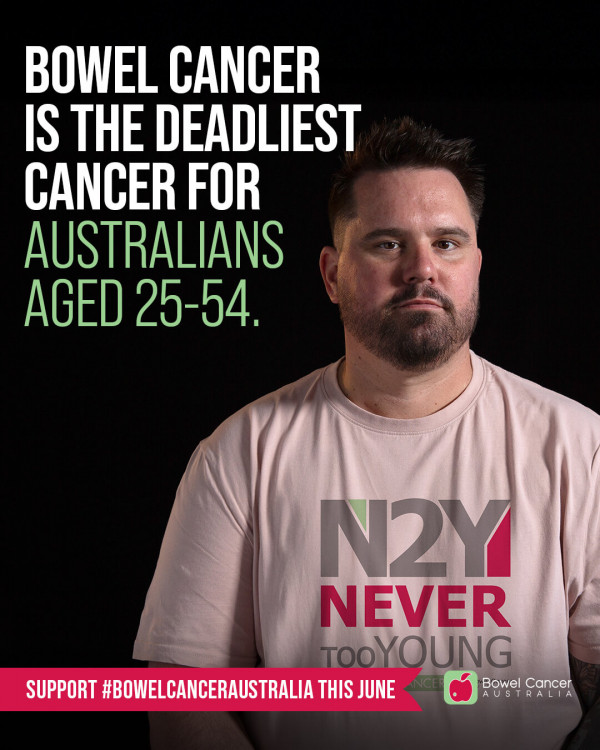
BOWEL cancer continues to take a devastating toll on Australian families, claiming the lives of 101 people each week. Yet, despite its deadly impact, it remains one of the most treatable forms of cancer – when detected early.
This June, Bowel Cancer Awareness Month aims to shine a spotlight on the disease that will affect around 280 Australians this week alone. The campaign urges Australians to learn the signs, understand the risks, and take action through screening and lifestyle changes.
A disease that affects all ages
While bowel cancer is more common in people over 50, it is by no means confined to older adults. Increasingly, younger Australians are being diagnosed, making awareness and vigilance across all age groups more important than ever.
Understanding the risk factors
Anyone can develop bowel cancer, but certain factors significantly increase the risk. These include:
Age – Most cases occur in people over 50.
Family history – A genetic predisposition can increase risk.
Diet – Diets high in red or processed meats and low in fibre are linked to higher risk.
Lifestyle choices – Lack of exercise, obesity, smoking, and heavy alcohol use can contribute.
Medical history – Conditions like Crohn’s disease or ulcerative colitis increase the likelihood.
Genetic syndromes – Inherited conditions such as Lynch syndrome and FAP (familial adenomatous polyposis) dramatically raise risk.
Symptoms you shouldn’t ignore
Bowel cancer often develops without symptoms in the early stages, making routine screening vital. When symptoms do appear, they can include:
• Blood in the stool
• Persistent changes in bowel habits
• Unexplained weight loss
• Abdominal pain or bloating
• A lump in the abdomen
• Fatigue caused by anaemia
If these symptoms last more than a few weeks, experts urge a prompt visit to a healthcare provider.
The importance of early detection
Diagnosis may involve stool tests, colonoscopies, virtual imaging, biopsies, and blood tests to detect anaemia or tumour markers like CEA. The earlier the cancer is found, the more effective treatment can be.
Regular screening is recommended from age 45 to 50, or earlier for individuals with a family history or genetic predisposition.
Hope through treatment
If diagnosed, a range of treatment options is available depending on the cancer’s stage:
Surgery – Often the primary treatment to remove the tumour.
Radiation therapy – Especially for rectal cancers, to shrink tumours pre-surgery or destroy remaining cancer cells.
Chemotherapy – Typically used in advanced stages.
Targeted therapy and immunotherapy – Modern treatments designed to attack specific cancer cells or boost the immune system.
Prevention starts with awareness
Many bowel cancer cases are preventable or can be successfully treated when found early. Prevention tips include:
• Eating a high-fibre, low-fat diet
• Exercising regularly
• Avoiding smoking and excessive alcohol
• Knowing your family’s medical history
• Attending regular screenings
Every action counts
Bowel Cancer Awareness Month isn’t just about numbers – it’s about saving lives through conversation, education, and action.
Whether you’re booking a screening, checking in on a loved one, or simply sharing this information, you are helping to fight a disease that doesn’t have to be deadly.
For more information, support, or to access screening resources, visit www.bowelcanceraustralia.org.