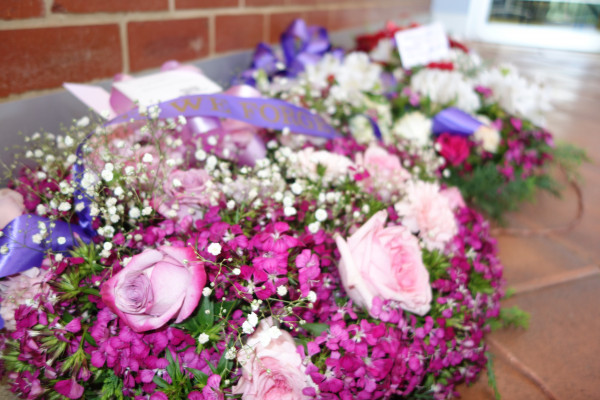
THE Eleventh of November each year is always a solemn day.
On Remembrance Day we honour and remember all those who have died and served Australia as members of our defence force in all wars and armed conflicts.
It was at the 11th hour of the 11th day of the 11th month in 1918 that hostilities formally ceased in World War I.
That war was The Great War and supposed to be the end of all wars.
History has proven that not to be the case and while the date of Remembrance Day directly links to World War I, it is a reminder of the service of all defence personnel throughout the generations and in all theatres of war.
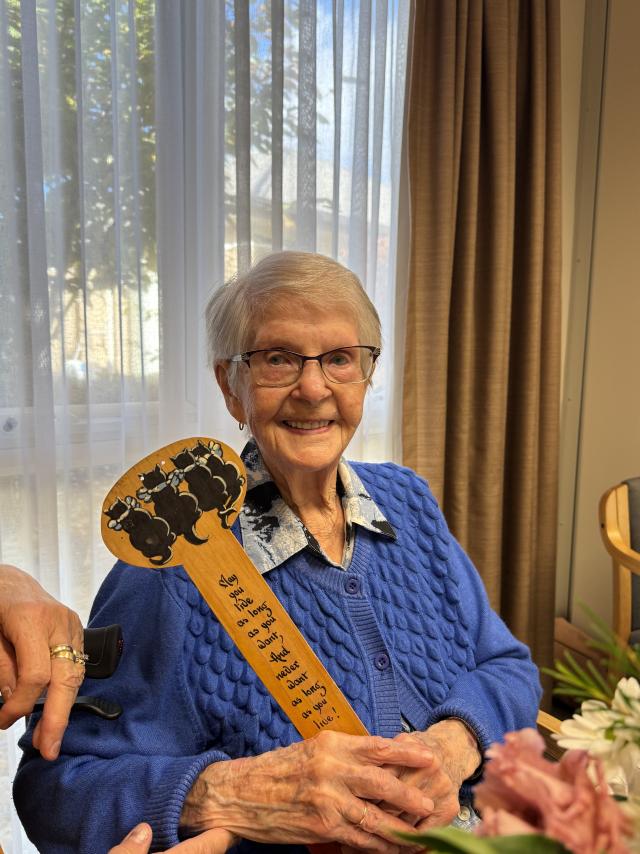
Last week I met Vietnam veterans Don Baird and John Bailey for a morning tea to give them certificates under the Commonwealth’s Saluting Their Service Program.
Further to this I presented posthumous certificates under this program. One to June Baird, for the service of her father Lawrence William Hennessy, who served in New Guinea in World War II.
Another certificate to June and Don’s sons Jeromy and Adrian for the service of their grandfather John Henry Baird, who also served in New Guinea in World War II. And another to Sandra Stewart, whose father Kenneth Wallace Stewart fought in the Middle East, New Guinea, Borneo and Greece in World War II.
I take this opportunity to also acknowledge the Australian Government’s Unmarked Graves of First World War Veterans Pilot Program instigated by the previous Coalition Government.
After World War I, many veterans came back to Australia seeking a quiet life in the country.
Thousands took up soldier settler farms.
The Swan Hill, Nyah, Woorinen and Robinvale irrigation areas were a major part of soldier settlement schemes after World War I and World War II.
When these veterans passed away, some may have been buried without a funeral or a permanent headstone and were not provided with an official commemoration.
The Australian Government’s Unmarked Graves of First World War Veterans Pilot Program provides funding to individuals, non-commercial organisations or community groups towards the cost of a grave marker on those currently unmarked graves.
The program, which is administered by the Office of Australian War Graves, offers up to $450 to assist with the cost of a grave marker or as a contribution towards a larger cost.
It is with disappointment I note the current Federal Government cut funding for the program by more than half of the $3.7 million from the former government’s 2022-23 budget, to $1.5 million in the October 2022-23 budget.
It is my hope that we can continue to pay respect to our deceased veterans long into the future, and this should be bipartisan.
Lest we forget.