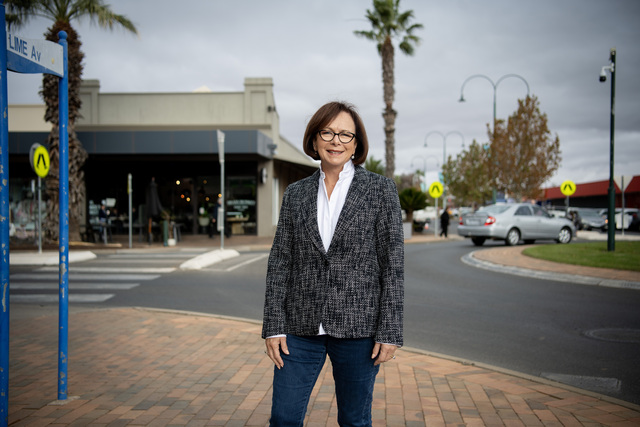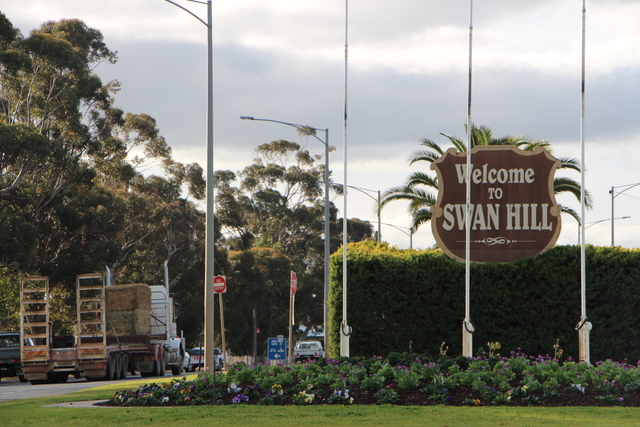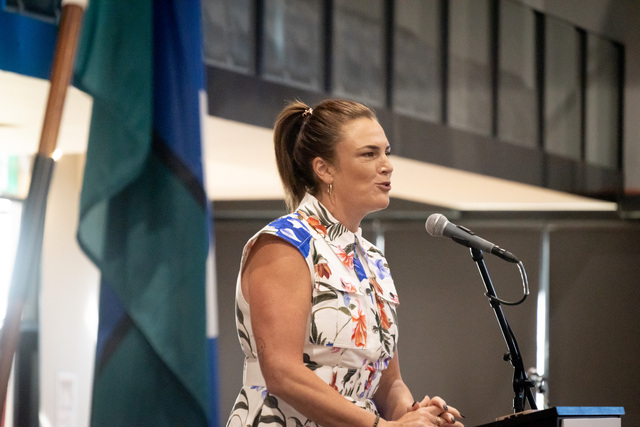
MEMBER for Mallee Anne Webster, you have been a committed supporter of the campaign to vote “no” at the Voice referendum.
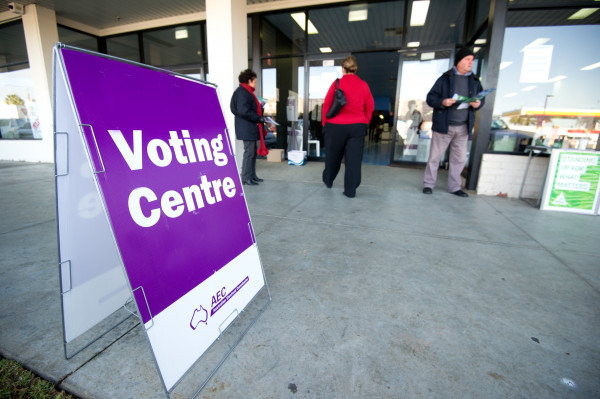
With Australians about to head to the polls, now seems a good time to explore some of the arguments you’ve tabled for voting “no”.
“What I don’t want to see is Australia divided,” you said in June.
“(The Voice means) there will be two societies, two races, literally … Indigenous and everybody else who is not,” you said in May.
Here’s what a divided, two-society nation looks like: An Indigenous child is twice as likely to die than a non-Indigenous child, according to the Closing The Gap Report 2020.
About one in four Indigenous Year 9 students are below national minimum reading standards compared to about one in 20 non-Indigenous students.
A third of Indigenous Australians aged 20 to 24 haven’t completed Year 12, compared to one in 10 non-Indigenous Australians.
Half of Indigenous Australians are employed, compared to three-quarters of non-Indigenous Australians.
Indigenous men are dying 8.6 years younger and Indigenous women 7.8 years younger than their non-Indigenous counterparts.
“The people of Mallee care about Closing the Gap for Indigenous health, education and life outcomes, but they’re simply not convinced that the Voice will fix any of those issues,” you said in July.
Such concerns are reasonable. We don’t have any evidence for what a Voice will or won’t achieve because it doesn’t exist yet.
What we do have evidence of, though, is what not having a Voice has achieved – see the above figures. You can agree, these are hardly “convincing”.
“The Prime Minister tells us the referendum is just a modest proposal for recognition in the Constitution – no argument here,” you told parliament last month.
Great – you support constitutional recognition of Indigenous Australians.
“It’s essential that the politicians should leave Canberra and visit Indigenous communities, sit in town halls, missions and campfires,” you said in May.
Great – you support listening to the voices of Indigenous Australians.
“The proposed Voice is by far the most radical change we’ve considered to the Constitution since World War II,” you said in July.
OK – two hold-ups there. Let’s start with it being “radical”.
The Voice would not have a veto power. It would not make laws. It would be an advisory body.
The parliament would still be the parliament. It would remain responsible for legislation.
In fact, the parliament would make the laws on the Voice’s composition, functions, powers and procedures, as detailed by the proposed constitutional amendment.
Voters are simply being asked whether to establish a body called the Voice, which may make representations to the parliament and government on matters relating to Aboriginal and Torres Strait Islanders.
Perhaps your concern is more about this being a “change … to the Constitution”. Let’s look at that.
The Voice would be a fifth attempt in 50 years to establish a representative Aboriginal body to advise the government.
Labor’s National Aboriginal Consultative Committee ran from 1973 until it was axed by the Coalition in 1977.
The Coalition’s National Aboriginal Conference ran from 1977 until it was axed by Labor in 1985.
Labor’s Aboriginal and Torres Strait Islander Commission ran from 1990 until it was axed by the Coalition in 2005.
The Labor-instigated National Congress of Australia’s First Peoples ran from 2009 until its funding was cut by the Coalition in 2013.
Here lies the importance of putting the Voice in the constitution: Its very existence won’t be subject to the whims of the government of the day. It can’t be taken away.
The politicians have had many chances over many years to get an advisory body right – they failed.
The referendum is a chance for the Australian public to intervene by removing failure as an option.
“The last thing Australia needs is another bureaucratic body,” you said in March.
Agreed. There’s a lot of bureaucracy, especially in the Indigenous space. A lot of wasted spending.
Wouldn’t an overarching national body, rather than advocacy being split hundreds of different ways across the nation, help address that?
“In our democratic election process, we have 11 Indigenous MPs and senators already,” you said in May.
This is such a valid point. Indigenous representation does matter.
Beyond those 11, just six others have served in the Federal Parliament with acknowledged Indigenous ancestry. Ever.
Until last year, your party The Nationals had never had an Indigenous federal representative.
That’s 121 years and 46 previous parliaments where laws were written that affect Indigenous Australians with no, or precious little, input from them inside the two houses.
Acknowledging the value of this input means accepting how much catching up there is to do.
“The diverse groups of Indigenous people are concerned about who would be picked to be their Voice, given there are hundreds of estimated people groups,” you said in July.
“Will the Voice representatives speak for all Indigenous people groups?”
Congratulations, you’ve just described a democratic system.
There are times when the Federal Parliament seems to only speak for, as you put it, “the powerful, influential or metropolitan-based chosen few”, but I don’t believe you’re arguing for that body to be dissolved.
We don’t expect parliament to only pass laws that 100 per cent of the population agrees with – I’m sure you’re not arguing advice given by the Voice needs 100 per cent Indigenous support, either.
“I can tell you confidently an overwhelming majority of Mallee residents surveyed oppose the Voice,” you said in June.
Voters in Mallee have only twice voted “yes” to a referendum with a greater percentage than the national result. One of those times was the 1967 referendum on Indigenous Australians.
The people of Mallee will engage with this proposal in good faith. They will inform themselves. They will be considered. They will listen to both sides.
Like them, Dr Webster, in your public statements there is a desire to arrive at good outcomes.
Please consider whether this may be better achieved by supporting “yes” instead.