I WOULD like to tell you a little about myself without telling you my life story as I don’t want to bore you too much.
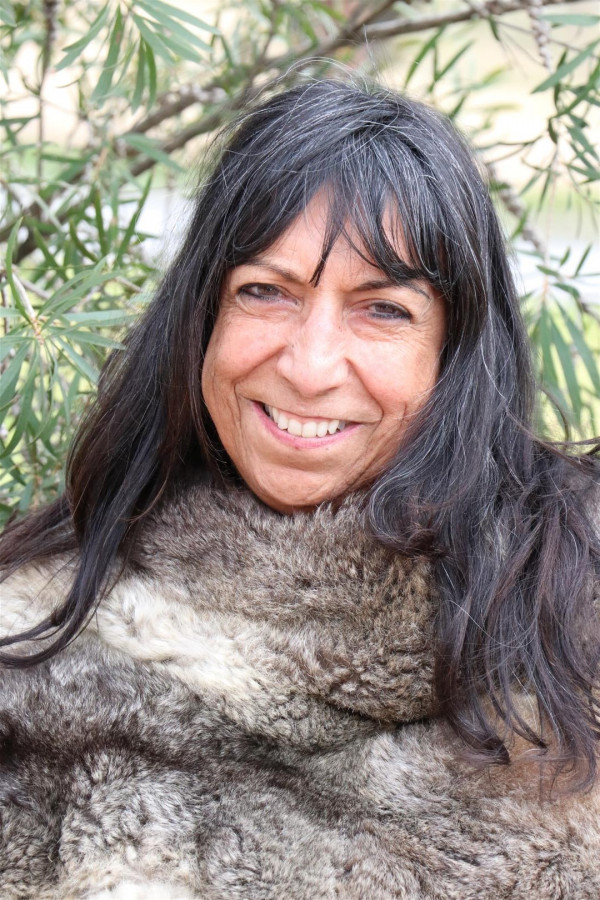
I’m Glenda Nicholls, second daughter of Bevan and Letty Nicholls.
I recognise my Wadi Wadi, Yorta Yorta and Ngarrindjeri ancestors and I acknowledge that I am standing on shared country of the Wadi Wadi and Wemba Wemba and Jupagulk people.
This area is known as boora boora grounds.
Like so many underprivileged people in this town, I was born on the veranda of the Swan Hill hospital.
In the 1950s.
When I was a baby my parents took me home from the hospital to the Pinkie Camp just over the bridge.
That’s where my grandparents lived in their hut and that’s where I spent my early years.
While Aboriginal people weren’t expected to get an education, my parents made sure we attended school where we could learn to read and write, because theyhad never had the chance.
We walked from across the river up to the Central Primary School where St Mary MacKillop College is today.
Around the 1960s, a handful of Aboriginal families from around the Swan Hill area moved into the township of Swan Hill.
Our family moved from across the river, from what was known then as the Church of Christ Settlement.
We moved into public housing in Dunstone Street.
“Right the Wrong Write YES for Aborigines on May 27th 1967.”
That was a line from the “yes” campaign song leading up to the 1967 referendum and I sang it in my father’s Yorta Yorta language.
A lot of our mobs campaigned very strongly for the rights of our people years before leading up to that important date in time.
Historically, people like the three Bills – Bill (William) Ferguson, Bill (William) Cooper and Bill (William) Paten – plus others, Aunty Marg Tucker, Aunty Geraldine Briggs, Faith Bandler and my grandparents, Sir Doug and Lady Glady Nicholls, many more too numerous to mention, who wanted change for our people.
Better conditions for our mobs was important to them back then.
It was a step forward.
So, it was in 1967 when a referendum was held and a unanimous “yes” vote meant that I was finally acknowledged as a human being and counted in the census, no longer listed under the Flora and Fauna Act.
That was the first time in my life that other Australians would decide on my life and how it was going to be.
I was in my early teens and I remember that day very clearly as my dad celebrated the “yes” vote by doing the soft-shoe shuffle around the kitchen and telling us that when we became of age we had to make sure we put our name on the electoral roll.
There was a lot of thought around that referendum.
For some, in their minds the “yes” vote meant many things.
For me, well, I don’t know what I thought.
As kids, we were brought up with the 10 commandments.
So, back then you had to be 21 years of age before you were classed as an adult and could vote, let alone do other things that 18-year-olds can do today.
It was in the 1970s when the Aboriginal people of Swan Hill got together in a building that they named Wandarrah, down in McCallum Street, and this was where they all worked together to achieve five basic rights for our people in this town.
Those five-finger basic rights were listed under housing, employment, education, health and justice.
Back then, we didn’t have native title as such because this area was known as boora boora ground and everyone worked together as it was understood that everyone who was here was meant to be here.
It worked, and with the help of other communities in the town, good things happened.
In 1973 the National Aboriginal Consultative Committee (NACC), which was established under the Whitlam government with a purpose to provide the Commonwealth Government with advice on issues about Aboriginal people, was set up and my Aunty Betty Tournier was voted in as our local member.
NACC was later dissolved by the government of the day.
In 1979 the idea of a treaty was mentioned but the Fraser government rejected that idea.
Since the 1967 referendum, my life journey has been long and now, some 55 years later, we hear of voice, treaty and truth.
The first step is the Voice and a referendum.
Although, through truth telling we tell our stories and hope that you will listen with respect and understanding.
This 2023 referendum is asking Australians to approve an alteration to the Australian Constitution to recognise the First Peoples of Australia by establishing an Aboriginal and Torres Strait Islander voice.
You voting “yes” in this referendum will make it the second time in my life that other people are making decisions on my future as an Aboriginal person.
I am asking that you vote “yes” to give me a voice.
A “yes” vote to me would mean recognition.
A “yes” vote means that you are listening.
And, a “yes” vote means that we can all achieve better results.
And while I respect your vote, I want you to know that a “yes” vote is important for me knowing that we can move forward as a nation with respect.