OVER the past month, I have lived in fear, unable to contact my extended family in Bangladesh.
Internet and mobile service shutdowns were enforced by the Bangladeshi Government when student protests turned deadly, killing more than 300 people – most of whom were under 25 years of age.
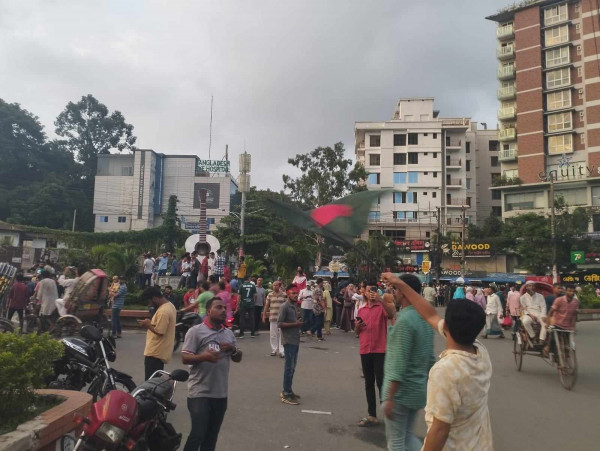
Thankfully, last week, celebrations filled the streets of my hometown as Bangladeshi Gen-Zs ousted Prime Minister Sheikh Hasina from the country.
On Monday August 5, as angry protestors waited outside her home, the 10th Prime Minister of Bangladesh fled the country on a helicopter after 15 consecutive years of reigning with an iron fist.
Throughout her time in power, Hasina’s Awami League party had been plagued with allegations of corruption, nepotism, and extrajudicial killings in an effort to crack down on any political dissent.
People’s frustration with Hasina and Awami League reached a tipping point last month when police started shooting at university students protesting against job recruitment quotas that require 30 per cent of government jobs to be filled by descendants of freedom fighters in Bangladesh’s 1971 liberation war.
As protests started escalating, Bangladesh was disconnected from the rest of the world, as the government cut off internet and mobile services nationwide.
My cousins were unable to go to school as chaos unfolded on the streets.
Back in my home city of Chittagong, with no access to social media, my uncle Ahmed Munir Chowdhury – a sub-editor at the country’s leading Bengali-language daily newspaper, Prothom Alo – said it may have caused a short-term revival of print news.
“We were 100 per cent dependent on print in getting the news out,” he said.
“People were out on the streets buying newspapers again like in the old days.”
What initially started as a peaceful protest by a group of students, dramatically escalated into a nationwide anti-government movement that was ultimately successful in seeing Hasina step down.
On the day of Hasina’s resignation, my uncle told me how the streets of Chittagong were filled with jubilation.
“It’s like I stepped outside to a new Bangladesh,” Mr Chowdhury said.
“There are so many young people on the streets just singing songs, and I’ve never seen anything like this in my life.”
“It gives me a lot of hope for the future.”
Following Hasina’s exit from the country, the movement was dubbed as a Gen-Z revolution.
“This might be the first time Gen-Z has successfully overthrown a government,” Mr Chowdhury said.
“We have just witnessed how they have uniquely utilised technology and social media platforms like Instagram, Telegram, and Discord to coordinate protests and spread information in a way my generation cannot do.”
In the aftermath of the protests, my cousins have been among the many Gen-Z Bangladeshis cleaning up the streets, and trying to maintain law and order in a now lawless country.
“There is no sight of police on the streets,” Mr Chowdhury said.
“But with the deterioration of law enforcement, young people have stepped up.”
“There are students who are controlling traffic, cleaning up the streets, and guarding Hindu temples upon hearing reports of attacks against religious minorities, particularly Hindus.”
An interim government lead by entrepreneur and Nobel prize laureate Muhammad Yunus, is being set up as my relatives wait for an election to vote in a democratically elected government.
As I watch the creation of what could be a whole new Bangladesh, all I can do from here is remain cautiously hopeful for the future of my family.