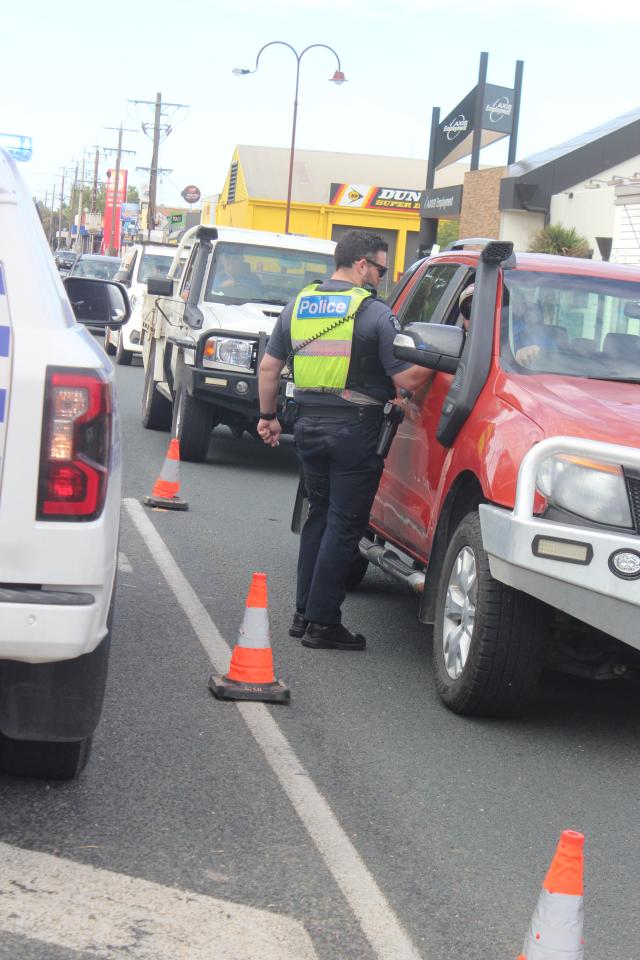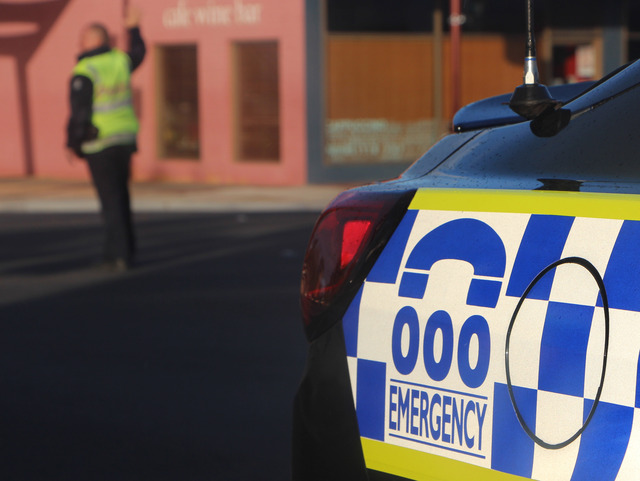
THERE were “avoidable delays” around the initial deployment of police resources and specialist support in finding Ms South, Victoria Police conceded
Victoria Police conducted an Operational Safety Critical Incident Review (OSCIR) and concluded that the search and missing person investigation was “structurally well planned and executed”, but there were “avoidable delays”, Coroner Ryan said.
“It also recorded that police were advised to avoid searching in areas where farmers had been spraying herbicides on crops and noted that Ms South was eventually located within such a crop site,” he said.
The OSCIR report found the closure of Charlton Police Station on July 4 delayed the initial police search until the next day.
The decision on July 5 not to request deployment of an air wing and assets with Forward Looking Infrared (FLIR) capabilities was a missed opportunity to buttress the initial search efforts by local police.
It was also established that a formal request should have been submitted on July 6 to SARS for the deployment of specialist resources, and Victoria Police should have accepted investigation primacy soon after search efforts commenced in and around Wycheproof.
The OSCIR report recommended a state-wide audit be conducted to ensure that all non-24-hour police stations when unoccupied, have active call forwarding facilities.
Acting Superintendent Daniel Baynes of the specialist response division (which includes the Dog Squad) reviewed the coronial brief and noted deployment of a police dog in a missing person search is time critical and an earlier deployment may have been of utility in the search for Ms South.
Notwithstanding, he identified a number of limitations regarding the use of the dog squad in the search for Ms South which included the time between when Ms South’s vehicle was first observed on July 3 to when police were notified on July 5, and then the subsequent request for the dog squad on July 8.
Insp Baynes highlighted the contamination of the scene by police and civilians and the removal of Ms South’s vehicle prior to the arrival of the dog squad and the uncertainty regarding which direction Ms South may have travelled after leaving her vehicle.
Coroner Ryan consider that the assistance of the dog squad should have been sought directly from the specialist response division on July 5 following Sen-Const Sheahan’s request.
“To effectively exploit the tracking capability of a police dog, it would have been best practice for it to be deployed as soon as possible after Ms South’s vehicle was located, and before it had been removed from the scene,” he said.
“That said, the evidence does not enable me to conclude that earlier deployment of the dog squad would have led to Ms South being located alive as she may have already been deceased on July 5.
“Further, there is no guarantee that a police dog would have successfully located her in any event as the search parameters were also impacted by advice to avoid searching paddocks which had been recently sprayed with herbicides.
“An earlier discovery of Ms South’s body would have increased the likelihood of a forensic pathologist being able to formulate a cause of death.
“An unascertained cause of death deprives the family of closure and adds to their distress at the loss of their loved one.
“It may be that Ms South’s body would have been located earlier had Victoria Police had access to cadaver dogs.”
Coroner Ryan said Victoria Police was notified he was considering making a recommendation that it conduct an assessment to consider the practicality and viability of establishing a cadaver dog capability within the dog squad. At the inquest, counsel for the Chief Commissioner advised the court that they had already commenced an assessment.
“It is encouraging that Victoria Police is in the process of developing its own human remains detection dog capability,” Coroner Ryan said.
“It is understandable that the process may take some time and involve prioritising resource allocation.
“In the meantime, I consider that the Victorian community would be served by Victoria Police continuing to strengthen its relationship with New South Wales Police so that its expertise and training facility may be utilised.”
Coroner Ryan offered his “sincerest sympathy” to Ms South’s family “whose distress and grief were compounded during the extended period in which she remained missing”.