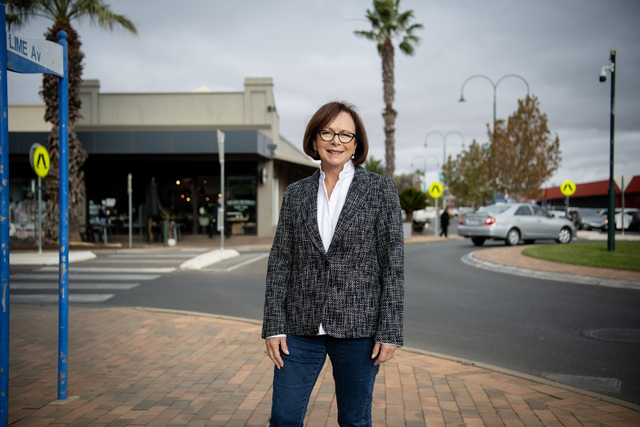
MEMBER for Mallee Anne Webster concedes there will be some members of The Nationals who will be “dismayed” by a decision to support in principle a target of net zero emissions by 2050.
There were ongoing concerns about adopting the policy, with some worried it could result in job losses in regional areas.
Dr Webster said The Nationals had taken the time to ensure protections were in place for the regions.
She said it was important any push for emissions reduction took “a collaborative approach from private industry and government to ensure that we’re actually going to reach that goal”.
“If not 2050, then before.
“We needed to ensure that manufacturing, that our farming, whether it’s cattle, whether it’s horticulture … that are integral to who we are as a regional community is protected.
“What we need to be mindful of is that our international trading partners, the banking sector, the mining sector itself … are all in support of net zero.
“I understand there will be some Nationals who will be dismayed by this decision, but equally others who will be delighted with this step forward.”
Prime Minister Scott Morrison announced the new climate policy last week, days before he was due to fly to Glasgow for global climate talks.
Mr Morrison said investment in low-emissions technology was expected to unlock at least $80 billion of total private and public investment, including in clean hydrogen, carbon capture and storage and energy storage.
The plan also identified the potential for continued technology advances and breakthroughs to unlock ultra-low cost solar.
Mr Morrison said priority technologies would deliver 85 per cent of the emissions reductions necessary to achieve net zero by 2050.
“This is achieved through our strong track record, with emissions already more than 20 per cent lower than 2005 levels,” he said.
“The technology investment roadmap will reduce emissions by around 40 per cent, global technology trends that will reduce emissions by 15 per cent, and high-integrity offsets that will achieve at least a further 10 per cent reduction.
“It recognises the role future technology breakthroughs will play in closing the gap, with new and emerging technologies to reduce emissions by a further 15 per cent by 2050.”
Dr Webster said The Nationals had supported earlier measures to drive down emissions, with more work on the way.
“We’ve actually been working toward these goals anyway, and now we’ve acknowledged the target,” she said.
“We have agreed to and we will meet and beat the Paris targets. So the target at the moment is 26-28 per cent. And we will meet and beat that.
“Since 2005, our emissions reductions are 20 per cent below 2005 (numbers) and, now our prosperity is 40 per cent higher.”
Birchip mixed-broadacre farmer and member of Farmers for Climate Action Bernadette Hogan said although details about the Regional Future Fund remained unclear, she hoped money was not spent “supporting the fossil-fuel industry and coal mining”.
“The National Party needs to stop using farmers as the justification for getting all this money.
“That’s fine if they’re going to put it into the agricultural sector.
“But if they’re not, that money needs to be spent to embrace innovation and change the way we do what we do.”
Ms Hogan said although it was a big project, she hoped any funds would provide support for “updating our power transmission infrastructure to neighbours to fully utilise all of our solar and wind-generating capacity”.