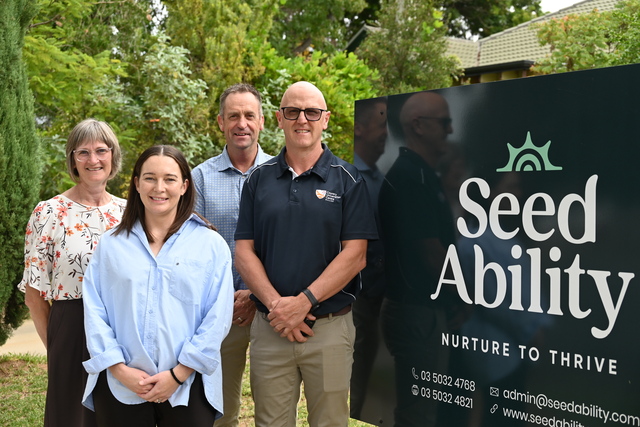
MEMBER for Mallee Anne Webster and the National Irrigators Council (NIC) have slammed federal Labor after it hinted it would tear up a major agreement about how water could be recovered for the environment across the Murray-Darling Basin if it wins this year’s election.
The shift in policy could see more water recovered for the environment, which would be at odds with a deal reached by all basin states to protect communities from social and economic harm.
Under the Murray-Darling Basin Plan, an additional 450 gigalitres of water must be recovered for the environment by 2024 using water recovery projects that had a neutral or improved impact on basin communities.
With the election due by late May, the opposition is yet to formally announce any policies regarding the Murray-Darling Basin.
Dr Webster said under Labor more water would be recovered for the environment at the expense of productive, job-creating water.
“That means water from Mildura to Cohuna will see more pressure on growers and the spectre of job losses will have devastating flow on consequences on local communities,” she said.
“Growers and communities have led the charge in water saving practices, and under a Labor/Greens/Independent alliance would be left to bear the brunt of a disconnected policy
that will have real world consequences.”
Speaking to ABC Rural, Shadow Water Minister Terri Butler hinted that a Labor government would seek to restore the original socio-economic definition.
“I will say this about the 450GL, I think that all Australians have an interest in the Murray-Darling Basin Plan, not just those who live in the basin and the basin communities, but all Australians,” Ms Butler said.
“Those who seek to undermine the 450GL or seek to make it more difficult to recover that water are really undermining the spirit of the Murray-Darling Basin Plan.
“You can expect us, when we make our policy announcements, to be upholding the letter and the spirit of the Murray-Darling Basin Plan to keep faith not just with the jurisdictions – that’s all the jurisdictions, not just the two biggest ones that entered into the plan at the time – but to keep faith with all Australians.”
In 2018, state water ministers together with federal water minister David Littleproud agreed to set a strict socio-economic test for any water recovered toward the 450GL target.
It meant that only water recovery projects that could prove no socio-economic harm to communities would be considered to count toward the water savings.
So far just 2GL has been recovered toward the 450GL target.
The NIC called on Labor reconsider its election water policy.
NIC chief executive officer Isaac Jeffrey said without irrigation, there would be no food on tables or clothes on backs.
“Over 76 per cent of our vegetables are grown by Australian irrigators. If the irrigated agriculture sector is damaged, this presents a risk to food quality, higher food prices impacting the cost of living, and forcing a reliance on imported food grown without Australia’s high regulations and standards,” he said.
“It also risks trade and our economy.
“The Murray-Darling Basin Plan is a bipartisan water management policy which has effectively balanced the water needs of local communities, the environment and the productive sector.”
Mr Jeffrey said the NIC supported the plan and wanted to see it fully implemented.
“This is a world-leading and complex policy with hard-won gains, and its key pillars should not be abandoned,” he said.
“The 450GL efficiency measures, which were an ‘add-on’ to the Plan and designed to return more water to the environment, have an attached important caveat that projects must return a neutral or positive socio-economic impact on local communities.
“That is, projects should not harm local communities by undermining regional jobs, businesses and local economies.
“This caveat is eminently sensible, however recent comments by the Shadow Minister for Water seem to suggest if the 450GL target is not met, a Labor Government would seek to remove the clause and buyback water – ripping it out of communities and putting them at risk.”
Mr Jeffrey said a move in this direction would be an “unmitigated disaster” for basin communities.
“Not only could it affect food production, it could also lead to business closures, regional job losses and challenges in delivering water to other farmers as water is removed from the system,” he said.