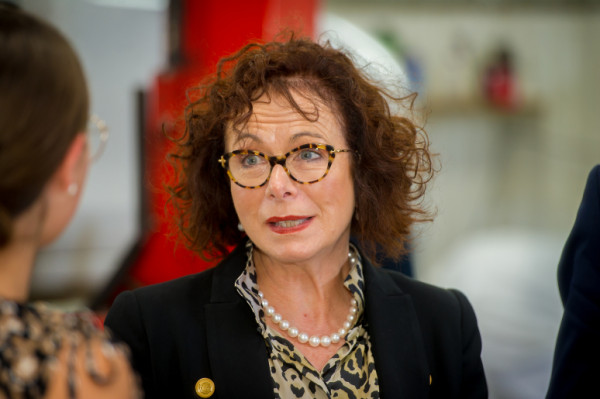
MEMBER for Mallee Anne Webster has voiced her “disappointment” in the findings of a joint parliamentary inquiry into the Constitution Alteration Bill.
In March the House of Representatives and the Senate agreed to the establishment of a joint select committee on the Aboriginal and Torres Strait Islander Voice referendum.
The committee, composed of seven Labor members, four Coalition members and two crossbench MPs, was appointed to report on the legislative provisions of the Bill, which was recently introduced by the government.
Releasing their findings last week after a six-week inquiry, the committee recommended the Bill be passed without amendment.
Victorian Senator Jana Stewart, who was among the Labor politicians on the committee, said the report reflected the consensus of constitutional legal experts and Aboriginal and Torres Strait Islander community groups.
“A constitutionally enshrined voice will give Aboriginal and Torres Strait Islander Australians an opportunity for practical and lasting change in policy areas such as health, child protection and the justice system,” she said.
“It will give us a say in the matters that affect our communities.”
But Dr Webster told The Guardian she felt the committee was heavily weighted towards pro-voice members rather than being balanced, and that the findings reflected this.
“Normally in a bipartisan space, such as committees, we try and get a balance of views, and that’s appropriate,” she said.
“With something that will make a fundamental difference to the way we will live our lives and the way we run government in Australia, this is very serious, and the fact that it was done the way that it was is just really disappointing.”
Dr Webster said while the National Party recognised that there were immense challenges facing many Aboriginal and Torres Strait Islander communities, they did not believe a voice to Parliament would be a real catalyst for change.
“We believe that adding another layer of bureaucracy in Canberra will not genuinely close gaps, and that it’s essential that the politicians should leave Canberra and visit Indigenous communities, sit in town halls, missions and campfires instead of relying on advice from Canberra-based bureaucrats, which is what they will be doing if it comes to the voice being implemented,” she said.
Dr Webster said the voice would create more division rather than unity.
“In our democratic election process, we have 11 indigenous MPs and senators already in the house, representing all of their electorates, not just Indigenous people, but everybody, just like every other MP who is not Indigenous is representing all of their constituents,” Dr Webster said.
“That provides a sure footing to good democratic processes going forward, and to change that in a permanent fixture – adding a chapter to the constitution – we believe will ultimately be very divisive to Australia as we know it.
“We need to remember our equality under the law is something that is so precious in Australia and in democracies, if we go to an implementation of the voice, there will be two societies, two races, literally – those who are Indigenous and everybody else who is not, and we don’t believe in the long term that that is going to benefit Australia.
“Our unity is still incredibly important.”