THE Federal Government’s decision to begin water buybacks on July 15, targeting up to 70 gigalitres of water from the southern basin, has been met with fierce opposition.
Voluntary water purchases, or buybacks, are part of a three-pronged approach by the government to deliver 450GL of additional water to the environment by December 2027.
Those demanding an urgent rethink of the Murray-Darling Basin Plan include Nationals politicians, farming and irrigator groups, and a mix of mayors, chief executives and administrators from six northern Victorian councils.
Their collective sentiment was that open-tender buybacks should be abandoned and the $300 million Sustainable Communities Program – aiming to compensate communities affected by voluntary water purchases – was unclear and “grossly inadequate”.
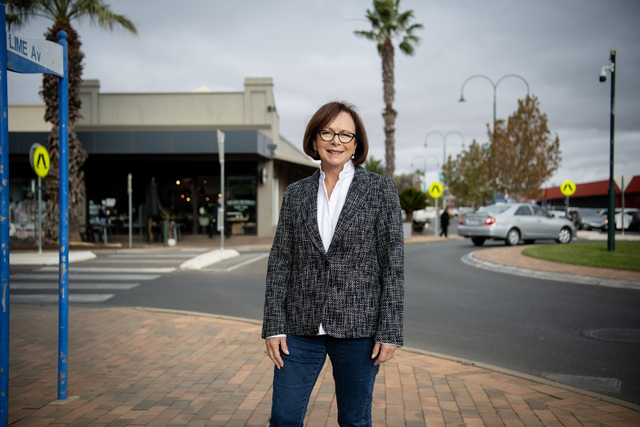
Member for Mallee Anne Webster sounded a warning that exacting buybacks on Victorian communities along the Murray River would impact part of the $10.3 billion in annual gross regional product.
“Once again we will see patchwork quilts of land that is dry, land that is irrigated, and the costs ultimately go to the farmers who are left,” Dr Webster said.
Recent modelling by Commonwealth research branch ABARES tested three water buyback scenarios in which the southern basin would provide recovery volumes of 125GL, 225GL and 325GL.
The report projected that the purchase of those water volumes would equate to farm production losses in the region of $62 million, $111 million or $154 million per year.
A Victorian Government report from September 2022 suggested that if 372.3GL of water was bought back from the southern basin, it could risk 8700 hectares of plantings and could lead to a $400 million decrease in the value of local farm production.
Victorian Farmers Federation president Emma Germano warned that buybacks could prompt a repeat of impacts felt during the Millennium Drought.
“In response to the latest economic analysis, which placed an overly conservative estimate on the impact of water buybacks, the Albanese government has only allocated a pitiful $300 million to assist communities,” Ms Germano said.
“There are no guarantees over how these funds will be used and whether they will support farmers and the resulting loss of jobs in the agricultural sector.”
On June 11 the Federal Government described the Sustainable Communities Program as a means to provide $300 million for “investments that create and support local jobs and businesses” in affected regional communities.
Murray River Group of Councils chair and Gannawarra Shire mayor Ross Stanton questioned the government’s rush to recover water through buybacks.
“The last time the Commonwealth did open-tender water buybacks in our region we lost around 1600 jobs, it cost us hundreds of millions of dollars in production, and the price of water for agriculture went up $72 per megalitre,” Cr Stanton said.
“Our irrigation districts ended up looking like Swiss cheese.
“If that happens again, it will push districts to breaking point.”
Cr Stanton called for the Federal Government to rethink open-tender buybacks, to put communities at the heart of water recovery and to “be serious about helping communities transition”.
“We all want healthy rivers and a thriving environment, none more than those of us who live in it in our river communities,” Cr Stanton said.
“We also need thriving towns and businesses, and relying on market forces and focusing purely on water recovery as a number through open-tender buybacks will cause social and economic damage.”
The Murray-Darling Conservation Alliance, which represents close to half a million supporters across all basin states, praised the announcement of Commonwealth tenders, calling it an important milestone for the return to river health.
Murray-Darling Conservation Alliance national director Craig Wilkins said it was a milestone towards a “flourishing” basin for Australia’s iconic fish, platypus, frogs and waterbirds.
“The whole community benefits when the rivers and wetlands are healthy,” Mr Wilkins said.
“These are not new targets for river health.
“They are the same basin plan targets that have been in place since 2012.
“Scientists have long held that the full delivery of the plan’s water targets, including the 450GL, is the bare minimum required to give the Murray a decent chance of survival.
Environment Victoria healthy rivers campaigner Tyler Rotche said most people who sold water for the benefit of the river stayed in farming.
“(They are) only selling some of their water rights,” Mr Rotche said.
“That means they continue to use and pay for irrigation infrastructure and contribute to the local economy.”