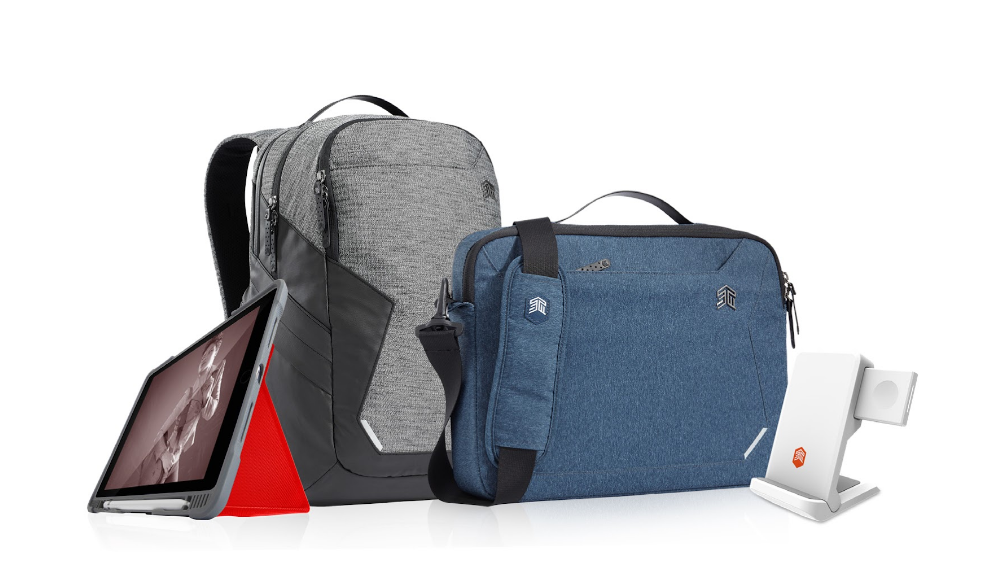
For more than a decade, schools and IT departments have faced a recurring dilemma: protect thousands of devices on tight budgets, or accept the cost of breakage as unavoidable. As tablets and laptops became standard classroom tools, the hidden expense was not the hardware itself, but cracked screens, damaged ports and shortened device lifespans. In that context, purchasing decisions shifted away from aesthetics and towards durability, reliability and total cost of ownership. One of the brands that has quietly benefited from that shift is STM Goods, a privately owned accessories maker that has expanded globally without external funding.
When Cheap Protection Gets Expensive
For school systems managing tens of thousands of iPads or laptops, device failure quickly becomes a budget line item. Industry data from U.S. school districts routinely shows that repairs and replacements can add 10–15 per cent annually to the original device cost when protection fails early. Cheaper cases, often sourced to minimise upfront spending, tend to crack, loosen or deform within a school year, particularly in high-use environments.
IT administrators interviewed across education procurement forums consistently cite consistency as a deciding factor. A case that survives three years across an entire fleet reduces not only repair costs, but also staff time spent processing replacements and managing warranties. STM’s Dux line entered schools early in the large-scale iPad rollout era, positioning itself as a product tested under classroom conditions rather than retail display assumptions. “The devices told us what failed,” said Ethan Nyholm, a co-founder of STM. “We paid attention to that.”
The economics are straightforward. Paying slightly more per unit can result in lower total spend over the life of a device program. That calculation has become more pressing as public institutions face tighter procurement scrutiny and longer replacement cycles.
Scaling Through Institutions, Not Hype
STM’s growth has tracked closely with institutional demand rather than consumer fashion cycles. According to company figures, millions of Dux cases have been deployed globally, with heavy concentration in education systems across North America, Europe, Asia-Pacific and parts of Latin America. Unlike venture-backed competitors, STM remained privately owned and debt-free, a structure that limited rapid expansion but also insulated the company from pressure to chase short-term margins.
The global consumer electronics accessories market grew modestly in 2024 and 2025, with most gains driven by replacement demand rather than new device adoption. Analysts at industry research firms have noted that accessories tied to institutional procurement tend to be more resilient during slower consumer spending periods. STM’s footprint reflects that pattern: steady growth across regions rather than sharp spikes tied to product launches.
Leadership decisions reinforced this trajectory. Rather than broadening aggressively into unrelated categories, STM focused on a narrow set of devices—iPad, MacBook and Surface—where long-term contracts and repeat purchasing mattered more than seasonal sales. “Being smaller meant we had to be selective,” said Adina Jacobs, STM’s co-founder. “We built products around where failure actually costs people time and money.”
Procurement Logic Over Branding
The contrast between STM and lower-cost competitors is less about marketing and more about procurement mathematics. Schools and enterprise IT teams operate under multi-year planning cycles, where replacement rates, warranty claims and support overhead are closely tracked. In that environment, a case that reduces breakage by even a few percentage points can justify its higher price within a single deployment cycle.
Market data from education technology associations shows that device lifespans have lengthened as budgets tightened after pandemic-era spending. That has amplified demand for protection that does not degrade over time. STM’s product revisions have tended to be incremental—thicker corners, reinforced frames, updated port access—rather than cosmetic redesigns, aligning with institutional preferences for compatibility and continuity.
As consumer electronics markets remain competitive and price-sensitive, STM’s expansion offers a different narrative: growth driven not by advertising reach or debt-fuelled scale, but by repeat orders from organisations that calculate value differently. For schools and IT departments, the choice is rarely about the lowest sticker price. It is about what costs less after three years of daily use.