WHEN we reflect on the Central Murray region’s 2022 season in 20 years’ time, one story will stand out.
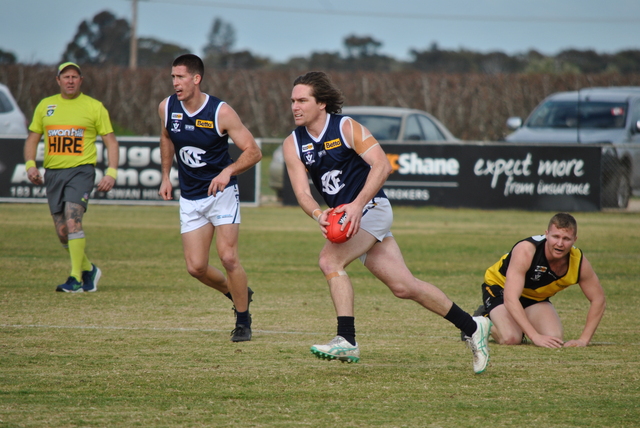
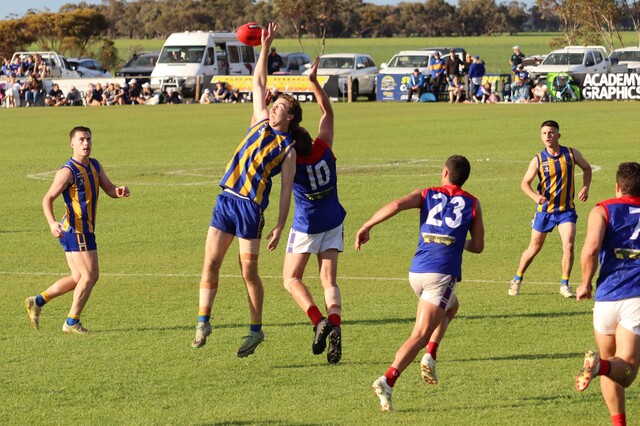
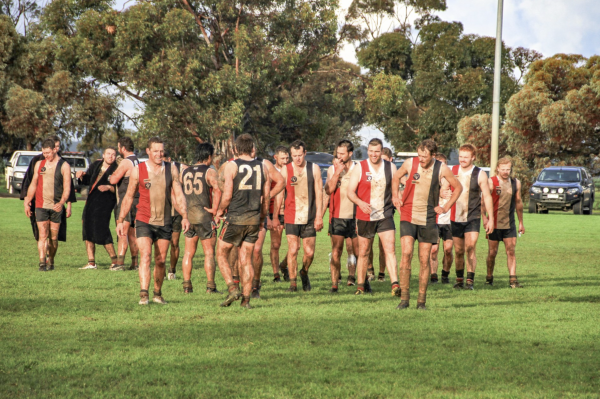
One of the region’s storied clubs, Quambatook, ran out on to the footy field and netball court for the last time.
It was a season nobody would forget – Kerang returned to the top of the mountain, Nullawil confirmed themselves as one of the great Golden Rivers teams with a third consecutive flag, Balranald won its first A Grade netball premiership, and life got back to normal with the scent of Deep Heat, meat pies and sweat again pervading clubrooms all over the Mallee.
In a tale that’s sadly being replicated all over regional Australia, a lack of juniors and volunteers forced the club’s hand. At the start of the season, they told their loyal supporters this would be their final ride.
While there will be no more Thursday night meals, the friendly smile of the gatekeeper or strapping of weary ankles and shoulders, what can’t be taken away is the memories and friendships made – and this famous old club has many.
“Whether we moved away with work or education, which many people have, we always had somewhere to come back to,” 1984 premiership player Peter Head told The Guardian.
“That was the biggest thing – you could get back and catch up with friends.
“But the friendships we’ve made don’t stop because the footy has.”
These memories can be the simplest of things, as shown by club legend Lionel ‘Bull’ Ritchie, who Head describes as a “diehard” and a “pleasure to play with”.
Ritchie says one of his earliest and fondest recollections of the club was a event thrown for him and his teammates by his junior coach back in the early 1960s.
“I remember once we played Balranald, and we kicked two goals, which were the first we’d got all year, and our coach put on a pie night for us, which was good fun.”
The origins of this club go back far further.
Football in the area can be traced back to the 1880s, when a match between Budgerum and Towaninny was reported in the Kerang Times in August 1884.
For decades, teams from Quambatook and the surrounding region would pop up and join associations that seemingly changed every season.
But the club as it’s known today came into existence in 1911, when the Quambatook District Football Association was formed.
In its 111-year history, the club has won six premierships – in 1913, 1945, 1973, 1974, 1984 and 1997.
Countless players, supporters and administrators have graced the club in that period, and it is clear when you walk around the changerooms or canteen that no one person is more important than another.
But there can only be one king, and for Quambatook, that was one of the town’s favourite sons – Jim Wallis.
Music industry figures Molly Meldrum and John Williamson might be the most famous people to come from the small town, but Wallis, who played 39 games for St Kilda in the 1960s before a knee injury curtailed his promising career, is its finest footballing export.
When St Kilda recruited him, a magazine reporter wrote: “There isn’t a local who doesn’t know Jim personally – you can ask a farmer tending sheep, you can ask a child, you can ask anybody, and they will give you enough evidence to prove that Jim Wallis is the number one pinup boy in that sun-bleached corner of Victoria, this side of the Mallee.”
Wallis, who was the local primary school teacher, loved his home so much that he convinced St Kilda to let him stay throughout the week and train with Quambatook before driving down to Melbourne each Friday.
Ritchie, who played with Wallis in the 1973 and 1974 premiership sides, described him as a “great footballer”.
By this stage, Wallis wasn’t the same player, thanks to countless injuries.
But his courage and leadership were never questioned, as shown in his 1962 season at Quambatook, when he played every game with a dislocated shoulder.
“He was getting on by the stage I was playing with him,” Ritchie said.
“He wasn’t as agile, but he just stood and took marks – he was a pretty handy ruckman as well, which was just a pleasure to rove to.
“He was very quiet and never got too excited, but he was still an incredible leader just through what he did on the field.”
Wallis died on May 27 this year.
His was the most successful era of the club, and the only time the Saints ever went back-to-back with premierships.
After spending 22 years in the Mid Murray Football League between 1950 and 1972, the Saints returned to the Kerang District Football League in 1973.
According to Ritchie, this factor was vital in the club’s success through the period.
“Playing in the MMFL beforehand hardened us,” Ritchie said.
“There were some outstanding players and sides in Swan Hill at that time, and when we returned to the KDFL in 1973, it made us quite a bit better.”
This was when the Saints were at their strongest, with revered club names such as Wallis, Ritchie, Malcolm ‘Dasher’ Knight and Curly Doyle tearing oppositions apart, but Ritchie believes the side from a few years previous might have been their best ever.
“When we had David Albiston coaching, that was an incredible side with the likes of Lachlan Anderson, which was in the late 60s,” he said.
“That was a great team that made the finals in Mid-Murray but just couldn’t go the whole way.”
It took 10 years after their 1974 triumph against Wakool for the Saints to again climb the mountain, producing a special season in 1984.
The seniors and under 17s were crowned premiers while the reserves also made the big dance.
Head was only a baby in footy terms when he was part of the side who brought home the chocolates in 1984, but he is nonetheless extremely honoured to be called a Quambatook premiership player.
“I was pretty lucky – I was only a young bloke, and we had some pretty good players from the districts and great coaches,” he said.
“A lot of blokes go through their sporting careers and don’t get the chance to play finals, let alone grand finals, so I’m pretty grateful.
“We were a relatively determined bunch of guys who enjoyed the social side of the field, we were hell bent on succeeding once we ran out on to the field.
“I was playing with blokes who had played a lot of footy, and they pointed us in the right direction.
“When you’re playing with someone like Bull Ritchie, it made my life pretty easy, and it was just a pleasure to play with him and many others.”Legendary full back Glen Tuohey was named best on ground in the 35-point victory over Ultima, and it wouldn’t be his, Matt Ritchie’s or John Holt’s last taste of ultimate success.
The trio and a couple more came back for a last shot at glory in the club’s final premiership in 1997, as recalled by premiership player and great club man Dean Bremner.
“Matt (Ritchie) was getting towards the end of his career, so he and a few guys from that age group like Noel Meney and Glenn Tuohey came back for one last crack,” Bremner said.
“It was amazing for us to all play together again, and that’s why I think those ’84 boys came back because they knew our group probably only had one last roll of the dice.”
Matt Ritchie’s return proved crucial, with the big forward nailing six goals and assisting another four on grand final day to help defeat Ultima by 23 points.
“He was always renowned as a gun goalkicker,” Bremner said.
“By that stage, though, his range was only 30-40 metres, but he was just a strong, imposing figure, and we couldn’t have got it done without him.”
While these flags are decades apart, there’s one common denominator among them, and that was the players on the field were mostly locals who bled for each other and the jumper.
“We had a pretty good group of mostly locals who’d been travelling home in 1997,” Bremner said.
“Plus, our coach John Cossar brought a couple of guys from Charlton who were good people, and we all trained together, which was a bit of a key.
“I think that’s been crucial for this club over the years that when we were at our best, we have a bunch of good home-grown footballers who have played a lot together and would do anything for one another.”
The 1997 premiership would be the club’s last, with a 2015 loss to Ultima being their last grand final appearance.
But the bonds created that September day in 1997 remain strong today, with the group able to celebrate their 25-year reunion at the club’s final home game function.
Bremner, who won the Saints’ best-and-fairest award that season, even found out a great new story about one of the side’s most important players, Brendan Lowther, a big ruckman who came from Bendigo.
“He was our X factor – when he was out there, we lifted 20-30 per cent,” Bremner said.
“But a couple of weeks before the grand final, he had hurt his ankle and was in serious doubt.
“I spoke to coach Cossar at the reunion, and he told me one of the selectors asked him, ‘Do you think we can win it without Lowther?’ And he said no, so Lowther played in that grand final.”
The club celebrated its history at its final home game against Macorna in August, which was played in front of the biggest crowd in recent memory.
The day was a bittersweet one for the Saints’ faithful, and it was at that moment the reality sunk in for Head.
“It was an odd feeling when I was driving down that day knowing it was the last time we’d be heading to Quambatook for a game of footy,” he said.
“The club has been such a big thing in all our lives – in not just Quambatook but small townships everywhere, the football club is the town’s identity.”
Sadly, a promising home-and-away season ended with a straight-sets finals exit for the Saints.
There was one last reason to smile, though, when Ricky Wild was crowned the Golden Rivers League’s best and fairest.
Wild told The Guardian: “This one is for the club and everyone who is involved.”
Wild joined an illustrious list of Saints voted the best player in the competition, including Brodie Bennet (2015), Luke Maher (2009 and 2010) and Brian Theizs, who won the title in the 1997 premiership year.
Bremner remembered his star teammate fondly “Brian (Theizs) was very elusive and hard to tackle – he won the league medal in 1997 and was incredible on grand final day – he was just one of those guys who could set it alight in bursts and tear the game away from the opposition in five minutes.
“He did the little things right as well, and that’s what I’ve been trying to teach these young guys now, that you need to do the one-percenters to get over the line and help your mates.”
Thankfully for Saints fans, the club’s leadership has allowed them to go out gracefully and offered a chance to farewell something that has been integral in all their lives.
“It has been very professionally run, the club, for a long time now, and the volunteers have been excellent – who are the real heroes in all of this,” Head said.
“They always said that if something doesn’t add up, they would call it early, which they have.
“If there’s any lesson to other clubs that might be going the same way, it’s that they should follow this model and give their supporters a chance to come back rather than leave it until the end of a season.
“Other clubs are doing their best, and no one situation is the same, but in my opinion clubs shouldn’t base success purely on premierships.
“It’s about allowing people to come together and catch up with mates.”
The feeling of love for the club is palpable when talking with stalwarts like Ritchie, Head and Bremner.
“I’m going to miss the camaraderie, beers after training and catching up with everyone regularly,” Ritchie says.
“I don’t really know what I’m going to do now – I might go holidaying – I guess I’ll find something to do, but it won’t be the same.”
Head, more philosophically, said while the Saints might have been the heartbeat of Quambatook, the town itself and the people were the soul.
“I’ve played with other clubs, but you don’t get that same feeling because Quamby is our home,” he said.
“We will still be going back there – we’ve got a hotel, tractor pull and a coffee shop – just because the footy is done doesn’t mean we are.
“The committee have a plan for the social side of things for the future to ensure people are still coming back.
“No matter where you’re living in Australia, if you grew up in Quamby, it will always be the place we relate to.”