Home » The Guardian » Climate changing fire seasons

Climate changing fire seasons

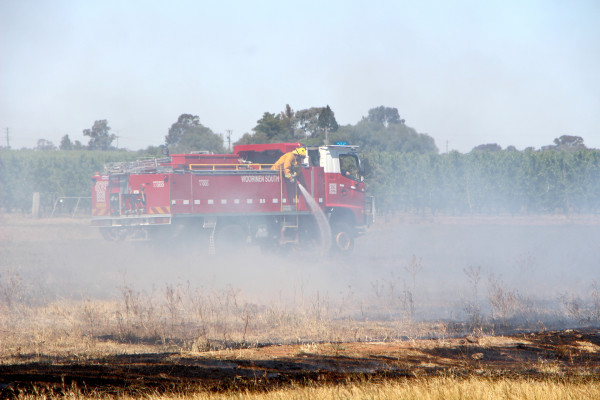
HUMAN-induced climate change is the most likely driver behind Australia’s earlier and longer fire seasons, according to new research.

Country Fire Authority (CFA) manager research and development Sarah Harris and Bureau of Meteorology (BoM) scientist Chris Lucas co-wrote Understanding the variability of Australian fire weather between 1973 and 2017, recently published by science journal PLOS ONE.

Examining seasonal fire weather history for 44 years at 39 weather stations across Australia, it explores whether early starts to the bushfire season in different regions of eastern Australia in the recent past — including this season’s significant fires in southeast Queensland and New South Wales — are an indicator of a changing climate.

In an article published by The Conversation, Mr Lucas and Dr Harris wrote “climate change is definitely playing a role in producing the earlier start to bushfire seasons and overall more extreme seasons, particularly in south-eastern Australia”.

The researchers pointed out that the natural variations in climate modes continue to play a key role.

“That means we should not expect every bushfire season to be worse than the last as a result of climate change. Similarly, a few milder bushfire seasons among a string of

record high seasons does not mean that climate change should be dismissed,” they wrote.

CFA chief executive officer and chief officer Steve Warrington welcomed the research.

“As firefighters, we see the effects of these longer and more severe fire seasons and CFA is proud to play its part on this topic, both through its robust research program, but also through initiatives aimed at reducing greenhouse emissions, such as increasing our use of rooftop solar and the number of hybrid vehicles in the fleet,” he said.

Meanwhile, Australia has an increased risk of heatwaves and bushfires in the coming months, according to the Bureau of Meteorology’s severe weather season outlook.

Parts of the country have already seen bushfires, and the bureau’s head of long-range forecasts, Dr Andrew Watkins, said the current state of Australia’s climate drivers meant the likelihood of seeing more bushfire activity than normal was increased.

“The bureau outlook shows we’re likely to see more warmer and drier than average conditions for the coming months. This is due largely to a record strong positive Indian Ocean Dipole, that leads to drier air than usual over northwest Australia that supplies much of Australia’s rainfall,” Dr Watkins said.

“The increased odds of warmer than average days, coupled with a very dry landscape and a likely late start to the northern wet season, give a clear indication that we’re likely to see more heatwaves than normal.

“It also adds to the potential bushfire risk, particularly when you consider how dry many parts of southern and eastern Australia are at the moment.”

Digital Editions


  • Magpies fly to second win

    Magpies fly to second win

    A DETERMINED Lake Boga has kept their finals hopes alive with a hard-fought 16-goal win over a disappointing Nyah-Nyah West United on the weekend. The…

More News

  • Blues stave off determined Saints

    Blues stave off determined Saints

    KERANG held their nerve against a dogged Tooleybuc-Manangatang side to come away from Riverside Park with an 18-point win in a tense mid-ladder clash. Eager to rejoin the winner’s list,…

  • Swan Hill to host week one finals

    Swan Hill to host week one finals

    THE Central Murray Football Netball League (CMFNL) has confirmed that the first week of their expanded top eight finals series will take place in Swan Hill in late August. With…

  • Swans lead the way

    Swans lead the way

    SWAN Hill’s women’s soccer team has continued its remarkable rise, with the Swans moving to the top of the ladder for the first time in years following a gritty 1-0…

  • MRI skills boost

    MRI skills boost

    WHILE awaiting the outcome of the funding for the new medical imaging service, Swan Hill District Health is continuing to strengthen its local diagnostic imaging capability. A staff member will…

  • Unbeaten run continues

    Unbeaten run continues

    FIVE wins from the first five games is certainly a great way to start the 2026 season for NNW United, as they look towards revenge and glory. This latest win…

  • Boost for childcare in border town

    Boost for childcare in border town

    A MAJOR funding boost for childcare in Robinvale has been welcomed by Swan Hill Rural City Council, with the Murray Valley Aboriginal Co-operative set to expand and redevelop its early…

  • Council rejects industry rate relief plea

    Council rejects industry rate relief plea

    BALRANALD Council has rejected a push for industry-wide rate relief for dried vine fruit growers impacted by extreme weather, instead urging State and Federal Governments to provide targeted disaster assistance…

  • Coalition fighting for relevance

    Coalition fighting for relevance

    THE Farrer by-election had shattered the myth of the “safe” rural seat, according to veteran political commentator Barrie Cassidy, who warned the Coalition was now fighting for relevance across regional…

  • Farley hits ground running

    Farley hits ground running

    ONE Nation’s newest MP wasted no time settling into federal politics, heading to Canberra last week to learn the ropes just days after his history-making victory in the Farrer by-election.…

  • Local veteran earns Invictus call up

    Local veteran earns Invictus call up

    YEARS after leaving active service, Wayne Hale is once again preparing to represent the Green and Gold after being selected to compete in the Invictus Germany Sports Festival next month.…