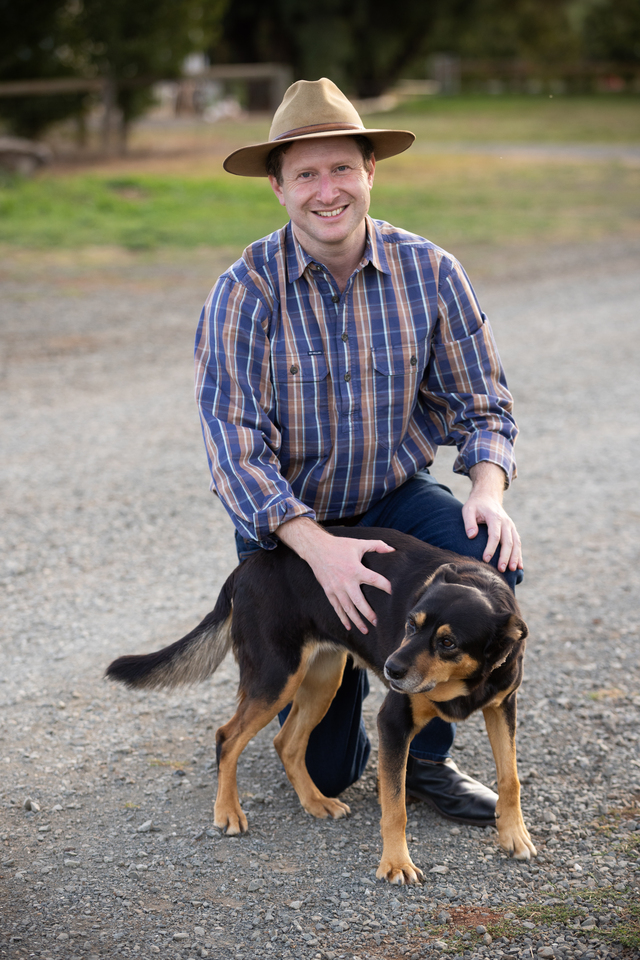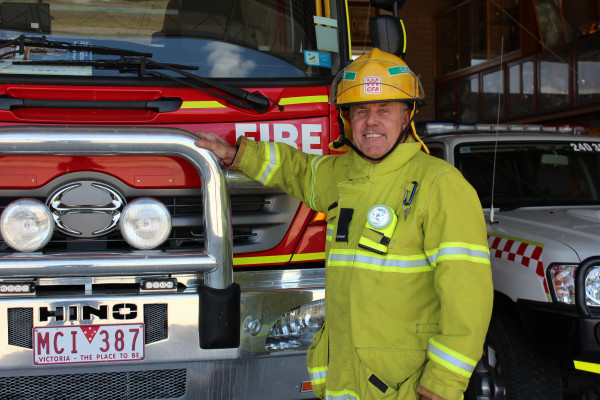
THIRD Lieutenant Gerard Scholtens talks about his time in the brigade as if joining was the only sensible decision; it’s not one that’s above or beyond, or out of the ordinary, it’s just a commitment to those around him to do what he can to contribute.
Car accidents, bush, scrub, grass and house fires, with more than 20 years of service with the Swan Hill CFA, Lt Scholtens has attended all these and more.
He’s tight lipped on some of his experiences, preferring to keep the harder moments to himself.
There have been plenty of highlights over the years too, but throughout his years in the brigade, Lt Scholtens said one thing has remained constant: he’s in it for his community.
At the heart of that drive is the desire to make the community a safer one for his wife, children, and grandchildren.
This dedication was recently recognised in the form of a life membership with the Swan Hill CFA, awarded to Lt Scholtens in August.
But, his first encounter with fire came outside of his days in fluro, and is an experience he’d well advise anyone reading to avoid.
Asked to help a friend burn-off a block of land, and knowing very little about fire risk at the time, Lt Scholtens made a mistake that saw the local brigade at the time come to the rescue.
“We said oh we’ll just burn this block off, he had two or three house blocks and I said yeah no worries at all I’ll give you a hand, this was before I joined the fire brigade,” Lt Scholtens said.
“And I just dropped a match on the ground and before you know it the fire brigade’s there, it was a shocker, that was my first experience with fire.”
Lt Scholtens said there was one clear lesson from this particular experience: “Don’t drop a match in dry grass, ever again”.
It an anecdote that also shows the general naivety people tend to have about fire, if they have never attended scenes themselves.
Lt Scholtens said people tended not to take the risk posed by fire as seriously as they should, having never been confronted with the confronting and sometimes tragic consequences of a thoughtless action.
“Definitely, people definitely underestimate fire,” he said
“Even when we do burn offs now for different people, you always look around and you make sure we’re all right, because one minute you’ve got it under control and the next minute, it just goes.”
Lt Scholtens said while he had thought about joining the CFA a few times before he finally signed up, living behind the old fire house near MacKillop College, the idea would sometimes come to mind on a Saturday morning, watching the volunteers wash the fire trucks.
But it was only when the offer was brought to him that he acted on it.
“I actually just started working for myself and the captain of the rural brigade at the time asked me if I wanted join and I thought ‘oh yeah, let me think about it’ and two or three days later I joined up,” he said.
That was on February 1, 1998.
Things were a little different back then, Lt Scholtens said the brigade today has almost tripled in size, and has the advantage of technology.
“We had no pagers or mobile phones in those day, we’d just hear the fire siren and go,” he said.
“My first call out was a grass and scrub fire, I was very nervous for the first one.
Lt Scholtens has responded to plenty of confronting calls over the years, from road trauma to the loss of a family home or fatality.
He’s confronted walls of fire and fireballs as big as the tankers they drive, but Lt Scholtens said a job that stands out in his mind was a local one, where an element of the unknown put everybody on edge.
“All the fires — I don’t like any fires at all — but probably the biggest one or the worst sort of one where we didn’t know what was going on was at the water plant,” Lt Scholtens said.
“That went up a few years ago and you had chemicals in the back of it and you weren’t allowed to put water on some of the chemicals.”
Lt Scholtens said the solution was to have someone jump on a forklift and “get the chemicals out of there”.
“We just fought it from one end and didn’t go near it and we got it out and it was okay,” he said.
Having been a volunteer for more than two decades, Lt Scholtens has seen firsthand the evolution of the state’s rural firefighting service.
From training, “in the old days they’d just say here’s the rako, go for it, but now you have all the training, and the CFA back you 100 per cent”, to the steady growth of the local station.
“The brigade has grown, it really has, it’s probably tripled in size I’d say compared when I first joined and we have a lot of new people coming in all of the time,” he said.
“It’s great to see, people getting behind us, it’s people wanting to do something for the community too, that has a lot to do with it.”
With fires raging in New South Wales and Queensland and a couple of hundred CFA firefighters having crossed the border to lend a helping hand, Lt Scholtens remembers the many times he’s made a similar trip outside the district.
Leaving home and loved ones to head into a scene which could only be described as chaotic is, he admits, a daunting challenge.
But, Lt Scholtens said trade off is the reward of being able to lend a helping hand to people in the toughest of times.
“I’ve been to New South Wales for a few, gone on a few strike teams in the past,” he said.
While he will be staying at home with the grandkids this time around, deciding to “let the younger ones have a go”, Lt Scholtens said volunteers chose to go for the same reason they commit their time locally: to help where they can.
Though he admits it doesn’t make it any less daunting to walking into what are often catastrophic conditions.
“Sometimes it is daunting, and other times you just have a job to do and you get in and do it,” he said.
“There is that rewarding aspect there of helping people.”
There’s a practicality to Lt Scholtens, and his volunteer firefighter career.
A builder by trade, balancing work, family and volunteering was simply something he had to do.
“The thing is, because you do it for the community, you just drop things and you just go,” he said.
“And even when we went to Richmond to fight the fires there, you just sort of did it.
“It was pretty hard leaving the wife and kids at home, but if it wasn’t for them I probably wouldn’t even be volunteering.”
It was this commitment that was recognised in August this year, with Lt Scholtens awarded a life membership in the Swan Hill fire brigade.
Proud to receive the accolade, Lt Scholtens said he was caught completely off guard.
“I was a bit shocked actually, quite dumbfounded actually, they kept it a secret,” he said.
“I knew I was up for about 30 years, maybe, but I didn’t realise the life membership was there.
“Just, I was shocked, bloody shocked.”
Looking ahead to this fire season, Lt Scholtens said the brigade is facing challenging conditions, but hope remains for a quieter than expected season, if everybody plays their part.
“Hopefully it’s going to be a good season, I just hope all the farmers do the right things and put the fire extinguishers on their equipment, things like that and nothing gets out of hand,” Lt Scholtens said.
“With the wind and everything the way it’s been the last few weeks, conditions have been shocking — and fires create their own wind too and it just goes off, and you can’t read it.”
However the season turns out, Lt Scholtens said he’ll be on board with the brigade, ready to respond whatever the emergency.
“I’m still in it, I’ll be here for a while I think,” he said.