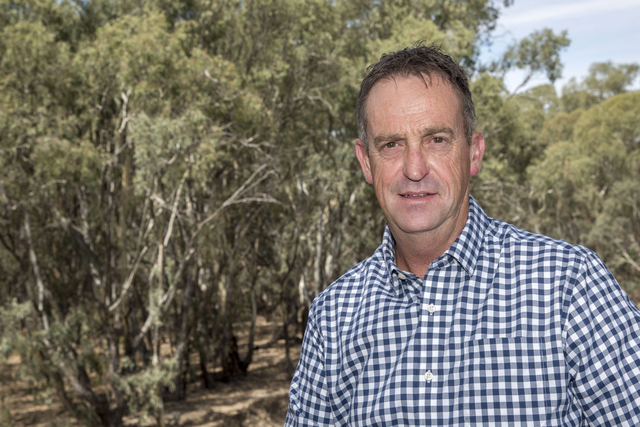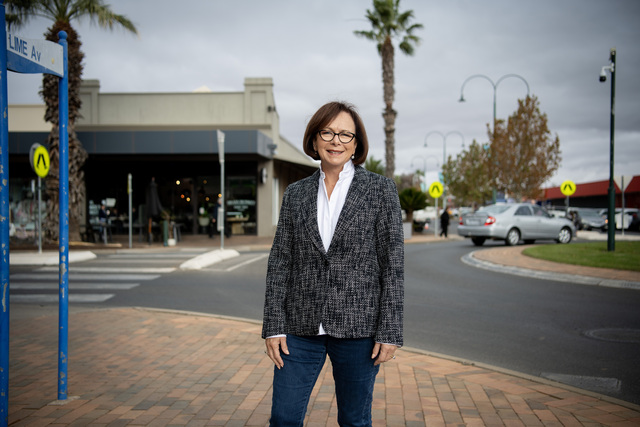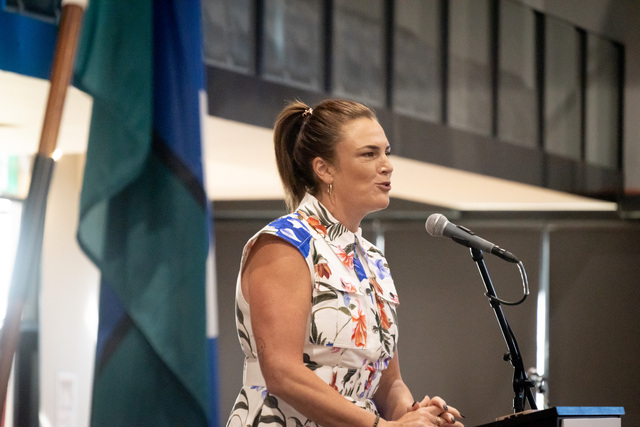
MEMBER for Murray Helen Dalton says water mismanagement is to blame for further job losses from one of Australia’s largest food exporters.
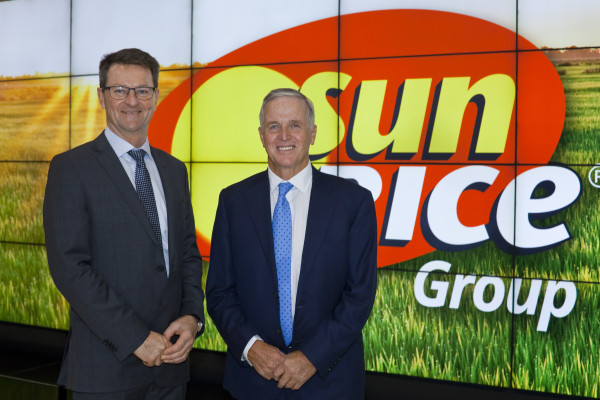
SunRice will cut a further 100 jobs at mills and grain-storage sites in southern NSW, taking the total number of jobs lost since November 2018 to 230.
The company issued a statement on Tuesday confirming the cuts, saying the crop harvested in 2020 would be even smaller than the crop harvested this season, which at 54,000 tonnes was the second-smallest on record.
“It’s an absolute tragedy,” Mrs Dalton told The Guardian.
“The impact this will have is huge. It’s equivalent to 58,000 jobs being lost in Sydney, if that happened in the city we would never hear the end of it.”
Mills in Deniliquin and Leeton will remain open, but will drop down to single-shift operation, affecting 80 manufacturing and support staff and 20 more staff at SunRice’s storage subsidiary.
“A community has to be incredibly strong to be able to absorb that loss and find jobs for people,” Mrs Dalton said.
“What is happening is absolutely insane. It’s about water management and the state government won’t stand up for rural and regional communities.
“The state government blames the federal government and they hide behind each others skirts.”
An irrigator herself, Mrs Dalton said the Murray Darling Basin Plan (MDBP) was “impacting big time” on Australia’s rice industry.
“Over the years the government has decreased general security over allocations and it’s made it incredibly difficult to irrigate,” she said.
“As far as I’m concerned this plan doesn’t support irrigators or irrigation communities.
“It doesn’t work and is unworkable during drought, it’s totally flawed.”
Ms Dalton said she had called on the government to make a “few simple changes” to give farmers access to water.
“At the stroke of a pen the government could return the water they have taken off us and give people at an allocation,” she said.
“The plan has placed the environment above the people and that has to change. Farmers are getting beaten up on all fronts.”
SunRice chief executive officer Rob Gordon said while SunRice employs more than 2000 people worldwide, “the heart of our business is in the Riverina, where our Australian rice is grown”.
“It is with deep regret we have been forced to make another series of changes to our Riverina operations ahead of the 2020 harvest,” Mr Gordon said.
“We understand that these changes have been, and continue to be very unsettling, and we will be doing all we can to support our employees and their families in the months ahead.”
Mr Gordon said due to concerns around the allocation of general security in the southern Murray-Darling basin, SunRice had conducted an external report into the MDBP which revealed “unintended consequences” for NSW irrigators.
“Whilst the water reform process has been immensely complex, this report identifies unintended consequences associated with the rollout of the MDBP and with the NSW government’s water allocation practices,” Mr Gordon said.
“The report shows those consequences include over recovery of water, significantly eroding the rights of general security NSW irrigators, who grow rice and other annual crops.”
Mr Gordon said SunRice was currently engaging with both federal and NSW government’s to address the inadequacies.
“We have every confidence that if changes are made to policy settings to address these inequities, the rice industry will be able to bounce back as it did following the Millennium Drought,” he said.