WITH the summer beach season in full swing it’s hard not to dwell on Steven Spielberg’s 1975 block buster movie Jaws.
With four shark related fatalities along the New South Wales coastline in the past two years it seems there’s a new sheriff in town.
Western Australian premier Colin Barnett has declared war on the local shark population.
Barnett’s shark policy, to seek out and destroy sharks, begins January 10.
A total of 72 drum lines will be set and baited approximately 1km offshore of eight Western Australian beaches.
Any sharks caught on these lines that are over 3m in length will be shot in the head, then dumped at sea.
When you think on Barnett’s shark policy you might wonder who needs protecting from whom?
With a growing population, more people are entering the water every summer hence more encounters with sharks.
Research shows that less than one in every three million scuba dives in Western Australia ends in a fatal shark attack.
How refreshing these odds might be if they were equated every time we stepped into our cars to go for a drive.
As an angler I have been privileged enough to see one of these giant sharks up close and personal.
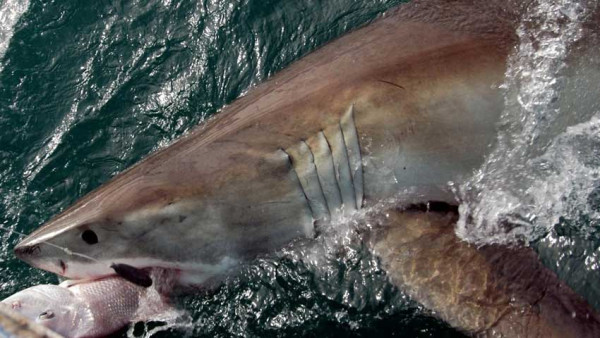
While we were snapper fishing off Whyalla in South Australia, a four metre great white lunged head clear of the water to grab a very large snapper from the line.
Its power and beauty were far more overpowering than the way it easily chewed through the large red fish. Caught between the camera and the chance to touch it on the head I think I made the wrong decision.
While the shots weren’t bad the chance to touch one of these sharks is something in all likelihood I will never have again.
The answers to shark related fatalities are unlikely to hang on the end of a baited hook.
Shark culling was carried out in Hawaii, between 1959 to 1976. During this time more than 4500 sharks were killed and yet there was no significant decrease in the number of shark bites recorded.
Put simply, if you enter the ocean you are at risk.
You can decrease these risks by following a few basic rules. Stay out of the water if sharks have been sighted in the area. Stay close to shore within 30m of the water’s edge. Don’t go swimming alone. Avoid water depths greater than 5m. Don’t enter the water during low light conditions like dusk and dawn.
Most importantly avoid swimming if there are seals, dolphins or baitfish in the water as sharks are usually in close proximity to prey.