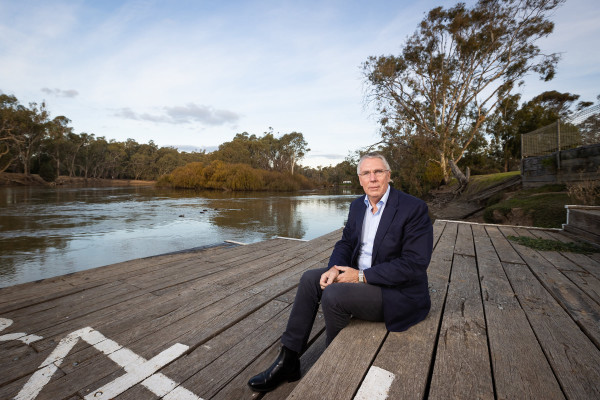
NATIONALS leader Peter Walsh has accused the Victorian Government of having a “hidden agenda” behind hospital budget cuts – a claim the government has sought to refute.
Rural and metropolitan health bosses were recently told to find savings, reportedly between $4 million and $10 million over the next three years, without cutting frontline jobs or services.
Mr Walsh said he believed this was an “underlying strategy” to force hospital mergers and give the government greater centralised control of regional health networks.
“In September the government took its razor to psychiatric services across the state and now it’s pushing its health tax, which by its own admission is going to force some GP practices to close down,” he said.
Mr Walsh said the Coalition put forward a budgeted health strategy at last year’s election, accounting not only for health costs but for investments in infrastructure, doctor and nurse training, and new equipment.
“The average regional Victorian is at the frontline of a new fight to save their local hospital,” he said.
“Believe me, cutting backroom costs doesn’t make that work disappear, it merely shoves it into whoever is left standing – and that will be staff who should be focused on health care.”
A Victorian Government spokesperson rejected Mr Walsh’s claims, telling The Guardian the cost reductions would focus on streamlining payroll and other administrative functions such as consultancies.
“We won’t be lectured by the same people who slashed $1 billion from Victoria’s health system – the records show that under Peter Walsh and the Liberal-National (coalition), hospitals closed and health services were cut,” the spokesperson said.
“Victorians rightly expect us to prioritise frontline health services and the services they need, and that is what we have done – this will not impact our frontline health workers.
“Our world-class health system continues to be our largest investments – with record funding across our hospitals, health-care workers and new services, including stepping in to fill gaps in primary care following a decade of neglect from successive federal Liberal-National governments.”
According to the government, since April last year 6200 health-care workers had been recruited, including 2500 from overseas – more than a quarter of whom were working in regional Victoria.